 Archive · 1984-2008
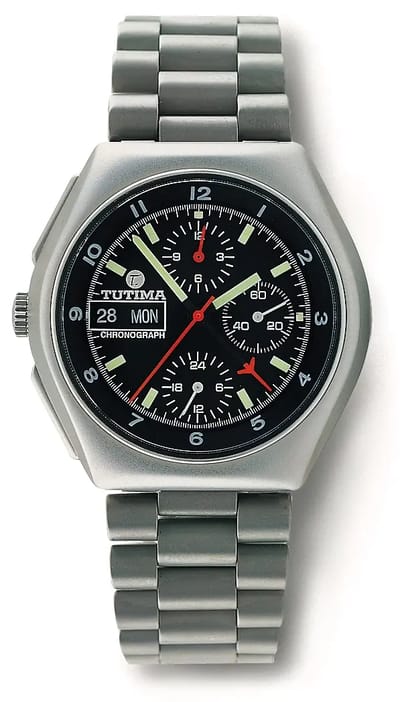
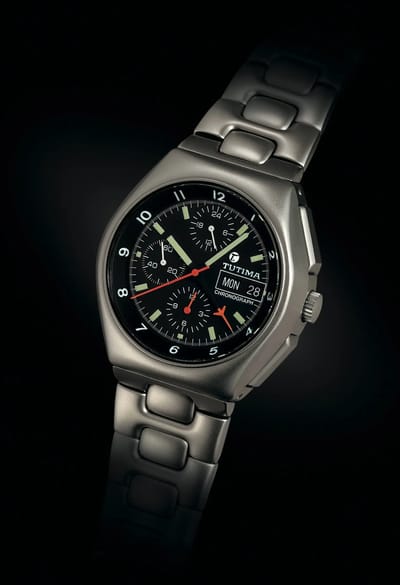
 Military NATO Chronograph 798-22
Ref. 798-22
Bundeswehr-selected, 1984. NSN 6645-12-194-8642.
Tutima — Independent manufacture. Glashütte, Germany, since 1927. Glashütte, since 1927.
The watches that built Tutima.
1927–1945
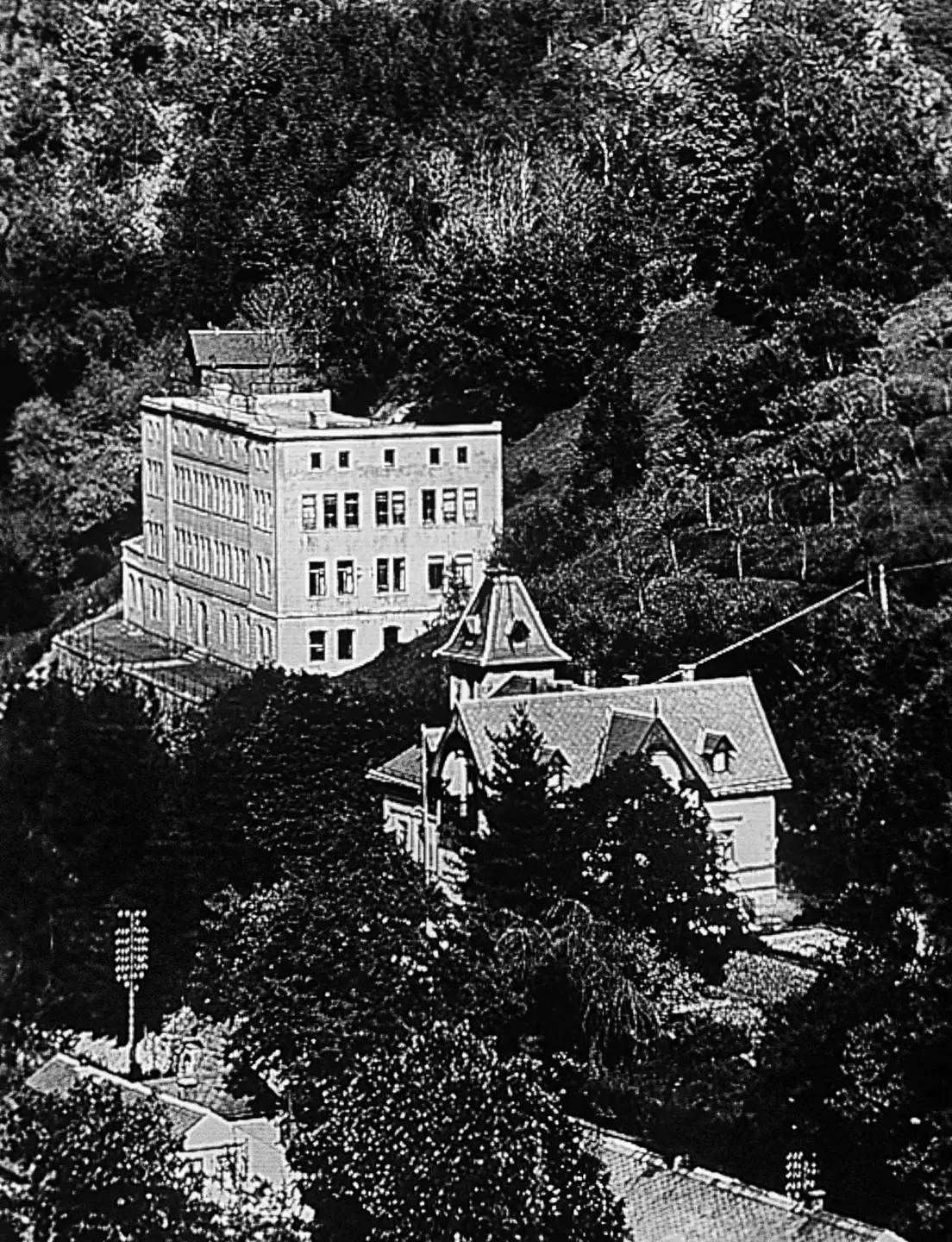
Where it began: Glashütte, 1927
“By the late 1930s, the factory employed a thousand people.”
Ernst Kurtz founded UROFA and UFAG in Glashütte in 1927. By the late 1930s, the factory employed a thousand people. The Flieger Chronograph — Caliber UROFA 59, around 30,000 produced — became the standard-issue pilot’s chronograph for the Luftwaffe. Allied bombing and Soviet occupation ended it all in 1945.

Dr. Ernst Kurtz, founder of UROFA-UFAG
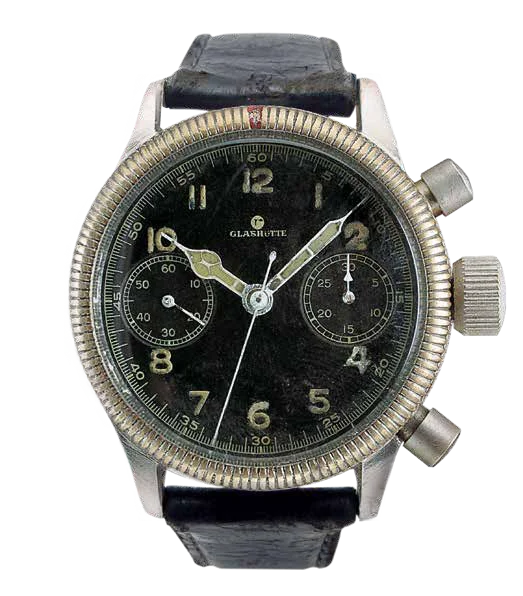
Flieger Chronograph, Cal. UROFA 59 (1941)
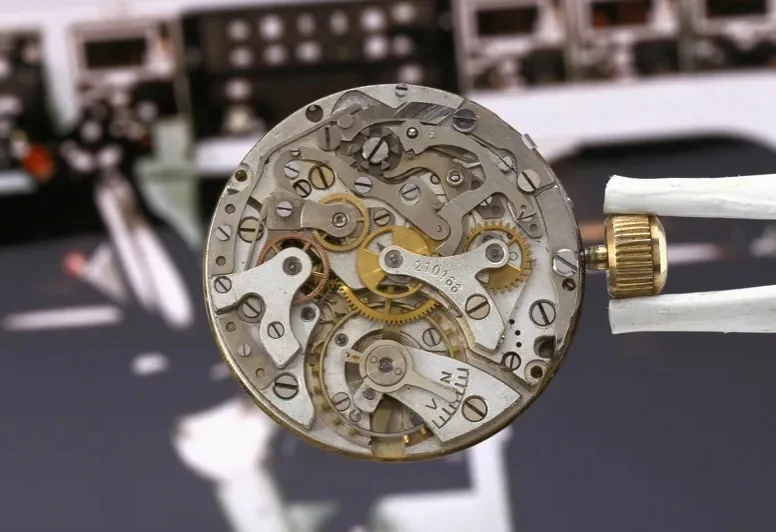
Caliber UROFA 59 — column wheel, flyback
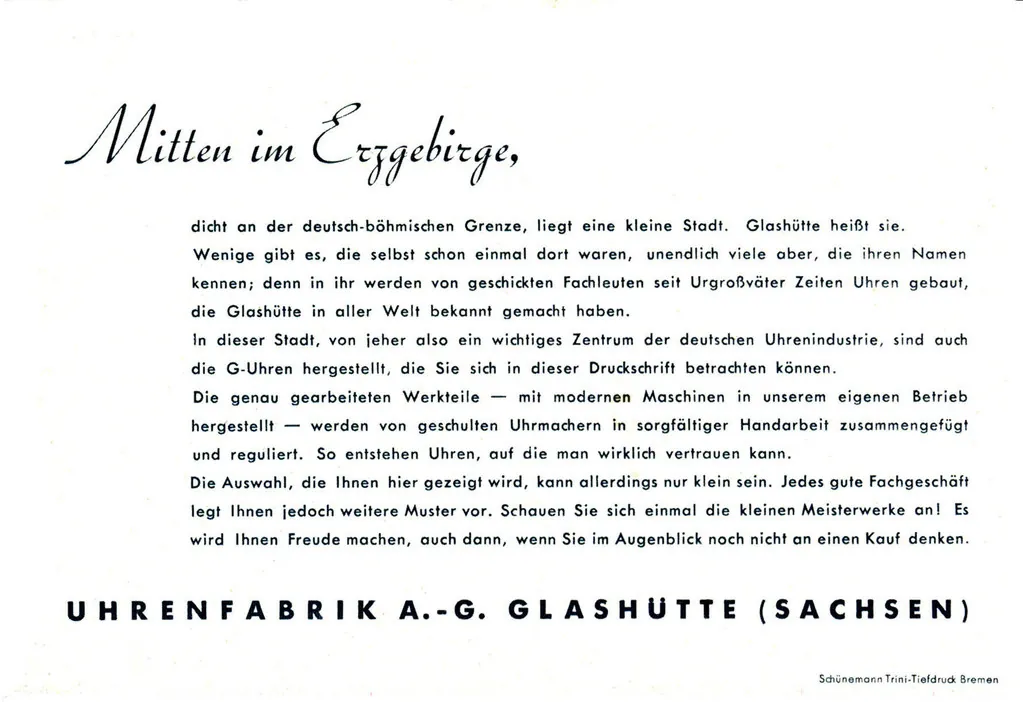
UROFA-UFAG catalog prose — Erzgebirge, c. 1937
1945–1956
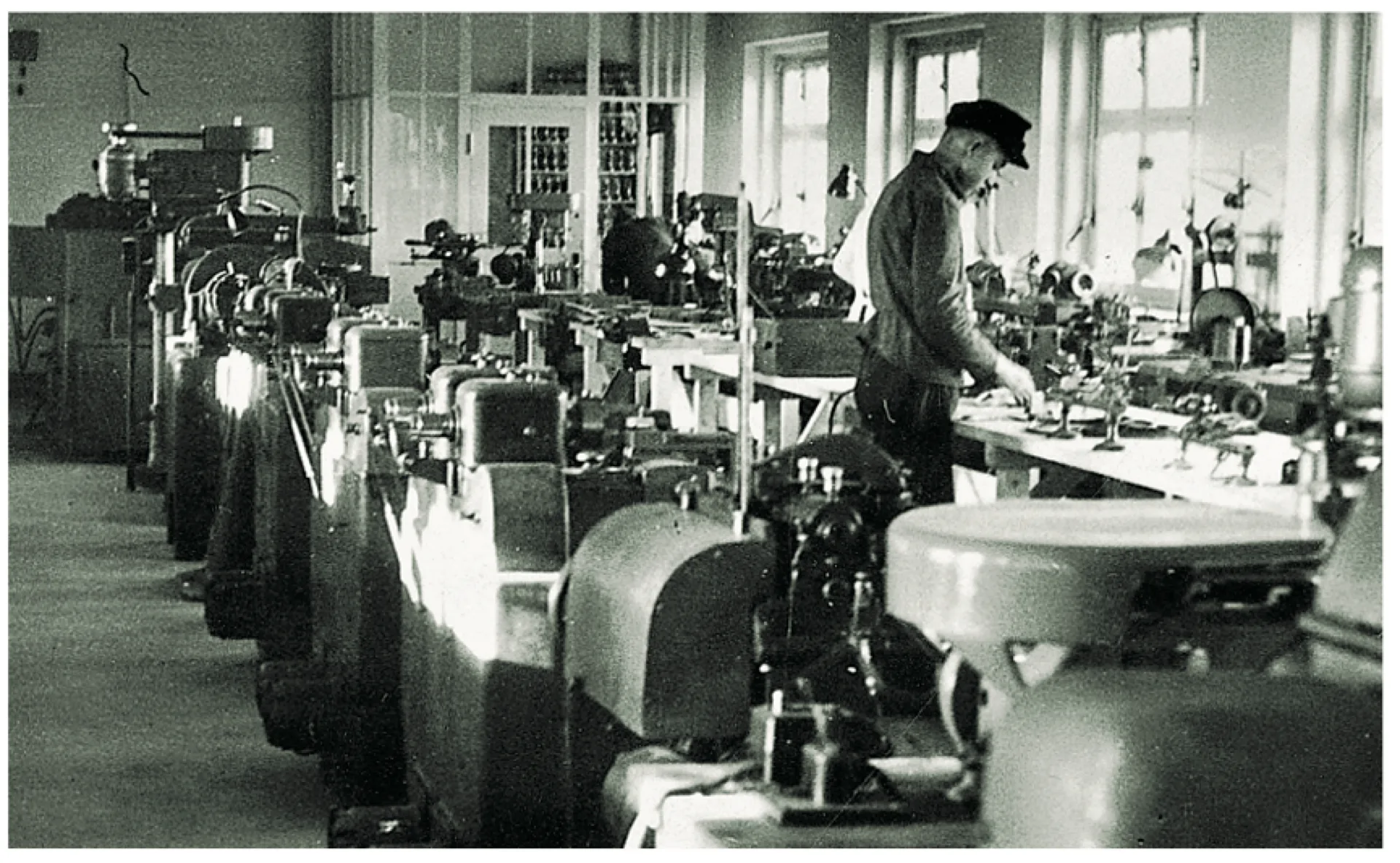
Dismantled. Dispersed. Not defeated.
Soviet occupation forces dismantled the UROFA-UFAG works in 1945. The tools, dies, and machinery were shipped east as reparations. Ernst Kurtz and many of his watchmakers scattered west, carrying decades of expertise but little else.
No production during this period.
1956–2007
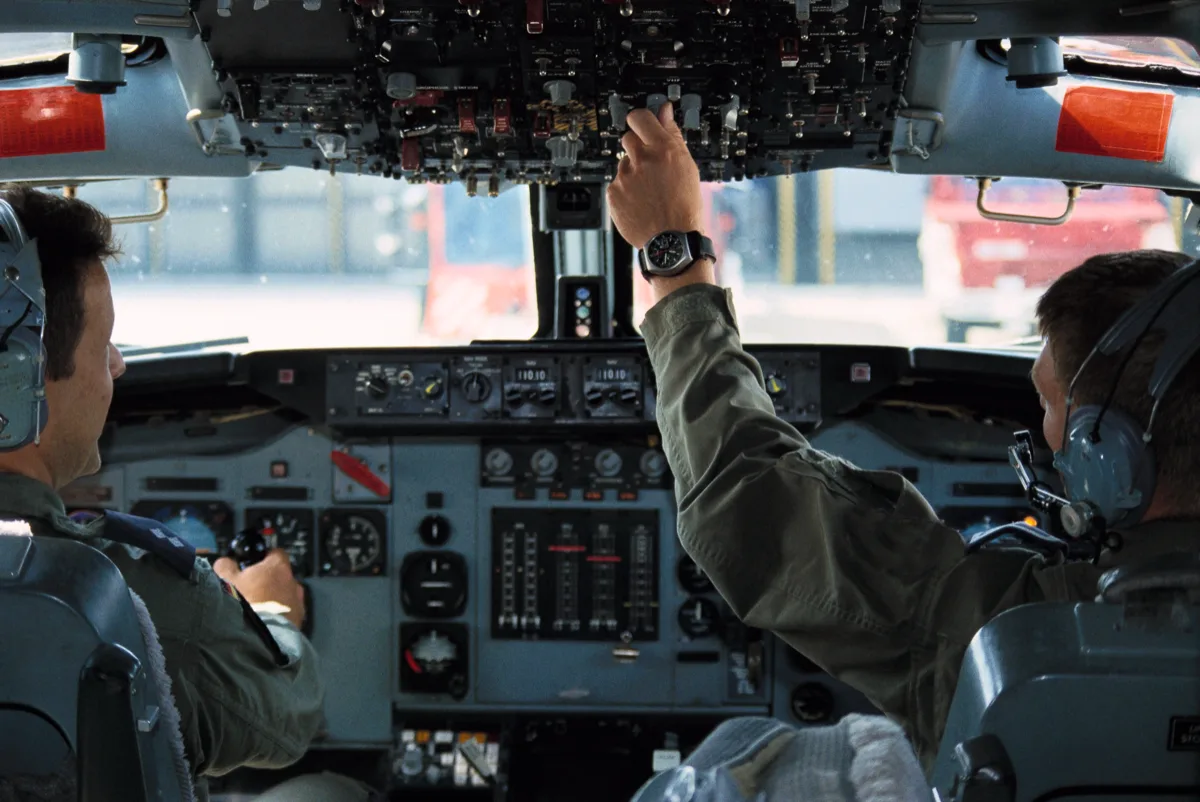
Five decades of military precision
“He joined as a 19-year-old apprentice and owned the brand by 25.”
Kurtz rebuilt in Ganderkesee, a small town near Bremen. Dieter Delecate joined as a 19-year-old apprentice in 1954 and owned the brand by 25. Over five decades, Ganderkesee produced military chronographs, dive watches, pilot instruments, and dress pieces.
Selected by the German Bundeswehr in 1984. Ref. 798, NATO Stock Number 6645-12-194-8642. Integrated pushers flush with the case for glove operation. Aboard the MIR space station. Flight-tested to 1,500 meters and 15 km altitude.
Archive · 1984-2008 Military NATO Chronograph 798-22
Ref. 798-22
Bundeswehr-selected, 1984. NSN 6645-12-194-8642.
Archive · 1984-2008 Image shows Ref. 798-22 — strap, bracelet, dial, date, or finish may differ Military NATO Chronograph 798-04
Ref. 798-04
Bundeswehr-selected, 1984. NSN 6645-12-194-8642.
Archive · 1984-2008 Image shows Ref. 798-22 — strap, bracelet, dial, date, or finish may differ Military NATO Chronograph 798-03
Ref. 798-03
Bundeswehr-selected, 1984. NSN 6645-12-194-8642.
 Archive · 1984-2008
 Military NATO Chronograph 798-02
Ref. 798-02
Bundeswehr-selected, 1984. NSN 6645-12-194-8642.
 Archive · 1984-2008
 Military NATO Chronograph 798-01
Ref. 798-01
Bundeswehr-selected, 1984. NSN 6645-12-194-8642.
Ref. 780-52 through 780-73, first cataloged on tutima.de in 2005. Valjoux 7754 — the GMT variant of the 7750 — with independently adjustable 24-hour hand for a second time zone. 38.7 mm case, 15.8 mm height, offered in black and white dials. A Eurofighter Typhoon special edition (Ref. 780-59) carried the aircraft silhouette engraved on its sapphire caseback.
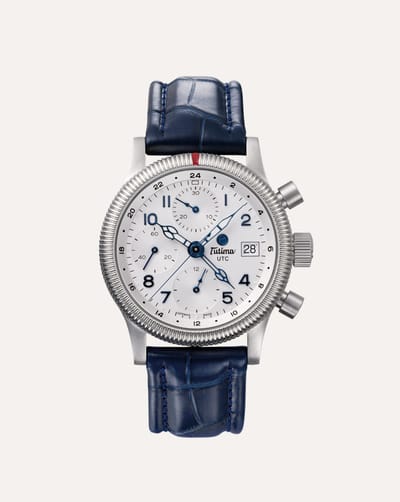 Archive · 2004-2013 Image shows Ref. 780-73 — strap, bracelet, dial, date, or finish may differ
 Flieger Chronograph F2 UTC 780-53
Ref. 780-53
Archive · 2004-2013 Flieger Chronograph F2 UTC 780-73
Ref. 780-73
Archive · 2004-2013 Image shows Ref. 780-73 — strap, bracelet, dial, date, or finish may differ Flieger Chronograph F2 UTC 780-72
Ref. 780-72
Archive · 2004-2013 Image shows Ref. 780-73 — strap, bracelet, dial, date, or finish may differ Flieger Chronograph F2 UTC 780-55
Ref. 780-55
Archive · 2004-2013 Image shows Ref. 780-73 — strap, bracelet, dial, date, or finish may differ Flieger Chronograph F2 UTC 780-52
Ref. 780-52
Archive · 2004-2013 Image shows Ref. 780-73 — strap, bracelet, dial, date, or finish may differ Flieger Chronograph F2 UTC 780-51
Ref. 780-51
Ref. 630/631, introduced around 2000 in Ganderkesee as a sport-oriented alternative to the Flieger line. The FX was Tutima’s first purpose-built sport watch, designed from the ground up with a wider case and integrated bezel rather than adapting the pilot-instrument Flieger platform. ETA 2836-2 three-hand automatic with bidirectional 60-minute countdown bezel, screw-down crown, 10 bar. The FX platform spawned four variant families — Automatic, Automatic UTC, Chronograph, and Chronograph UTC — sharing a common satinized steel case architecture. Discontinued around 2014.
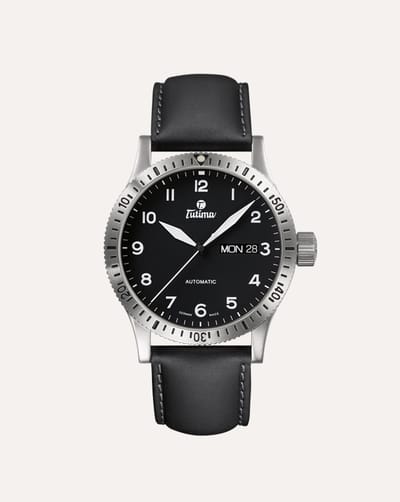 Archive · 2000-2014 Image shows Ref. 631-31 — strap, bracelet, dial, date, or finish may differ
 FX Automatic 630-37
Ref. 630-37
Archive · 2000-2014 Image shows Ref. 631-31 — strap, bracelet, dial, date, or finish may differ FX Automatic 631-34
Ref. 631-34
Archive · 2000-2014 FX Automatic 631-31
Ref. 631-31
Archive · 2000-2014 Image shows Ref. 631-31 — strap, bracelet, dial, date, or finish may differ FX Automatic 631-54
Ref. 631-54
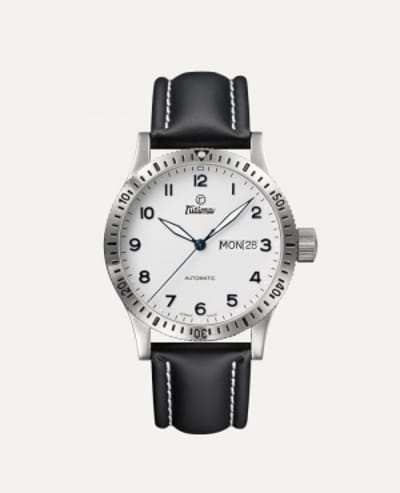 Archive · 2000-2014
 FX Automatic 631-51
Ref. 631-51
Archive · 2000-2014 Image shows Ref. 631-31 — strap, bracelet, dial, date, or finish may differ FX Automatic 631-36
Ref. 631-36
Archive · 2000-2014 Image shows Ref. 631-31 — strap, bracelet, dial, date, or finish may differ FX Automatic 631-35
Ref. 631-35
Archive · 2000-2014 Image shows Ref. 631-31 — strap, bracelet, dial, date, or finish may differ FX Automatic 630-36
Ref. 630-36
Archive · 2000-2014 Image shows Ref. 631-31 — strap, bracelet, dial, date, or finish may differ FX Automatic 630-35
Ref. 630-35
Archive · 2000-2014 Image shows Ref. 631-31 — strap, bracelet, dial, date, or finish may differ FX Automatic 630-14
Ref. 630-14
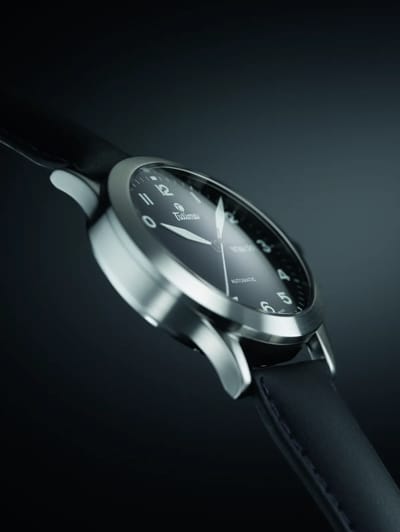 Archive · 2000-2014
 FX Automatic 630-11
Ref. 630-11
Ref. 632/633/634, cataloged from 2000. The FX Automatic with ETA 2893-2 for tracking a second timezone via independently adjustable 24-hour hand. Ref. 633 variants added a 24-hour bezel scale, enabling a third timezone reference — a three-timezone capability unique in the Tutima catalog at the FX price point. Multiple bezel configurations — satinized, 60-minute countdown, or 24-hour scale — were offered across at least seven reference numbers. 10 bar, screw-down crown.
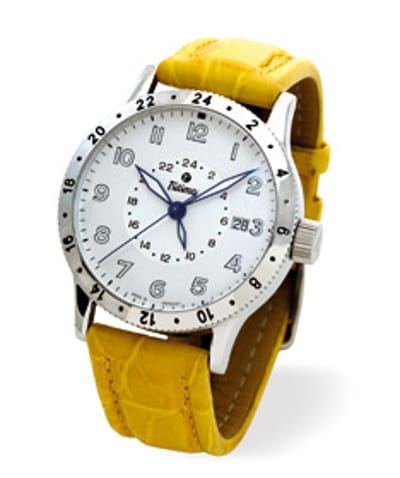 Archive · 2000-2014
 FX Automatic UTC 633-27
Ref. 633-27
Archive · 2000-2014 Image shows Ref. 633-27 — strap, bracelet, dial, date, or finish may differ FX Automatic UTC 634-26
Ref. 634-26
Archive · 2000-2014 Image shows Ref. 633-27 — strap, bracelet, dial, date, or finish may differ FX Automatic UTC 634-24
Ref. 634-24
Archive · 2000-2014 Image shows Ref. 633-27 — strap, bracelet, dial, date, or finish may differ FX Automatic UTC 634-06
Ref. 634-06
Archive · 2000-2014 Image shows Ref. 633-27 — strap, bracelet, dial, date, or finish may differ FX Automatic UTC 634-01
Ref. 634-01
Archive · 2000-2014 Image shows Ref. 633-27 — strap, bracelet, dial, date, or finish may differ FX Automatic UTC 633-25
Ref. 633-25
Archive · 2000-2014 Image shows Ref. 633-27 — strap, bracelet, dial, date, or finish may differ FX Automatic UTC 633-24
Ref. 633-24
Archive · 2000-2014 Image shows Ref. 633-27 — strap, bracelet, dial, date, or finish may differ FX Automatic UTC 633-05
Ref. 633-05
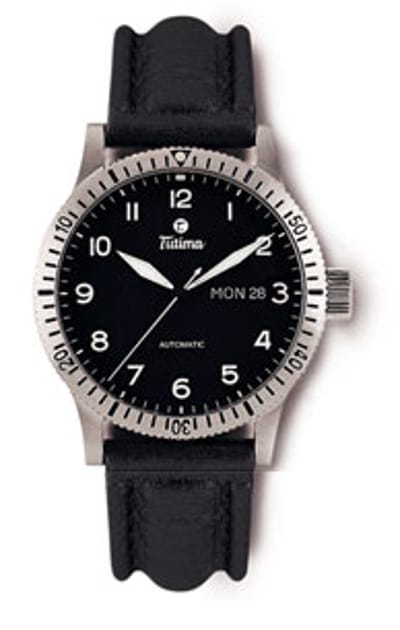 Archive · 2000-2014
 FX Automatic UTC 633-04
Ref. 633-04
Archive · 2000-2014 Image shows Ref. 633-27 — strap, bracelet, dial, date, or finish may differ FX Automatic UTC 632-25
Ref. 632-25
Archive · 2000-2014 Image shows Ref. 633-27 — strap, bracelet, dial, date, or finish may differ FX Automatic UTC 632-24
Ref. 632-24
Archive · 2000-2014 Image shows Ref. 633-27 — strap, bracelet, dial, date, or finish may differ FX Automatic UTC 632-05
Ref. 632-05
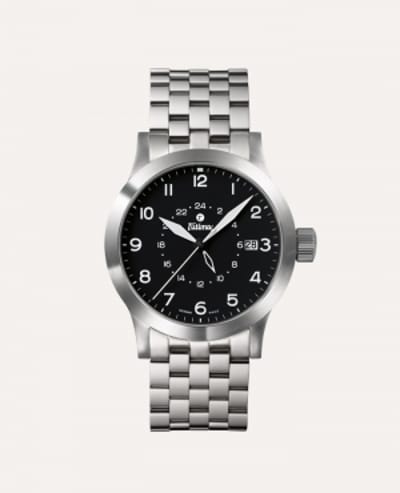 Archive · 2000-2014
 FX Automatic UTC 632-04
Ref. 632-04
Ref. 741/788, cataloged from 2002. Valjoux 7750 chronograph in the FX sport case — Tutima’s mid-range chronograph positioned between the smaller Flieger Classic line and the military-spec NATO series. It offered the same Valjoux 7750 base as the NATO Chronograph to civilian buyers without military procurement channels. 30-minute and 12-hour counters, day/date. Ref. 741 had a bidirectional 60-minute bezel; Ref. 788 used a smooth satinized bezel for a cleaner look. Sapphire caseback, steel, 10 bar.
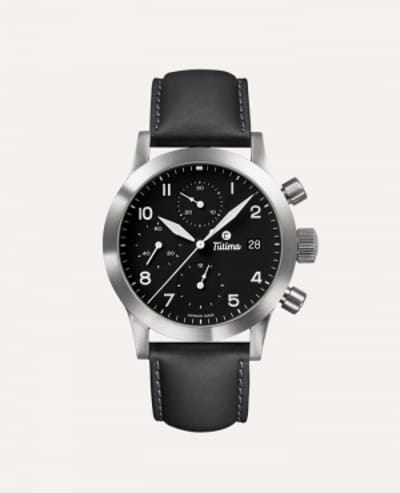 Archive · 2000-2014 Image shows Ref. 788-31 — strap, bracelet, dial, date, or finish may differ
 FX Chronograph 788-47
Ref. 788-47
Archive · 2000-2014 Image shows Ref. 788-31 — strap, bracelet, dial, date, or finish may differ FX Chronograph 788-34
Ref. 788-34
Archive · 2000-2014 FX Chronograph 788-31
Ref. 788-31
Archive · 2000-2014 Image shows Ref. 788-31 — strap, bracelet, dial, date, or finish may differ FX Chronograph 788-15
Ref. 788-15
Archive · 2000-2014 Image shows Ref. 788-31 — strap, bracelet, dial, date, or finish may differ FX Chronograph 788-07
Ref. 788-07
Archive · 2000-2014 Image shows Ref. 788-31 — strap, bracelet, dial, date, or finish may differ FX Chronograph 788-45
Ref. 788-45
Archive · 2000-2014 Image shows Ref. 788-31 — strap, bracelet, dial, date, or finish may differ FX Chronograph 788-41
Ref. 788-41
Archive · 2000-2014 Image shows Ref. 788-31 — strap, bracelet, dial, date, or finish may differ FX Chronograph 788-35
Ref. 788-35
Archive · 2000-2014 Image shows Ref. 788-31 — strap, bracelet, dial, date, or finish may differ FX Chronograph 741-46
Ref. 741-46
Archive · 2000-2014 Image shows Ref. 788-31 — strap, bracelet, dial, date, or finish may differ FX Chronograph 741-45
Ref. 741-45
Archive · 2000-2014 Image shows Ref. 788-31 — strap, bracelet, dial, date, or finish may differ FX Chronograph 741-34
Ref. 741-34
Archive · 2000-2014 Image shows Ref. 788-31 — strap, bracelet, dial, date, or finish may differ FX Chronograph 741-31
Ref. 741-31
Ref. 740/741/788 UTC variants, cataloged from 2000. Modified Valjoux 7750 with central 24-hour readout for a second time zone, combined with full chronograph functions — the most complex dial layout in the FX family. With chronograph, second timezone, and optional third-timezone bezel, this was the most densely packed movement-and-dial configuration Tutima offered outside the military NATO line. The 24-hour bezel on Ref. 740 variants enabled reading a third timezone. 38.5 mm case at 16.4 mm height. Sapphire caseback, steel, 10 bar. Later Ref. 740-84 variants used the Valjoux 7754 with applied numerals.
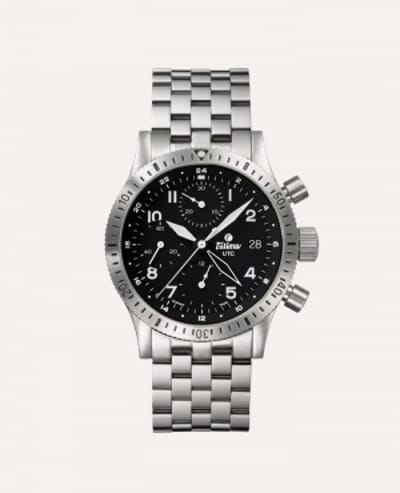 Archive · 2000-2014 Image shows Ref. 741-84 — strap, bracelet, dial, date, or finish may differ
 FX Chronograph UTC 741-81
Ref. 741-81
Archive · 2000-2014 Image shows Ref. 741-84 — strap, bracelet, dial, date, or finish may differ FX Chronograph UTC 788-85
Ref. 788-85
Archive · 2000-2014 Image shows Ref. 741-84 — strap, bracelet, dial, date, or finish may differ FX Chronograph UTC 788-65
Ref. 788-65
Archive · 2000-2014 FX Chronograph UTC 741-84
Ref. 741-84
Archive · 2000-2014 Image shows Ref. 741-84 — strap, bracelet, dial, date, or finish may differ FX Chronograph UTC 741-61
Ref. 741-61
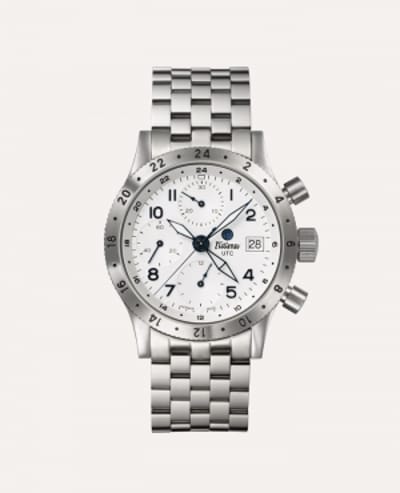 Archive · 2000-2014
 FX Chronograph UTC 740-84
Ref. 740-84
Archive · 2000-2014 Image shows Ref. 741-84 — strap, bracelet, dial, date, or finish may differ FX Chronograph UTC 740-81
Ref. 740-81
Archive · 2000-2014 Image shows Ref. 741-84 — strap, bracelet, dial, date, or finish may differ FX Chronograph UTC 740-64
Ref. 740-64
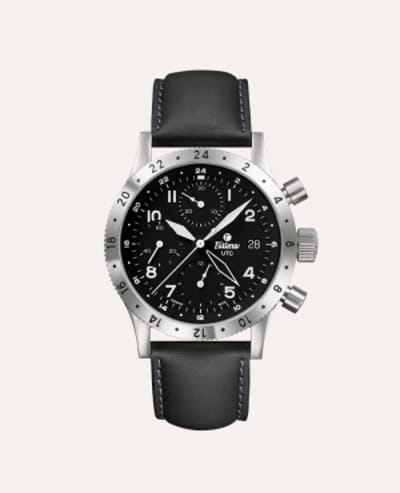 Archive · 2000-2014
 FX Chronograph UTC 740-61
Ref. 740-61
Ref. 759, cataloged from 1999, discontinued around 2006. The only quartz-powered model in the entire Ganderkesee-era Pacific line. The ETA 251.262 Swiss quartz offered 1/10-second precision and a split-time function for lap timing — capabilities that mechanical chronographs of the era could not match at this price. Titanium case at 40.2 mm and 11 mm height, unidirectional 60-minute diver bezel, 10 bar.
 Archive · 1999-2006
 Pacific Chronograph 759-02
Ref. 759-02
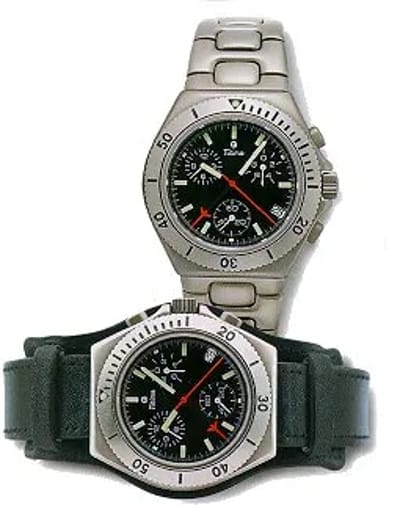 Archive · 1999-2006
 Pacific Chronograph 759-01
Ref. 759-01
Ref. 670 series, cataloged on tutima.de from 1999 — Tutima’s first dedicated dive watch, marking the brand’s entry into underwater instruments after three decades focused on pilot’s chronographs. Produced in Ganderkesee as an entry-level professional diver: 40.4 mm steel case, 10.8 mm height, ETA 2836-2 automatic, unidirectional bezel with ratchet, sapphire crystal, screw-down crown, 20 bar. Available on steel bracelet (Ref. 670-01) or military leather strap (Ref. 670-03). The Pacific established the dive catalog that led to the more extreme 300-metre titanium DI 300 five years later.
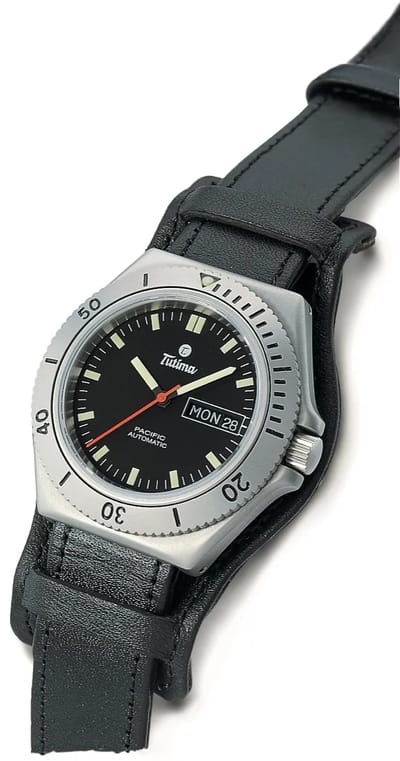 Archive · 1999-2010
 Pacific (Original) 670-03
Ref. 670-03
Original Pacific. 1990s Ganderkesee.
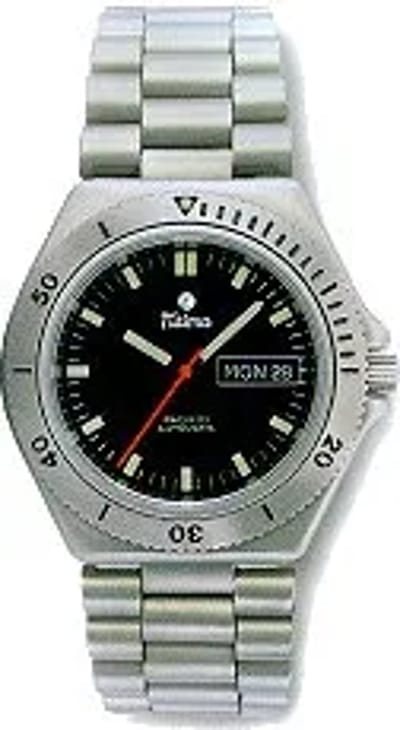 Archive · 1999-2010
 Pacific (Original) 670-01
Ref. 670-01
Original Pacific. 1990s Ganderkesee.
Rare titanium-and-gold variant of the military chronograph. Ref. 738-02: titanium case with 18-karat gold bezel and bracelet links — one of the few gold-accented military watches produced by any manufacturer. Lemania 5100 movement, 20 bar, rated to 15,000 m altitude.
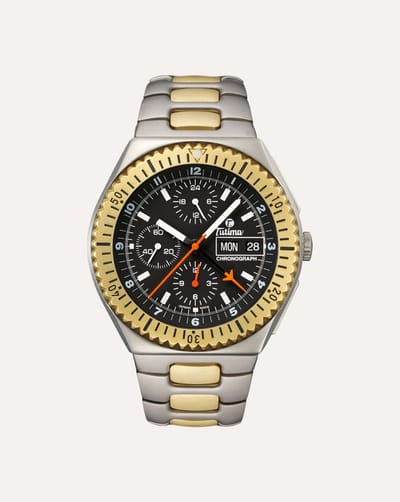 Archive · 2001-2008
 Military Fliegerchronograph TLG 738-02
Ref. 738-02
Titanium and 18-karat gold. Lemania 5100.
Ganderkesee-produced pilot watch with the second timezone displayed on a subdial rather than via a central 24-hour hand as in the Flieger GMT (Ref. 636). This approach kept the main dial as a clean three-hand layout with date at three o’clock. Where the GMT used the ETA 2893-2 with a central fourth hand, the UTC model used a movement module to drive a separate subdial readout. Same 36 mm case family as the Flieger Automatic and GMT.
Flieger UTC 635-06
Ref. 635-06
Flieger UTC 635-05
Ref. 635-05
Flieger UTC 635-02
Ref. 635-02
Flieger UTC 635-01
Ref. 635-01
Ref. 636/639, cataloged from 1999 in Ganderkesee. ETA 2893-2 — the dedicated GMT caliber — in a 36.4 mm case at just 10.5 mm height. The independently adjustable 24-hour hand tracks a second timezone without stopping the movement. Ref. 636 variants had sapphire caseback with perlage-finished movement; Ref. 639 used a solid steel caseback. 10 bar water resistance.
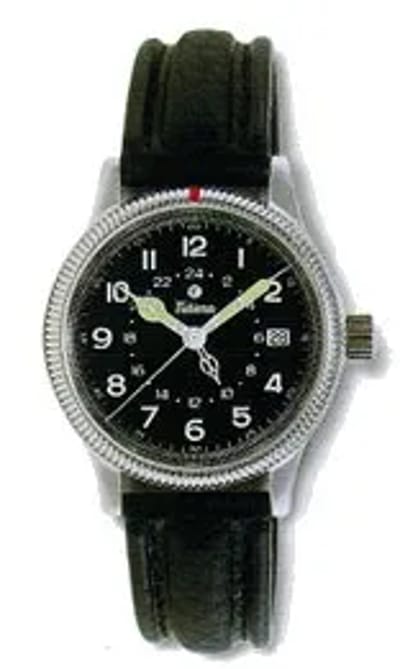 Archive · 1999-2013 Image shows Ref. 636-01 — strap, bracelet, dial, date, or finish may differ
 Flieger GMT 639-02
Ref. 639-02
Archive · 1999-2013 Image shows Ref. 636-01 — strap, bracelet, dial, date, or finish may differ Flieger GMT 639-01
Ref. 639-01
Archive · 1999-2013 Image shows Ref. 636-01 — strap, bracelet, dial, date, or finish may differ Flieger GMT 636-02
Ref. 636-02
Archive · 1999-2013 Flieger GMT 636-01
Ref. 636-01
Ref. 758, the last Tutima model to use the Lemania 5100 — the same movement as the NATO chronograph Ref. 798. Lemania ended Cal. 5100 production in 2002; Dieter Delecate had already stockpiled movements, keeping the chronograph in continuous production unchanged since the 1980s. Auto Bild Klassik noted in 2011 that the Lemania 5100, once standard across military chronographs, survived at Tutima alone. 38.6 mm steel case, 20 bar, coin-edge bezel, central 60-minute counter with integrated military-spec pushers.
 Archive · 1999-2002 Image shows Ref. 758-01 — strap, bracelet, dial, date, or finish may differ
 Flieger Chronograph F3 758-02
Ref. 758-02
Archive · 1999-2002 Flieger Chronograph F3 758-01
Ref. 758-01
Ref. 751, launched in 2007 at the World Financial Center in Manhattan. The same Lemania 5100 as the NATO military chronograph, repurposed with a 15-minute regatta countdown divided into three color-coded segments for the yacht racing start sequence. Pure titanium case, 20 bar, integrated pushers, sapphire crystal anti-reflective on both sides. Before going on sale, the watch was tested during an Atlantic crossing; from 2005 to 2011, Tutima served as official timekeeper of the Kieler Woche regattas.
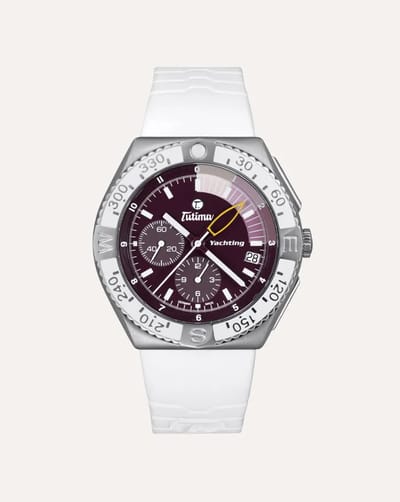 Archive · 2005-2014
 Yachting Chronograph 751-05
Ref. 751-05
Lemania 5100. Regatta countdown.
Archive · 2005-2014 Image shows Ref. 751-05 — strap, bracelet, dial, date, or finish may differ Yachting Chronograph 751-04
Ref. 751-04
Lemania 5100. Regatta countdown.
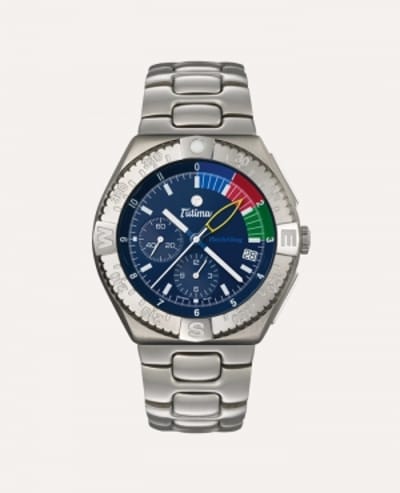 Archive · 2005-2014
 Yachting Chronograph 751-02
Ref. 751-02
Lemania 5100. Regatta countdown.
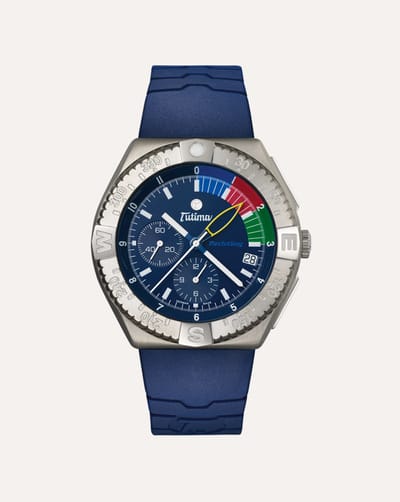 Archive · 2005-2014
 Yachting Chronograph 751-01
Ref. 751-01
Lemania 5100. Regatta countdown.
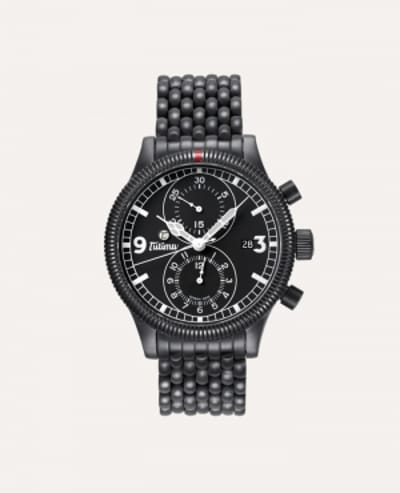
Ref. 628-11/628-13, added to the Grand Classic line around 2012. The PVD treatment hardened the steel surface and covered case, bezel, and clasp in uniform black — only the red bezel marker and dial accents provided contrast. Same ETA 2836-2 automatic with day/date and bidirectional rotating bezel as the standard Grand Classic. Leather strap with PVD-coated clasp. 10 bar water resistance, sapphire caseback.
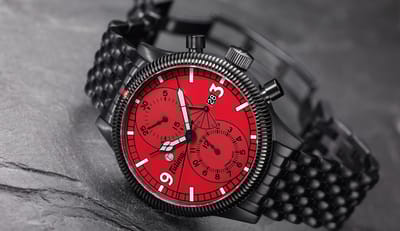 Archive · 2007-2014
 Grand Classic Black Chronograph PR 781-44
Ref. 781-44
 Archive · 2007-2014
 Grand Classic Black Chronograph 781-32
Ref. 781-32
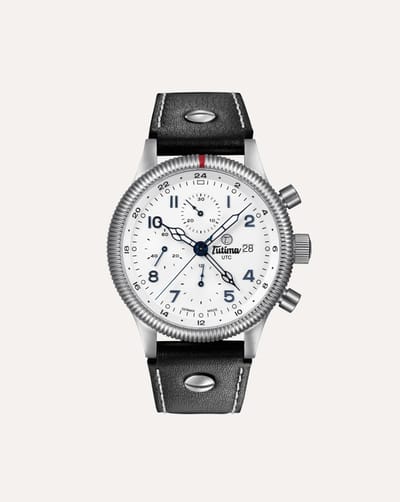
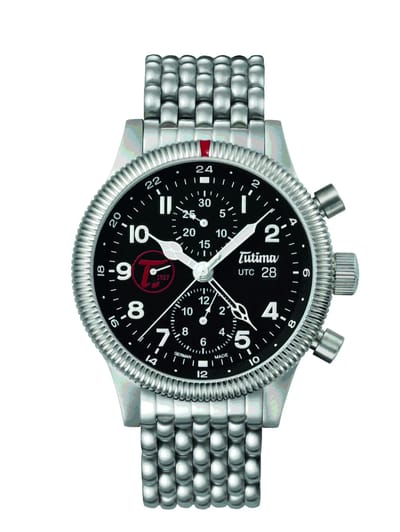
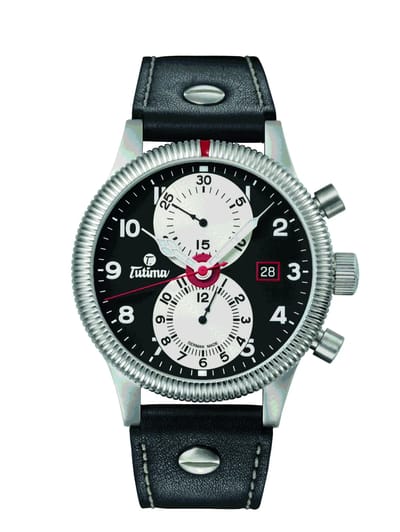
Ref. 781 series, the broadest family in the Grand Classic line with over a dozen reference numbers cataloged from 2011. Valjoux 7750 base for the standard chronograph and F2 sub-variants; Valjoux 7754 for the UTC and Havanna sub-variants, adding an independently adjustable 24-hour hand. The PR sub-variant (Ref. 781-21) added a modified power reserve module. UTC variants (Ref. 781-04) measured 43 mm at 15.9 mm height. All shared the Grand Classic’s bidirectional rotating bezel with red marker and sapphire caseback. 10 bar.
 Archive · 2007-2014 Image shows Ref. 781-25 — strap, bracelet, dial, date, or finish may differ
 Grand Classic Chrono UTC 781-28
Ref. 781-28
Archive · 2007-2014 Image shows Ref. 781-25 — strap, bracelet, dial, date, or finish may differ Grand Classic Chrono UTC 781-26
Ref. 781-26
Archive · 2007-2014 Grand Classic Chrono UTC 781-25
Ref. 781-25
Archive · 2007-2014 Image shows Ref. 781-25 — strap, bracelet, dial, date, or finish may differ Grand Classic Chrono UTC 781-18
Ref. 781-18
 Archive · 2007-2014
 Grand Classic Chrono UTC 781-04
Ref. 781-04
Archive · 2007-2014 Image shows Ref. 781-25 — strap, bracelet, dial, date, or finish may differ Grand Classic Chrono UTC 781-03
Ref. 781-03
 Archive · 2007-2014
 Grand Classic Chrono UTC 781-01
Ref. 781-01
Launched in 2007 for Tutima’s 80th anniversary — eighty years after Ernst Kurtz founded UROFA in Glashütte — the Grand Classic was the last major case platform designed in Ganderkesee and the first built to house Glashütte-finished movements. Coin-edge rotating bezel with red reference marker, ETA 2836-2, day/date, sapphire caseback, 43 mm case. Production of Tutima watches began in the restored Glashütte building on March 1, 2008, and the Grand Classic bridged that transition from Lower Saxony to Saxony. The 43 mm case architecture became the template for the Grand Flieger line that followed.
 Archive · 2007-2014
 Grand Classic Chronograph PR 781-21
Ref. 781-21
 Archive · 2007-2014
 Grand Classic Chronograph F2 781-11
Ref. 781-11
 Archive · 2007-2014
 Grand Classic Chronograph 781-05
Ref. 781-05
Ref. 750 series, cataloged from 1999. The “TL” designation stood for Titan-Lünette: a 43 mm titanium case with bidirectional ratcheted 60-minute bezel — the key distinction from the fixed-bezel T series (Ref. 760). Same Lemania 5100 movement as the Bundeswehr-issue Ref. 798, same 20 bar and 15,000 m altitude rating. The TL preceded the formal NATO designation and remained in the catalog through 2014.
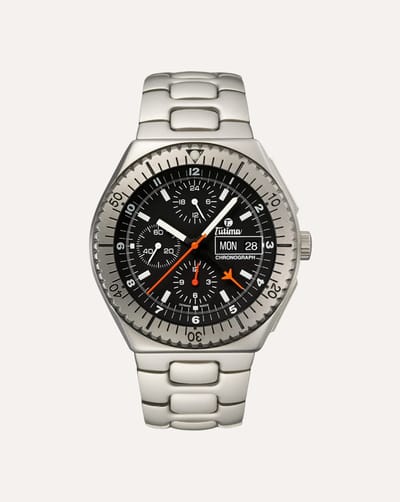 Archive · 1999-2008 Image shows Ref. 750-02 — strap, bracelet, dial, date, or finish may differ
 Military Fliegerchronograph TL 750-22
Ref. 750-22
Archive · 1999-2008 Image shows Ref. 750-02 — strap, bracelet, dial, date, or finish may differ Military Fliegerchronograph TL 750-04
Ref. 750-04
Archive · 1999-2008 Image shows Ref. 750-02 — strap, bracelet, dial, date, or finish may differ Military Fliegerchronograph TL 750-03
Ref. 750-03
Archive · 1999-2008 Military Fliegerchronograph TL 750-02
Ref. 750-02
Archive · 1999-2008 Image shows Ref. 750-02 — strap, bracelet, dial, date, or finish may differ Military Fliegerchronograph TL 750-01
Ref. 750-01
Licensed by EADS (now Airbus Defence and Space) for the multinational Eurofighter Typhoon program — the only formally licensed aviation-manufacturer partnership in Tutima’s catalog, distinct from the Flieger line’s generic military references. Ref. 780-59, Valjoux 7754 with 24-hour second time zone and rotating bezel, 38.7 mm case. The sapphire caseback carries an engraved silhouette of the Typhoon fighter, identifying the aircraft program directly. The Typhoon entered service in 2003 with air forces from Germany, the UK, Italy, and Spain; alligator strap with folding clasp.
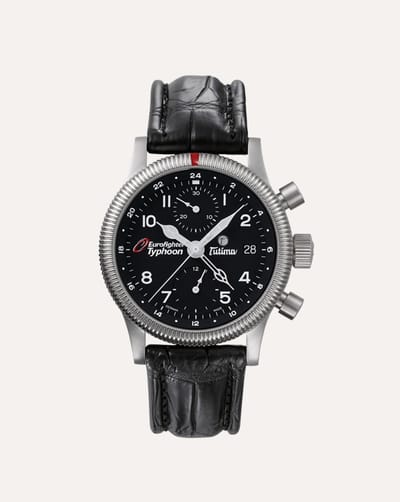 Archive · 2006-2010 Image shows Ref. 780-59 — strap, bracelet, dial, date, or finish may differ
 Eurofighter Typhoon Chronograph 780-60
Ref. 780-60
Archive · 2006-2010 Eurofighter Typhoon Chronograph 780-59
Ref. 780-59
Official Eurofighter Typhoon chronograph.
Ref. 780-81 through 780-86, first cataloged on tutima.de in 2004. Modified Valjoux 7750 with an additional module driving a power reserve indicator on the subdial — 38.7 mm case, 15.8 mm height, blued hands and applied numerals across white and blue dial variants. The 2007 PR RED limited edition (Ref. 780-85/86) was restricted to 250 pieces with a red dial and red bezel marker.
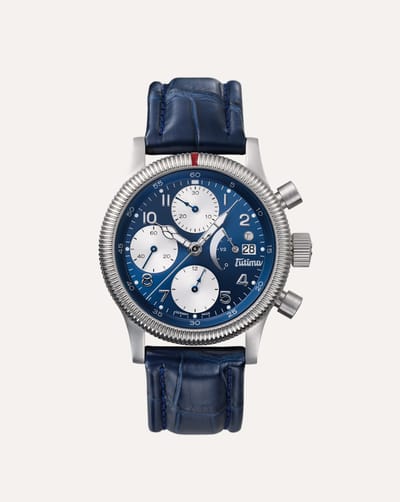 Archive · 2004-2013 Image shows Ref. 780-83 — strap, bracelet, dial, date, or finish may differ
 Flieger Chronograph F2 PR 780-86
Ref. 780-86
Archive · 2004-2013 Image shows Ref. 780-83 — strap, bracelet, dial, date, or finish may differ Flieger Chronograph F2 PR 780-85
Ref. 780-85
Archive · 2004-2013 Image shows Ref. 780-83 — strap, bracelet, dial, date, or finish may differ Flieger Chronograph F2 PR 753-21
Ref. 753-21
18-karat gold. UROFA-lineage movement.
Archive · 2004-2013 Image shows Ref. 780-83 — strap, bracelet, dial, date, or finish may differ Flieger Chronograph F2 PR 780-84
Ref. 780-84
Archive · 2004-2013 Flieger Chronograph F2 PR 780-83
Ref. 780-83
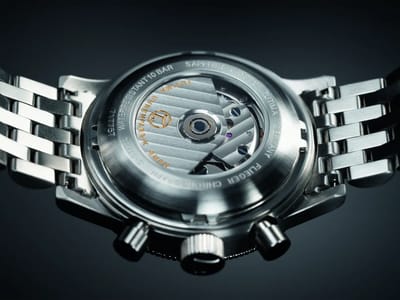 Archive · 2004-2013
 Flieger Chronograph F2 PR 780-82
Ref. 780-82
Archive · 2004-2013 Image shows Ref. 780-83 — strap, bracelet, dial, date, or finish may differ Flieger Chronograph F2 PR 780-81
Ref. 780-81
Ref. 780 series, produced in Ganderkesee from the late 1990s. The F2 transitioned the Flieger from the military-grade Lemania 5100 to the Valjoux 7750 automatic — taking the pilot chronograph from Bundeswehr instrument to consumer line while keeping the coin-edge bezel and screw-down crown. 38.7 mm case, 15.3 mm height, day/date, bidirectional rotating bezel. The platform spawned PR (power reserve), UTC (second time zone), and 18-karat gold variants (Ref. 754), and Eurofighter pilots later chose it as the basis for the Typhoon special edition.
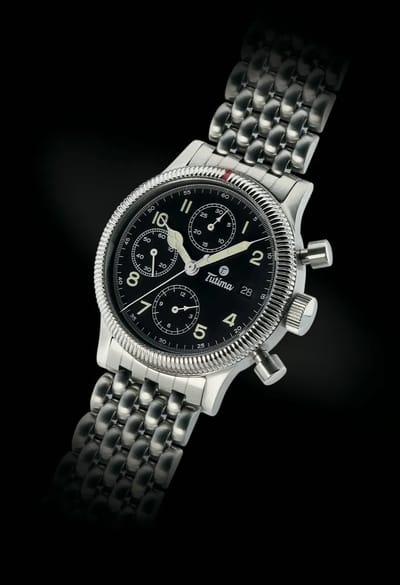 Archive · 1999-2013 Image shows Ref. 780-01 — strap, bracelet, dial, date, or finish may differ
 Flieger Chronograph F2 780-12
Ref. 780-12
Archive · 1999-2013 Image shows Ref. 780-01 — strap, bracelet, dial, date, or finish may differ Flieger Chronograph F2 780-11
Ref. 780-11
Archive · 1999-2013 Image shows Ref. 780-01 — strap, bracelet, dial, date, or finish may differ Flieger Chronograph F2 780-02
Ref. 780-02
Archive · 1999-2013 Flieger Chronograph F2 780-01
Ref. 780-01
Archive · 1999-2013 Image shows Ref. 780-01 — strap, bracelet, dial, date, or finish may differ Flieger Chronograph F2 754-12
Ref. 754-12
Archive · 1999-2013 Image shows Ref. 780-01 — strap, bracelet, dial, date, or finish may differ Flieger Chronograph F2 754-11
Ref. 754-11
Archive · 1999-2013 Image shows Ref. 780-01 — strap, bracelet, dial, date, or finish may differ Flieger Chronograph F2 754-02
Ref. 754-02
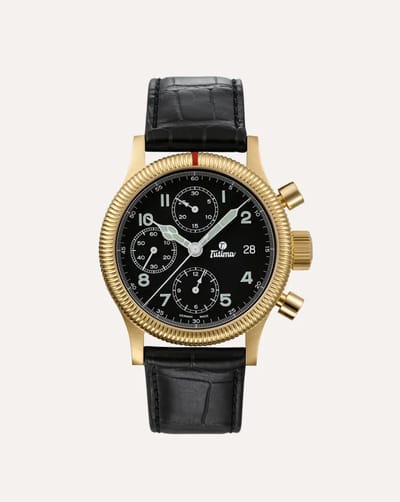 Archive · 1999-2013
 Flieger Chronograph F2 754-01
Ref. 754-01
Archive · 1999-2013 Image shows Ref. 780-01 — strap, bracelet, dial, date, or finish may differ Flieger Chronograph F2 780-32
Ref. 780-32
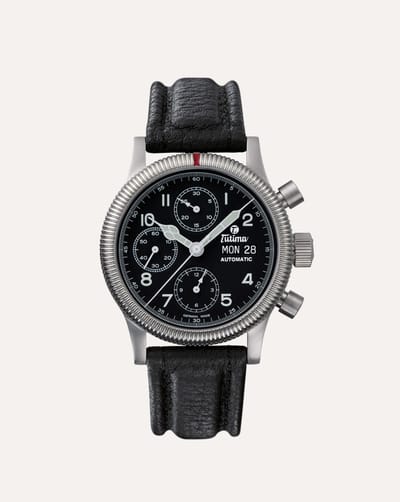 Archive · 1999-2013
 Flieger Chronograph F2 780-31
Ref. 780-31
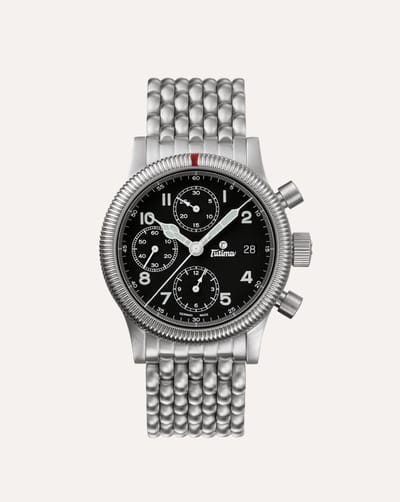 Archive · 1999-2013
 Flieger Chronograph F2 780-22
Ref. 780-22
Archive · 1999-2013 Image shows Ref. 780-01 — strap, bracelet, dial, date, or finish may differ Flieger Chronograph F2 780-21
Ref. 780-21
Ref. 629 series, first appearing on tutima.de in 2004. Pure titanium case, 43.8 mm diameter, 12.5 mm height, 30 bar (300 m) — Tutima’s step beyond the 200-metre Pacific into professional dive depth. ETA 2836-2, 25 jewels, screw-in titanium crown, signal orange dial available (Ref. 629-12). In the summer of 2005, after the Kieler Woche, Tutima towed a DI 300 on a line behind its racing yacht during the Nord/LB Baltic Sprint Cup — 26 days, 2,000 nautical miles (3,700 km) through Baltic salt water. The watch was still running accurately at the end. The X-35 World Championship edition (Ref. 629-16, 2007) carried a special caseback engraving. DI 300 Black (Ref. 629-51) added PVD-coated titanium for reduced underwater reflection.
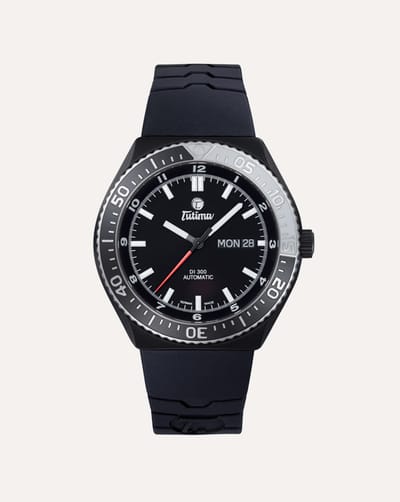 Archive · 2004-2016
 DI 300 Black 629-51
Ref. 629-51
300 meters. Titanium. Tutima’s first professional dive watch.
Archive · 2004-2016 Image shows Ref. 629-51 — strap, bracelet, dial, date, or finish may differ DI 300 629-05
Ref. 629-05
300 meters. Titanium. Tutima’s first professional dive watch.
Archive · 2004-2016 Image shows Ref. 629-51 — strap, bracelet, dial, date, or finish may differ DI 300 629-16
Ref. 629-16
300 meters. Titanium. Tutima’s first professional dive watch.
Archive · 2004-2016 Image shows Ref. 629-51 — strap, bracelet, dial, date, or finish may differ DI 300 629-15
Ref. 629-15
300 meters. Titanium. Tutima’s first professional dive watch.
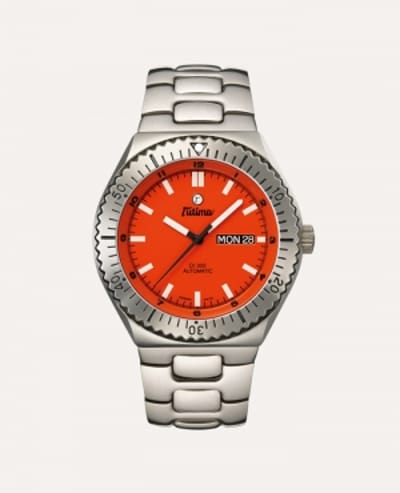 Archive · 2004-2016
 DI 300 629-12
Ref. 629-12
300 meters. Titanium. Tutima’s first professional dive watch.
Archive · 2004-2016 Image shows Ref. 629-51 — strap, bracelet, dial, date, or finish may differ DI 300 629-11
Ref. 629-11
300 meters. Titanium. Tutima’s first professional dive watch.
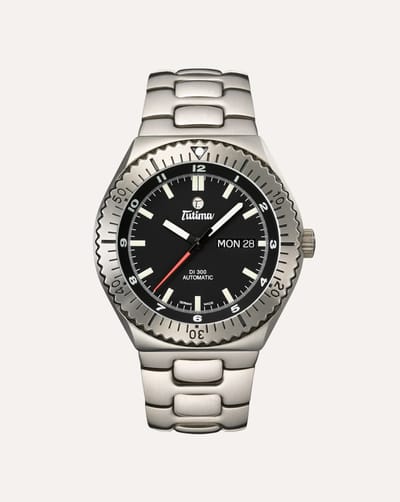 Archive · 2004-2016
 DI 300 629-02
Ref. 629-02
300 meters. Titanium. Tutima’s first professional dive watch.
Archive · 2004-2016 Image shows Ref. 629-51 — strap, bracelet, dial, date, or finish may differ DI 300 629-01
Ref. 629-01
300 meters. Titanium. Tutima’s first professional dive watch.
Titanium variant of the NATO Chronograph, cataloged from 1999 as Ref. 760. The 43.2 mm pure titanium case reduced wrist weight by roughly 40% over the steel Ref. 798 while adding anti-magnetic shielding and 7G shock resistance. Rated to 20 bar and compression-tested to 15,000 m altitude. The Commando II (Ref. 760-42), designated “Einsatzuhr,” was the variant issued to special-forces units with titanium bracelet.
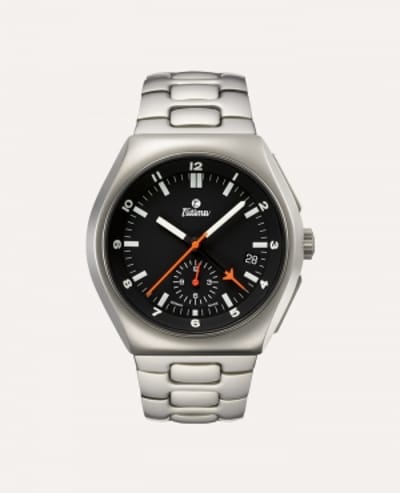 Archive · 1987-2008 Image shows Ref. 760-42 — strap, bracelet, dial, date, or finish may differ
 Military NATO Chronograph T 760-52
Ref. 760-52
Archive · 1987-2008 Military NATO Chronograph T 760-42
Ref. 760-42
Commando II. Special-forces issue.
Archive · 1987-2008 Image shows Ref. 760-42 — strap, bracelet, dial, date, or finish may differ Military NATO Chronograph T 760-41
Ref. 760-41
Archive · 1987-2008 Image shows Ref. 760-42 — strap, bracelet, dial, date, or finish may differ Military NATO Chronograph T 760-32
Ref. 760-32
Archive · 1987-2008 Image shows Ref. 760-42 — strap, bracelet, dial, date, or finish may differ Military NATO Chronograph T 760-22
Ref. 760-22
Archive · 1987-2008 Image shows Ref. 760-42 — strap, bracelet, dial, date, or finish may differ Military NATO Chronograph T 760-04
Ref. 760-04
Archive · 1987-2008 Image shows Ref. 760-42 — strap, bracelet, dial, date, or finish may differ Military NATO Chronograph T 760-03
Ref. 760-03
 Archive · 1987-2008
 Military NATO Chronograph T 760-02
Ref. 760-02
 Archive · 1987-2008
 Military NATO Chronograph T 760-01
Ref. 760-01
Ref. 637/638, produced in Ganderkesee from the late 1990s. The 36.2 mm case and 10.2 mm height made this the most compact Flieger in the catalog — a three-hand ETA 2836-2 with bidirectional bezel and instrument-dial layout unchanged from the larger models. Higher-spec Ref. 637 variants had perlage decoration and Geneva stripes on the rotor, visible through the sapphire caseback. 10 bar water resistance.
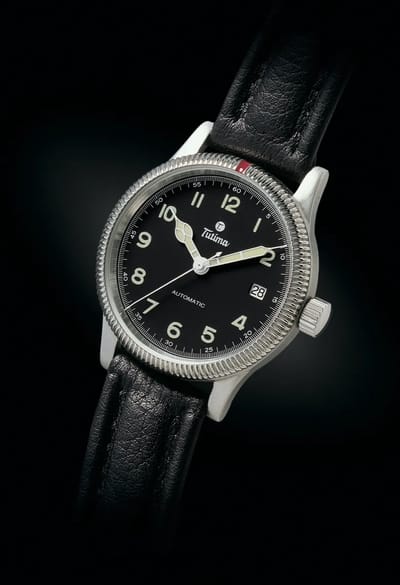 Archive · 1999-2013 Image shows Ref. 638-01 — strap, bracelet, dial, date, or finish may differ
 Flieger Automatic (36mm) 638-02
Ref. 638-02
Archive · 1999-2013 Flieger Automatic (36mm) 638-01
Ref. 638-01
Archive · 1999-2013 Image shows Ref. 638-01 — strap, bracelet, dial, date, or finish may differ Flieger Automatic (36mm) 637-05
Ref. 637-05
Archive · 1999-2013 Image shows Ref. 638-01 — strap, bracelet, dial, date, or finish may differ Flieger Automatic (36mm) 637-03
Ref. 637-03
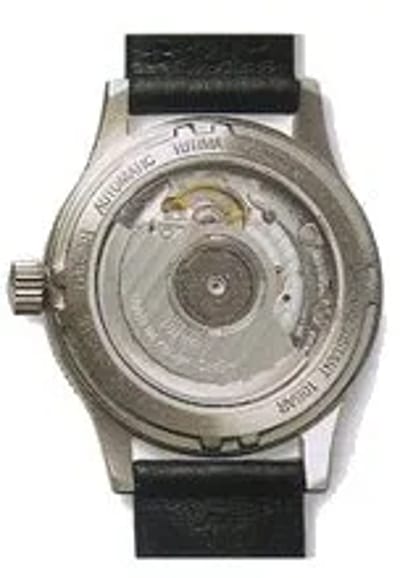 Archive · 1999-2013
 Flieger Automatic (36mm) 637-02
Ref. 637-02
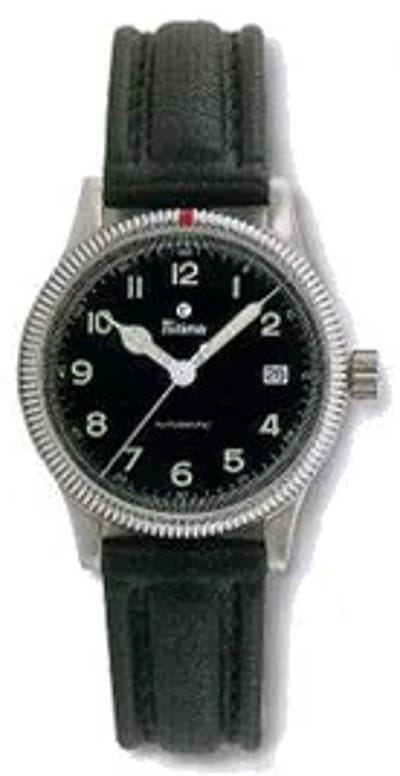 Archive · 1999-2013
 Flieger Automatic (36mm) 637-01
Ref. 637-01
The 1985 reissue of the 1941 original, built to the same 38.7 mm case diameter and three-register layout as the UROFA Cal. 59 Flieger. The original Cal. 59 was the first German chronograph to combine both addition stopwatch timing (Additionsstoppung) and flyback function (Tempostopp) in a single watch. The 1941 case was nickel-plated brass with a screw-down caseback. Ref. 783 in steel, Ref. 753 in 18-karat gold. Founder Ernst Kurtz’s brother Walter was a test pilot — the aviation connection was personal. Die Welt profiled Tutima in 1986, one of Germany’s leading newspapers recognizing the reissue of a watch produced roughly 30,000 times before 1945.
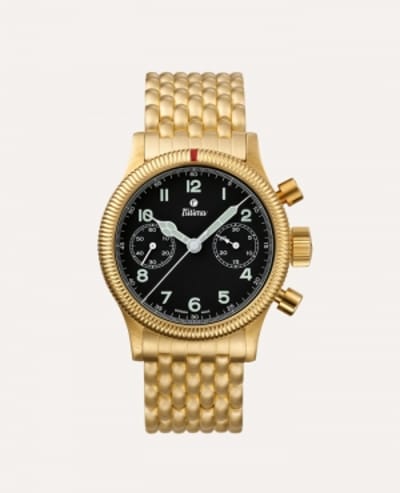 Archive · 1994-2013
 Classic Flieger Chronograph 753-02
Ref. 753-02
18-karat gold. UROFA-lineage movement.
Archive · 1994-2013 Image shows Ref. 753-02 — strap, bracelet, dial, date, or finish may differ Classic Flieger Chronograph 753-01
Ref. 753-01
18-karat gold. UROFA-lineage movement.
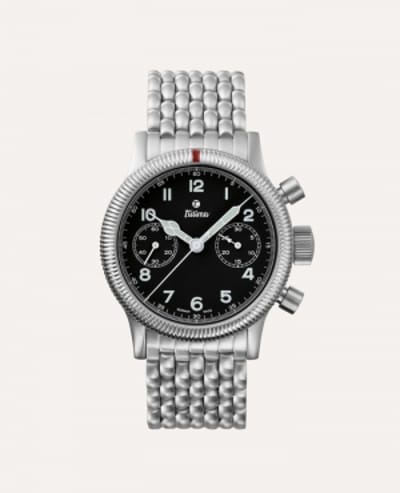 Archive · 1994-2013
 Classic Flieger Chronograph 783-02
Ref. 783-02
1985 reissue of the 1941 Flieger Chronograph.
 Archive · 1994-2013
 Classic Flieger Chronograph 783-01
Ref. 783-01
1985 reissue of the 1941 Flieger Chronograph.
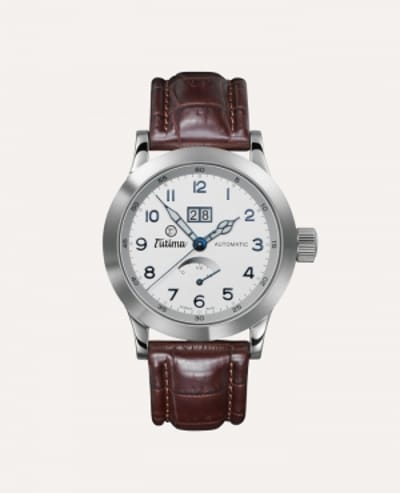
Ref. 644, announced 2007 as the steel counterpart to the 18-karat rose gold Valeo (Ref. 640). “Valeo” is Latin for “to have strength” — like “Tutima” itself (from “tutus,” safe), derived from Latin. The same ETA 2892-A2/Tutima module with 28 jewels, two-wheel big date, and power reserve indicator, now in a 38.5 mm polished steel case with satinized bezel. Six reference numbers across silver, blue, and anthracite dials with Louisiana alligator strap or steel bracelet. 10 bar.
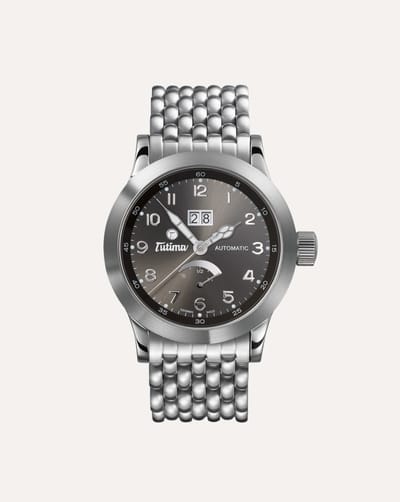 Archive · 2007-2014
 Valeo Reserve 644-06
Ref. 644-06
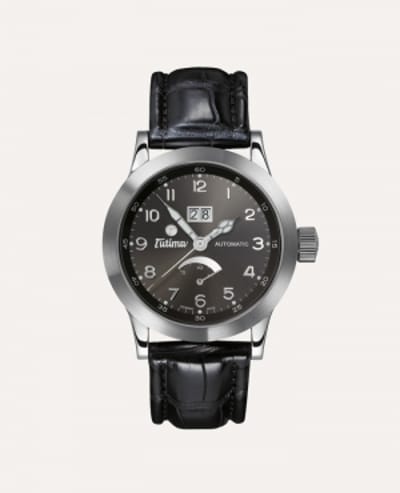 Archive · 2007-2014
 Valeo Reserve 644-05
Ref. 644-05
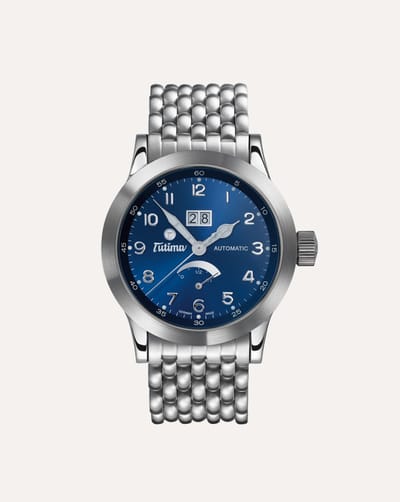 Archive · 2007-2014
 Valeo Reserve 644-04
Ref. 644-04
Archive · 2007-2014 Image shows Ref. 644-06 — strap, bracelet, dial, date, or finish may differ Valeo Reserve 644-03
Ref. 644-03
Archive · 2007-2014 Image shows Ref. 644-06 — strap, bracelet, dial, date, or finish may differ Valeo Reserve 644-02
Ref. 644-02
 Archive · 2007-2014
 Valeo Reserve 644-01
Ref. 644-01
Ref. 640, announced 2007 alongside the steel Ref. 644. Valeo — Latin for “to have power” — named in the same classical tradition as Tutima itself (from tutus, safe). The ETA 2892-A2/Tutima base carries 28 jewels (seven more than the stock movement), modified with an additional module for the two-wheel big date and power reserve indicator. 38.5 mm case, 11 mm height, solid 18-karat rose gold with satinized bezel. Silver, blue, or anthracite dials on Louisiana alligator strap with gold folding clasp.
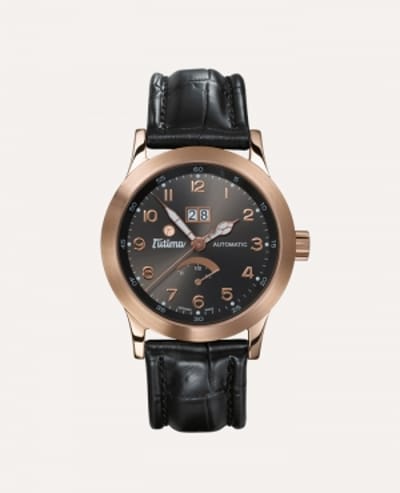 Archive · 2007-2014
 Valeo Reserve Gold 640-03
Ref. 640-03
18-karat rose gold. Power reserve display.
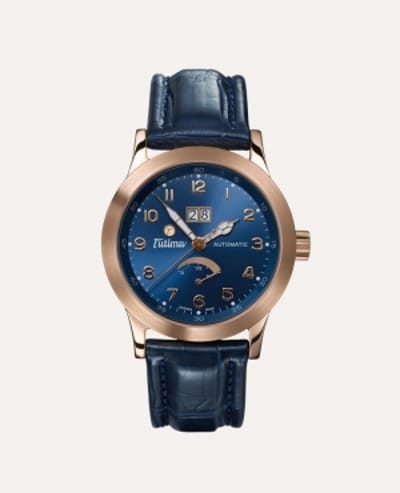 Archive · 2007-2014
 Valeo Reserve Gold 640-02
Ref. 640-02
18-karat rose gold. Power reserve display.
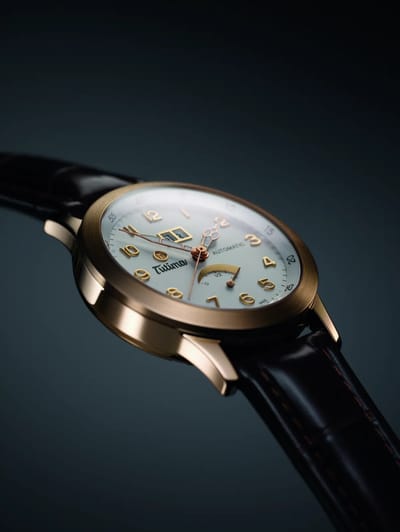 Archive · 2007-2014
 Valeo Reserve Gold 640-01
Ref. 640-01
18-karat rose gold. Power reserve display.
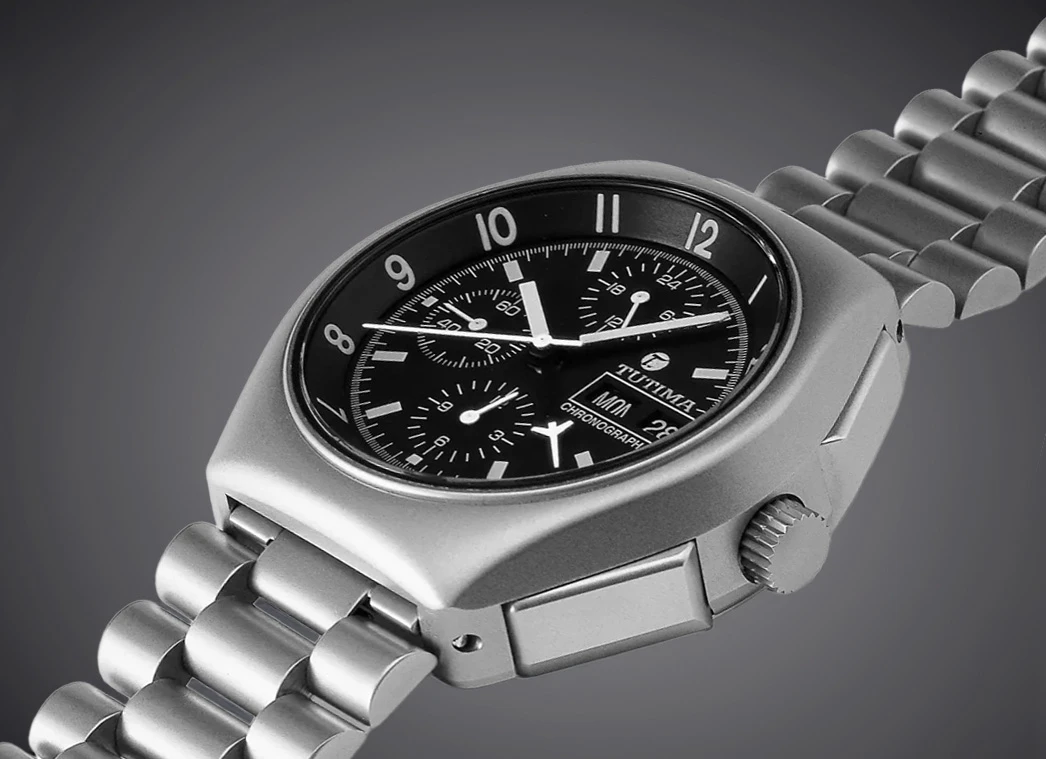
Ref. 798 — Bundeswehr standard issue since 1984
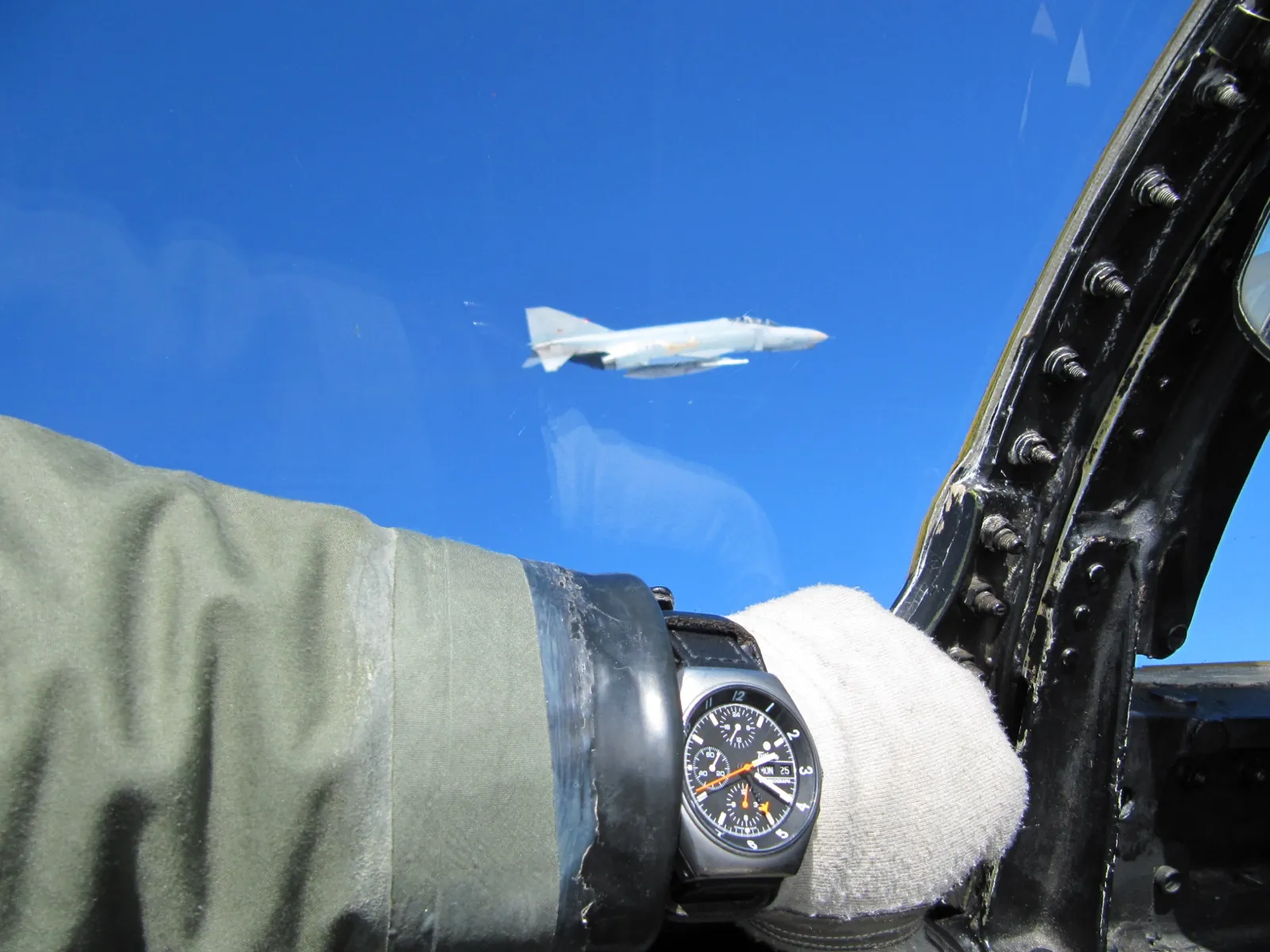
On patrol — F-4 Phantom, NATO Chronograph visible
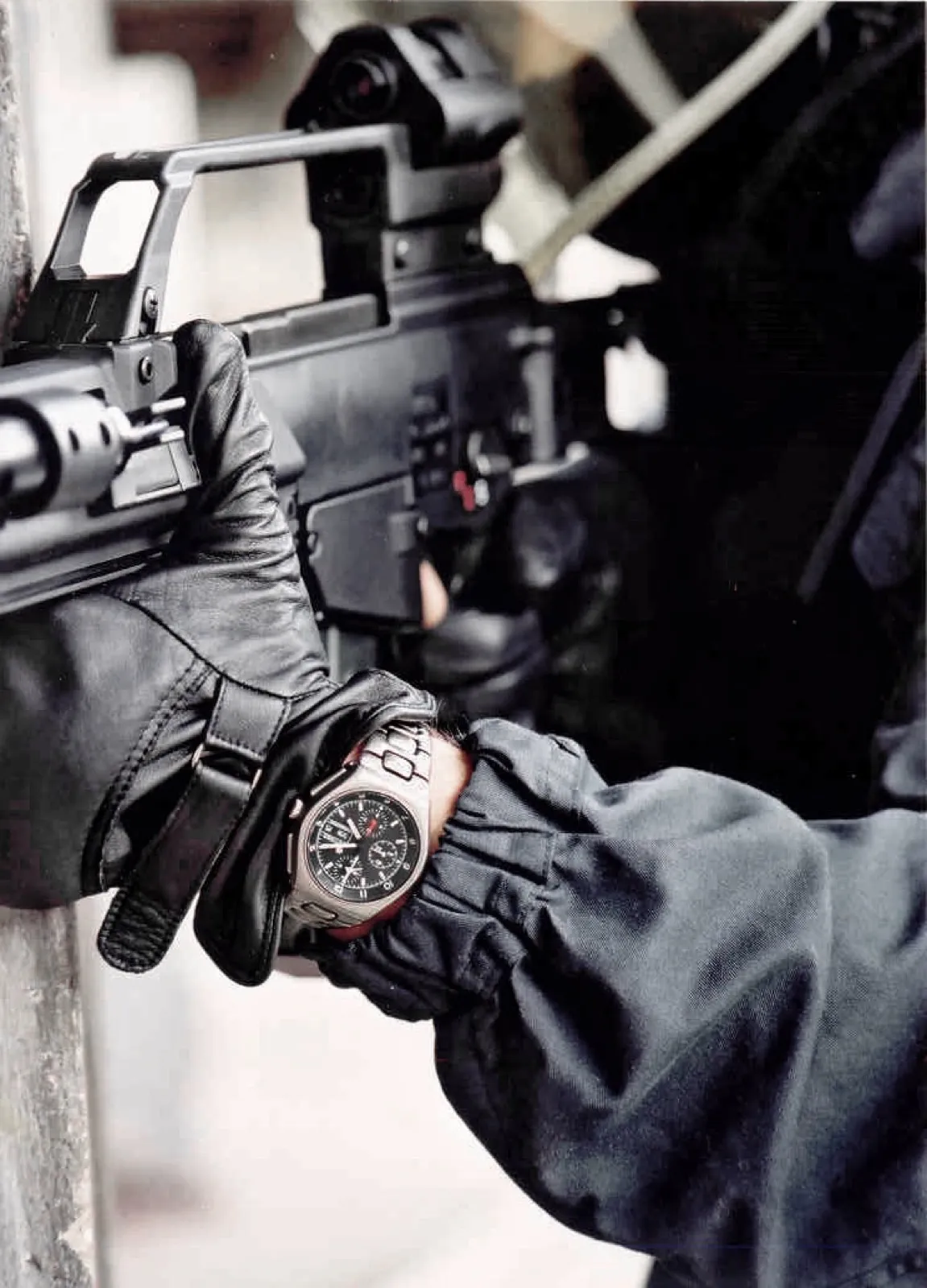
ZKA operator — Tutima in special forces service
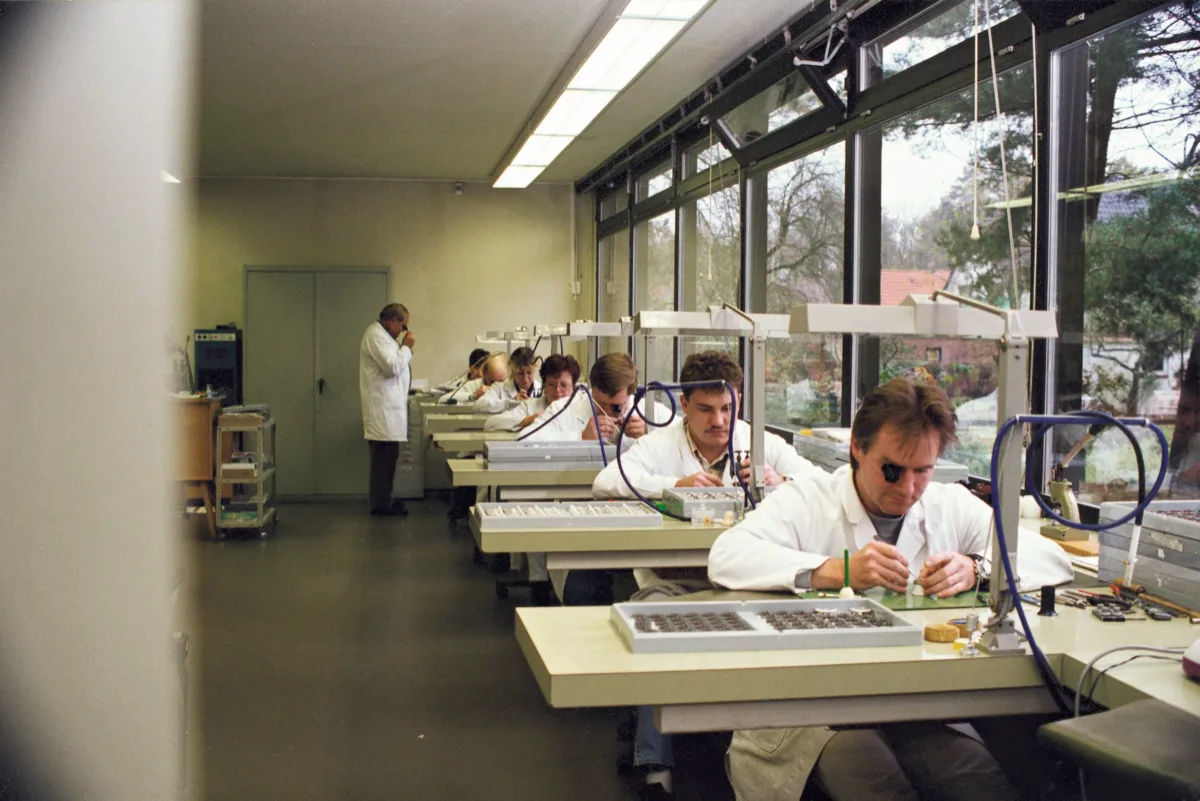
The Ganderkesee workshop
2008–
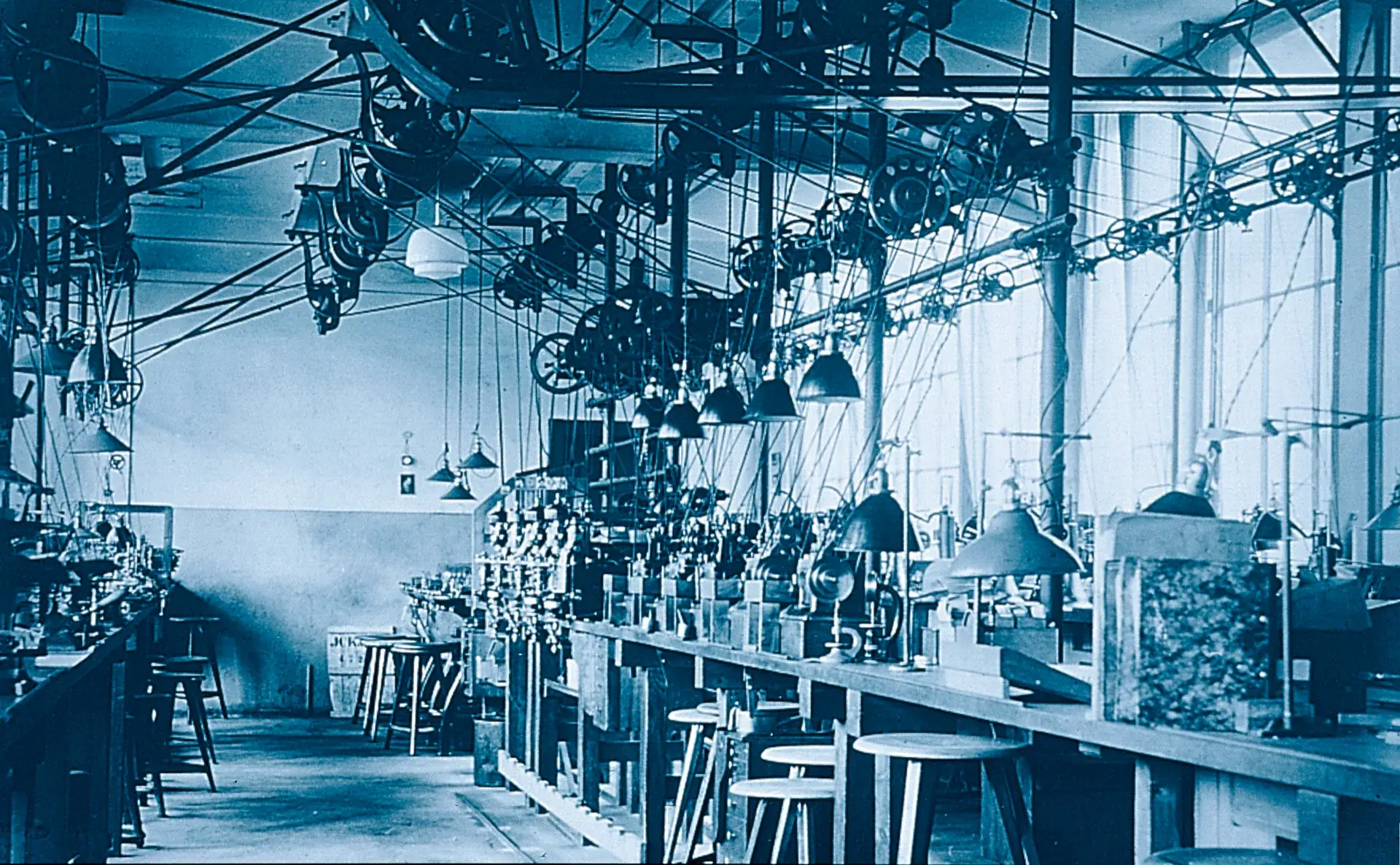
Return to Glashütte
“The day the Berlin Wall fell, Dieter Delecate drove east to bring it back.”
Dieter Delecate drove east the day the Berlin Wall fell. It took nineteen years, but he brought Tutima back. Production began March 1, 2008, in the former Bahnmeisterei on Altenberger Straße 6. The Glashütte era produced the first in-house calibers: Cal. 617 and Cal. 630.
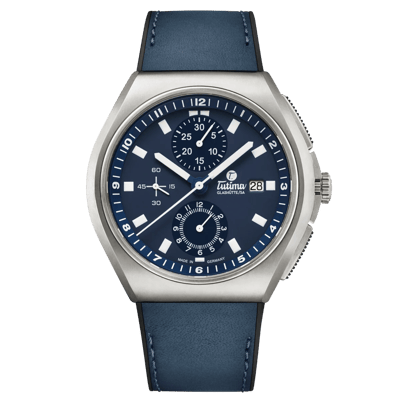 Archive · 2019–2023
 M2 Coastline Chronograph Blue Rubber
Ref. 6430-06
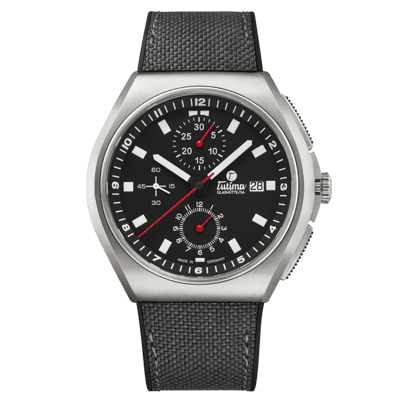 Archive · 2019–2023
 M2 Coastline Chronograph Rubber
Ref. 6430-05
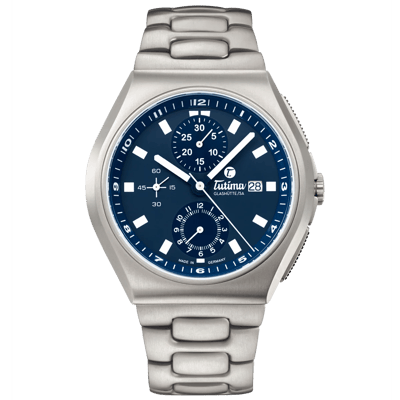 Archive · 2019–2023
 M2 Coastline Chronograph Blue Titanium
Ref. 6430-04
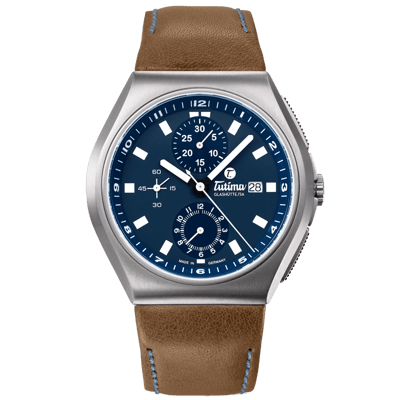 Archive · 2019–2023
 M2 Coastline Chronograph Blue Leather
Ref. 6430-03
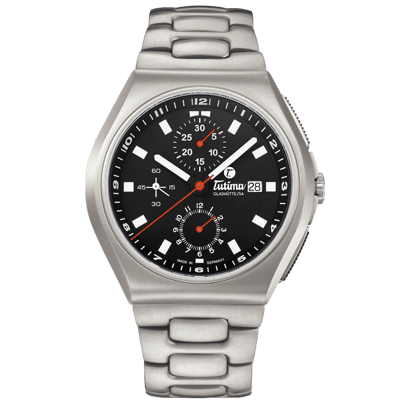 Archive · 2019–2023
 M2 Coastline Chronograph Titanium Bracelet
Ref. 6430-02
Ref. 610 series, recovered from tutima.net archives (2012). A 36.4 mm polished case at 11.7 mm height — scaled down from the 43 mm Grand Classic but retaining the same ETA 2836-2 automatic (25 jewels, day/date) rather than substituting a smaller or simpler movement. Mother-of-pearl dial, bidirectional rotating bezel with red marker. Four reference numbers across leather strap and steel bracelet, some with applied numerals. 10 bar water resistance.
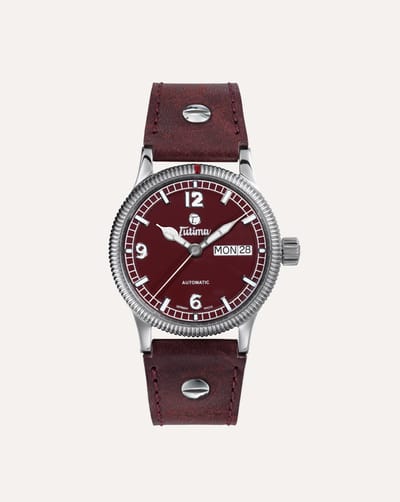 Archive · 2010-2014
 Grand Classic Ladies 610-05
Ref. 610-05
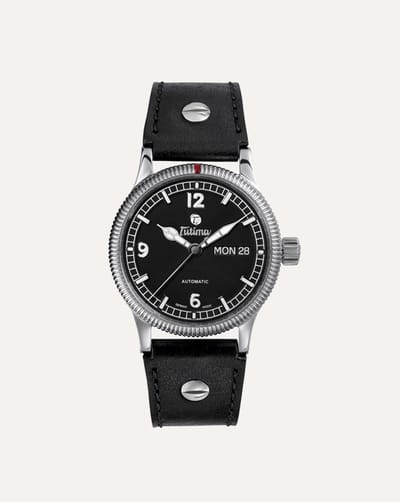 Archive · 2010-2014
 Grand Classic Ladies 610-03
Ref. 610-03
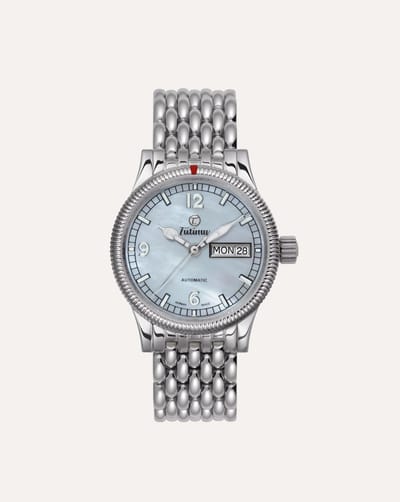 Archive · 2010-2014
 Grand Classic Ladies 610-02
Ref. 610-02
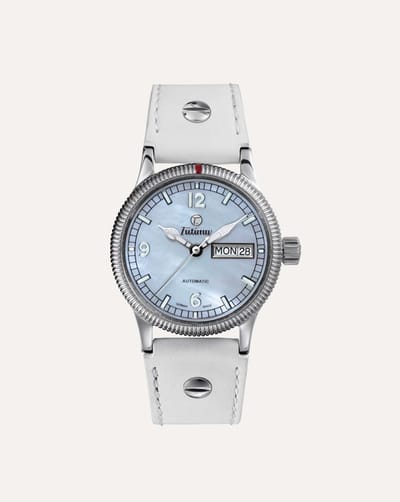 Archive · 2010-2014
 Grand Classic Ladies 610-01
Ref. 610-01
Ref. 677-31, added to the Pacific line around 2012. Hardened PVD-coated steel case and matching bracelet with security buckle and diver extension — the black treatment eliminated reflections that standard polished steel produces underwater. Same ETA 2836-2 automatic and unidirectional 60-minute diver bezel as the standard Pacific, same 20 bar. The PVD hardening also improved scratch resistance over the base model.
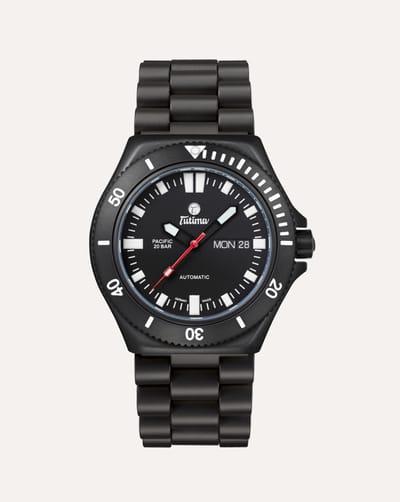 Archive · 2012-2017
 Pacific Black 677-31
Ref. 677-31
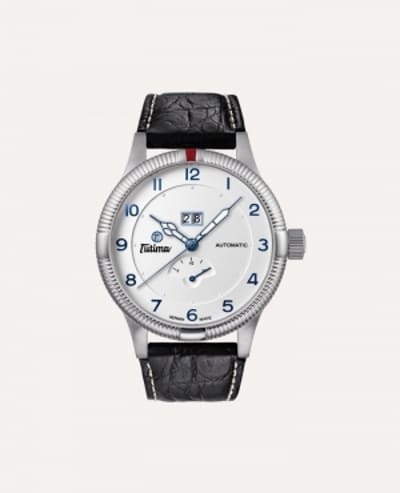
Ref. 627-01/627-02, cataloged from 2012. The Grand Classic case fitted with the same ETA 2892-A2/Tutima module used in the Valeo Reserve — 28 jewels, two-wheel big-date display, and power reserve indicator on subdial. This module added three jewels over the base ETA 2892-A2 and required Tutima-specific modifications. Bidirectional rotating bezel with red marker, applied numerals, sapphire caseback. 10 bar.
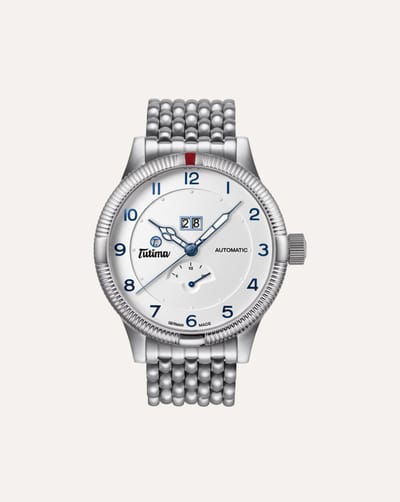 Archive · 2012-2014
 Grand Classic Reserve 627-02
Ref. 627-02
 Archive · 2012-2014
 Grand Classic Reserve 627-01
Ref. 627-01
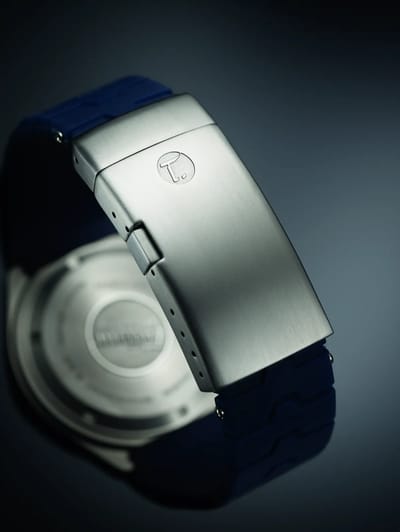
Ref. 629-17. The Pacific name applied to a DI 300-class titanium case rated to 30 bar (300 m), bridging the Pacific and DI lines. Unlike the standard DI 300’s unidirectional diver bezel, the Pacific 300 used a bidirectional 360-degree compass bezel for surface navigation. ETA 2836-2 automatic, rubber strap with security buckle and diver extension. The titanium case matched the DI 300’s specifications — the bezel function was what differentiated them.
 Archive · 2008-2014 Image shows Ref. 629-17 — strap, bracelet, dial, date, or finish may differ
 Pacific 300 629-18
Ref. 629-18
300 meters. Titanium. Tutima’s first professional dive watch.
Archive · 2008-2014 Pacific 300 629-17
Ref. 629-17
300 meters. Titanium. Tutima’s first professional dive watch.
Ref. 789-01. Solid 18-karat red gold case with ceramic bezel, launched at Baselworld 2009 and limited to 100 pieces at EUR 9,900. Valjoux 7754 chronograph with 24-hour second time zone, 43 mm case. Crown, pushers, and folding clasp also in 18-karat red gold. The sapphire caseback carries the Tutima “T” and the year “1927” — a marking shared across all Grand Classic models, referencing the year Ernst Kurtz founded UROFA in Glashütte. Alligator strap.
 Archive · 2009-2011
 Grand Classic Alpha 789-01
Ref. 789-01
Grand Classic Alpha. 18-karat red gold.
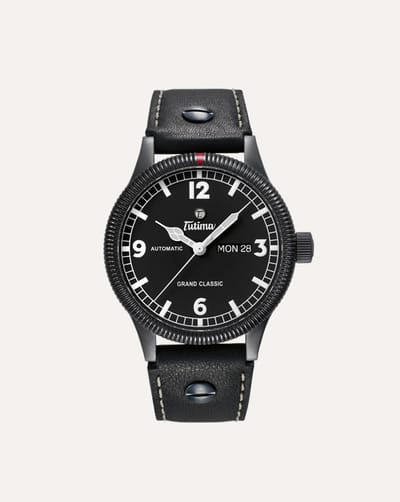
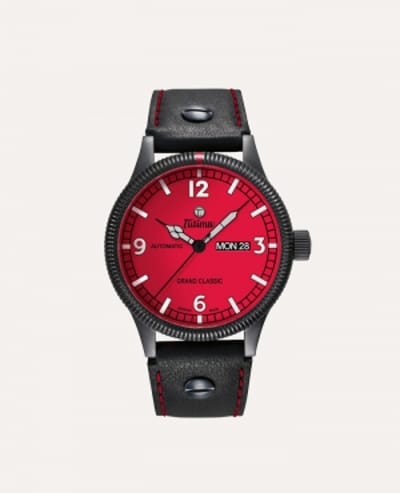
Ref. 628-11/628-13, added to the Grand Classic line around 2012. The PVD treatment hardened the steel surface and covered case, bezel, and clasp in uniform black — only the red bezel marker and dial accents provided contrast. Same ETA 2836-2 automatic with day/date and bidirectional rotating bezel as the standard Grand Classic. Leather strap with PVD-coated clasp. 10 bar water resistance, sapphire caseback.
 Archive · 2011-2014 Image shows Ref. 628-11 — strap, bracelet, dial, date, or finish may differ
 Grand Classic Black 628-12
Ref. 628-12
Archive · 2011-2014 Grand Classic Black 628-11
Ref. 628-11
Archive · 2008-2014 Image shows Ref. 628-11 — strap, bracelet, dial, date, or finish may differ Grand Classic Black 628-14
Ref. 628-14
 Archive · 2008-2014
 Grand Classic Black 628-13
Ref. 628-13
Launched in 2007 for Tutima’s 80th anniversary — eighty years after Ernst Kurtz founded UROFA in Glashütte — the Grand Classic was the last major case platform designed in Ganderkesee and the first built to house Glashütte-finished movements. Coin-edge rotating bezel with red reference marker, ETA 2836-2, day/date, sapphire caseback, 43 mm case. Production of Tutima watches began in the restored Glashütte building on March 1, 2008, and the Grand Classic bridged that transition from Lower Saxony to Saxony. The 43 mm case architecture became the template for the Grand Flieger line that followed.
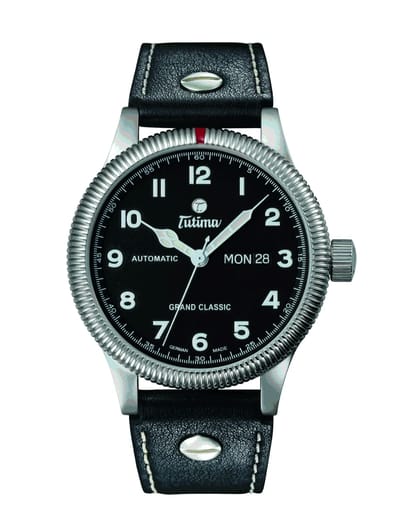 Archive · 2008-2014 Image shows Ref. 628-07 — strap, bracelet, dial, date, or finish may differ
 Grand Classic Automatic 628-21
Ref. 628-21
Archive · 2008-2014 Image shows Ref. 628-07 — strap, bracelet, dial, date, or finish may differ Grand Classic Automatic 628-08
Ref. 628-08
Archive · 2008-2014 Grand Classic Automatic 628-07
Ref. 628-07
Archive · 2008-2014 Image shows Ref. 628-07 — strap, bracelet, dial, date, or finish may differ Grand Classic Automatic 628-06
Ref. 628-06
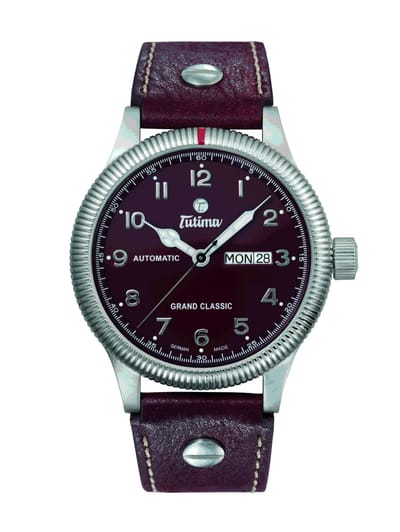 Archive · 2008-2014
 Grand Classic Automatic 628-05
Ref. 628-05
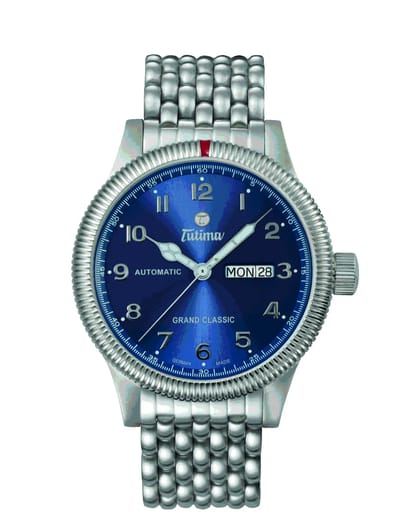 Archive · 2008-2014
 Grand Classic Automatic 628-04
Ref. 628-04
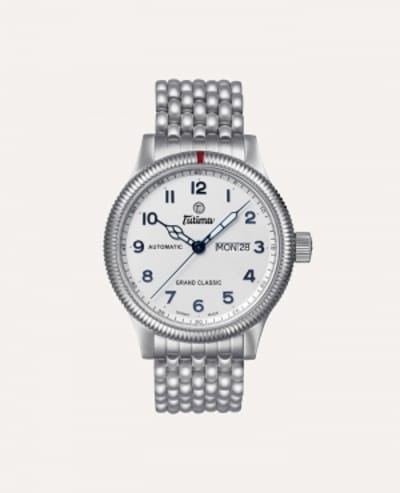 Archive · 2008-2014
 Grand Classic Automatic 628-02
Ref. 628-02
Archive · 2008-2014 Image shows Ref. 628-07 — strap, bracelet, dial, date, or finish may differ Grand Classic Automatic 628-01
Ref. 628-01
Ref. 677 series, appearing on tutima.net from 2011. Second-generation Pacific, advancing the Ref. 670 design with anti-reflective sapphire, SuperLumiNova, and a 60-minute dive scale on the bezel. ETA 2836-2 automatic, 25 jewels, 20 bar. The security buckle and diver extension — absent on the original — were standard. Ref. 677-05 (2012) introduced a carbon fiber dial.
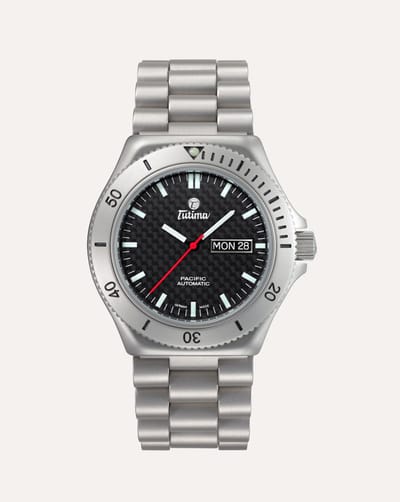 Archive · 2010-2017
 Pacific 677-05
Ref. 677-05
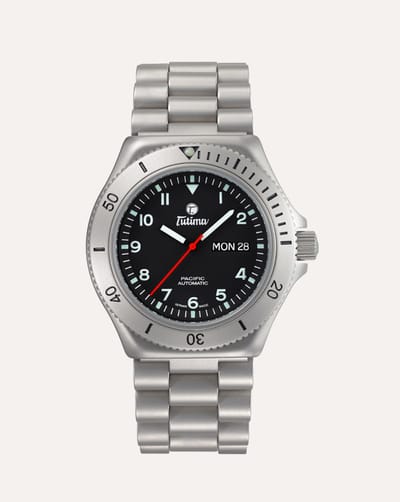 Archive · 2010-2017
 Pacific 677-03
Ref. 677-03
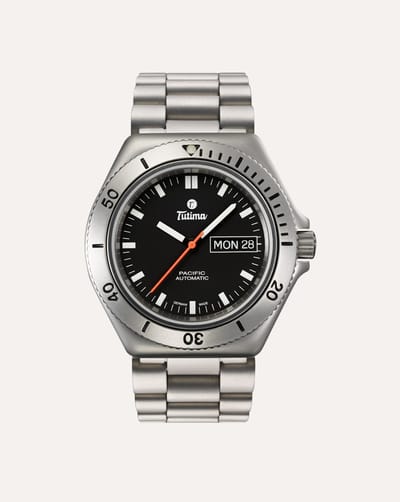 Archive · 2010-2017
 Pacific 677-01
Ref. 677-01
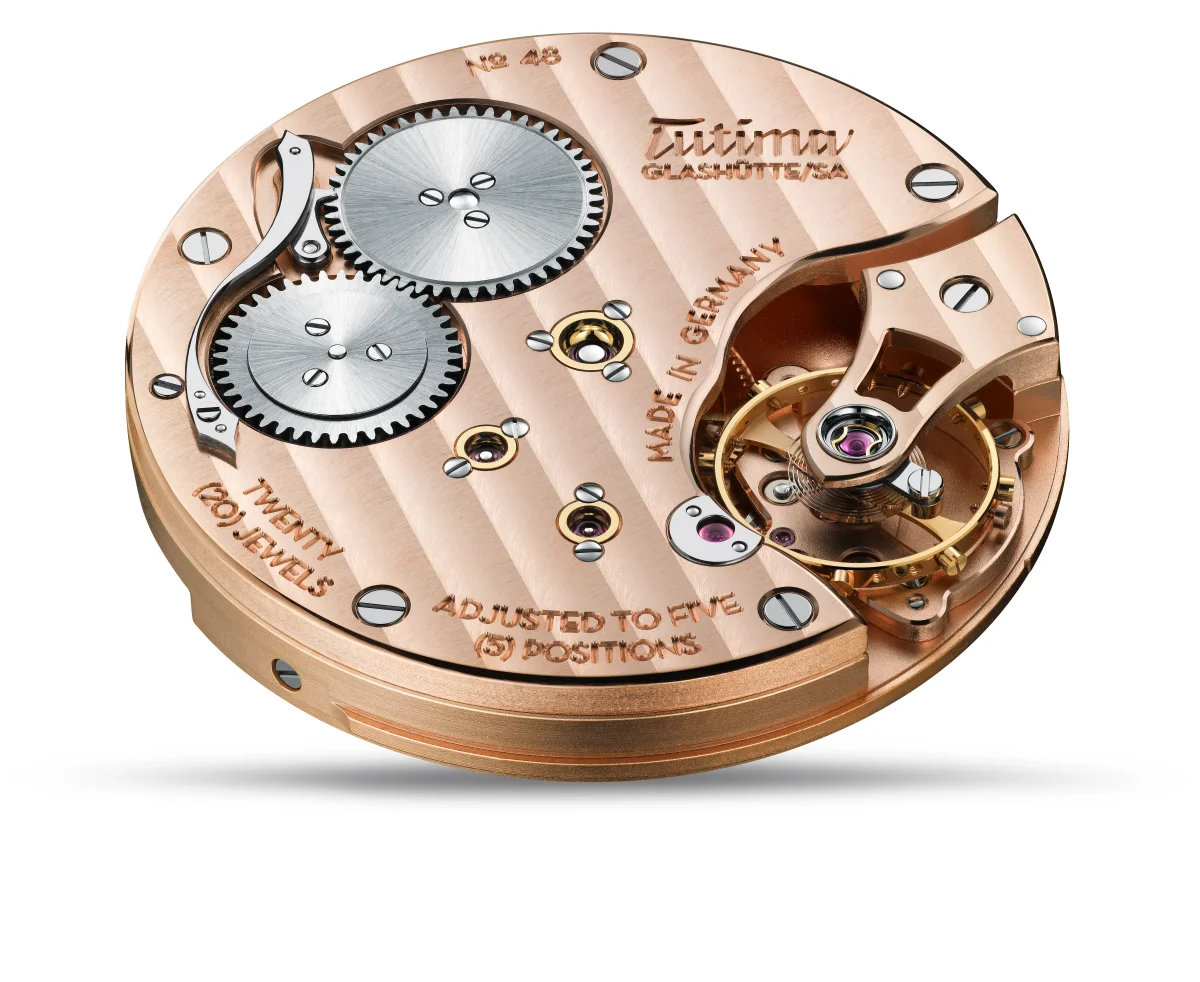
Cal. 617 — the foundation of modern Tutima
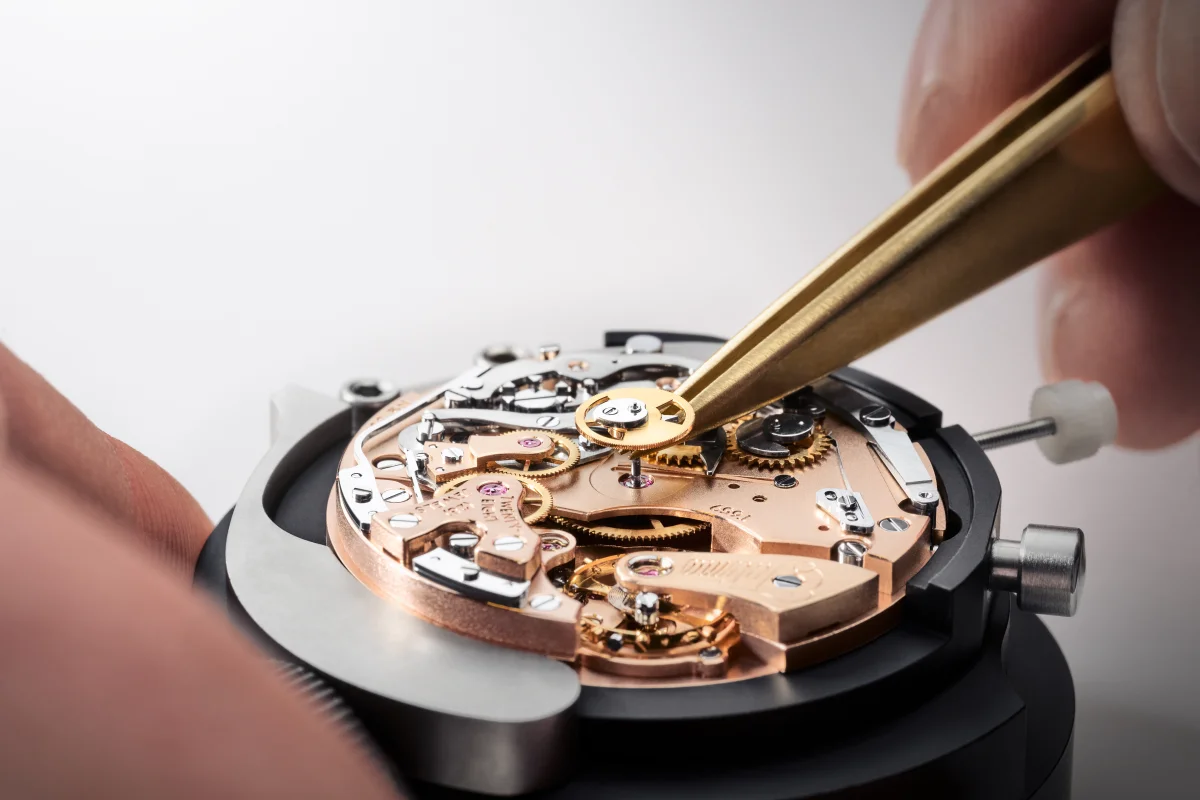
Hand assembly — Cal. 617 in the Glashütte workshop
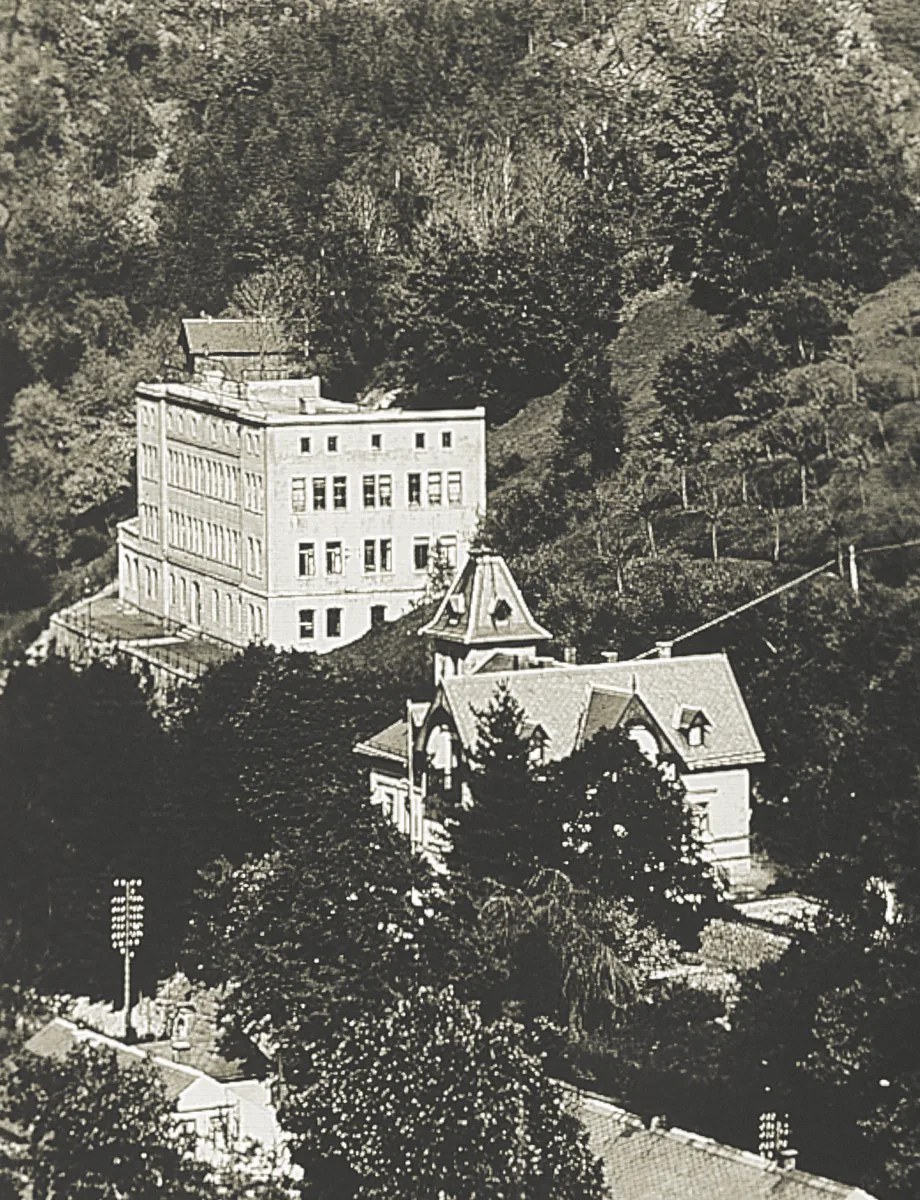
The original UFAG building in Glashütte
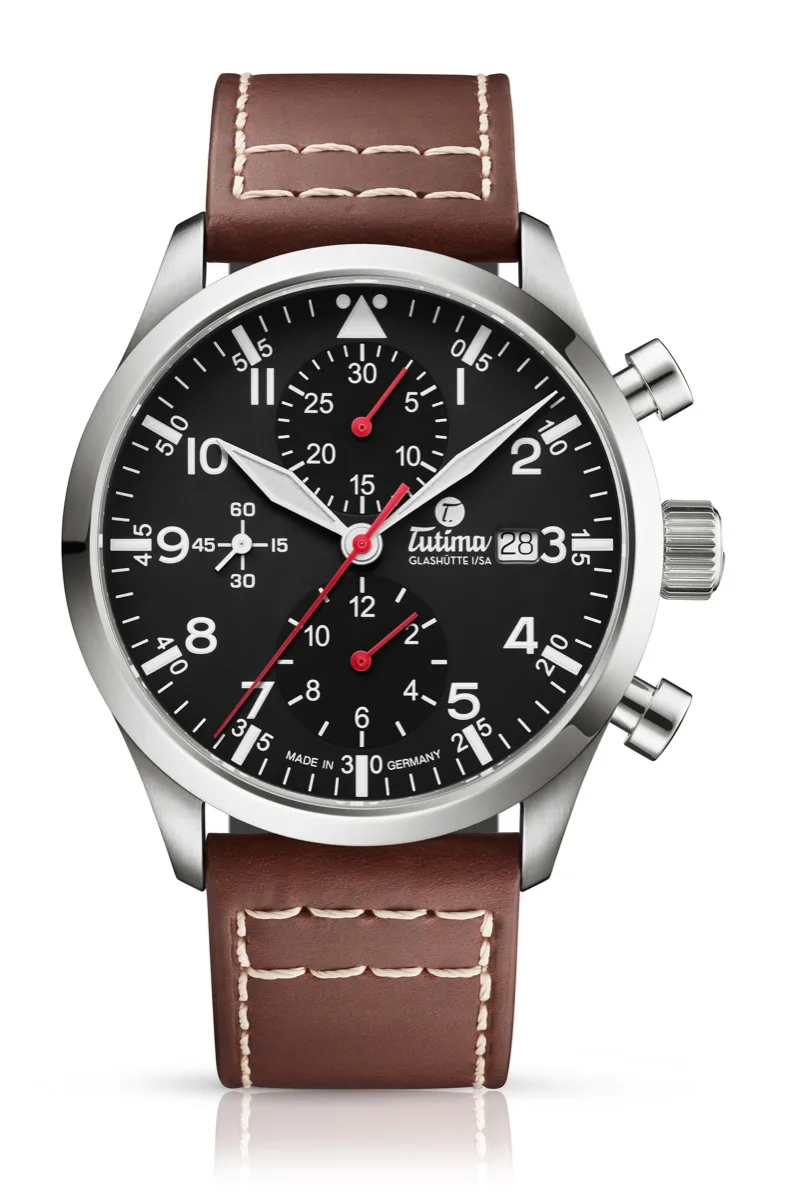
Flieger Legacy T5 — the lineage continues