A vault on the wrist
Sometimes there is no second chance—especially in an aircraft cockpit, where extreme situations can turn on fractions of a second and the difference between the right and…
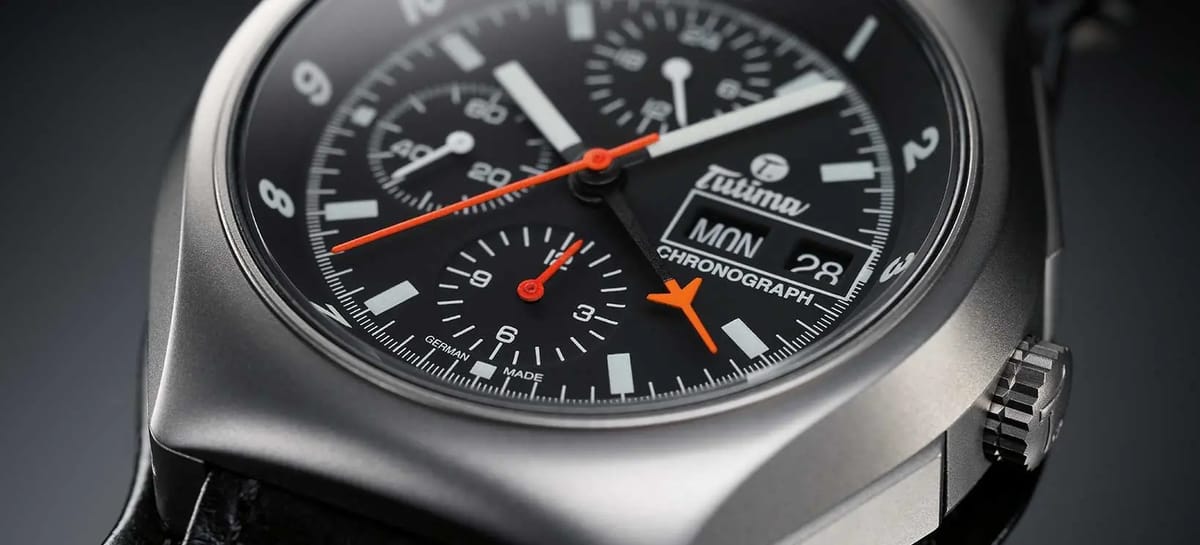
Sometimes there is no second chance—especially in an aircraft cockpit, where extreme situations can tu on fractions of a second and the difference between the right and the wrong decision. With this awareness, Tutima created the Military Chronograph, Reference 798, and proved it in the toughest arena imaginable: in the 1980s, it faced the rigorous requirements of the German Bundeswehr’s procurement offices and the scrutiny of aviation watch experts.
Few challenges are greater for a watchmaker than a tender for an official service watch for Air Force pilots. The result was a high-quality timekeeper with outstanding functionality, optimal legibility and an innovative design concept—an enduring classic within the German Armed Forces that has never lost its relevance.
At first glance, it’s clear that the legendary automatic chronograph was engineered with real-world use in mind. Tutima moved away from the usual pushers that extend far from the case and instead developed large, case-integrated buttons. This solves a familiar problem and makes operation with gloves markedly easier.
The solution also adds a crucial safety benefit: in turbulent situations, nothing protruding means less risk of injury—and fewer parts that can snag or snap. For the same reasons, the case’s edges and co ers are strongly rounded.
The Military Chronograph’s professional, purpose-built appearance is matched by its interior. At its heart is the distinctive Lemania 5100 automatic calibre—an engine that has proven itself in countless endurance tests under demanding conditions.
Housed in a massive special case with sapphire crystal and an oversized caseback, the movement sits protected like in a vault. A timepiece designed as an instrument—when reliability is not a preference, but a requirement.