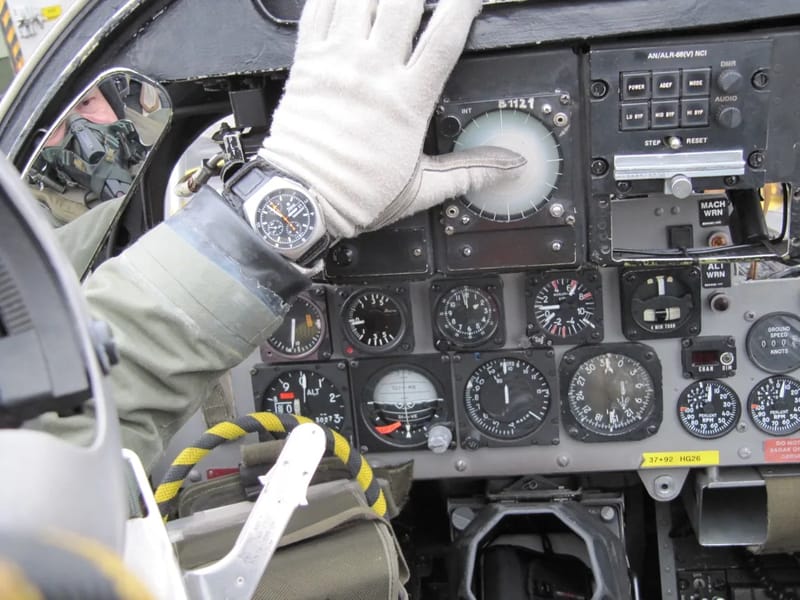
Eurofighter Typhoon: A Tutima on the Instrument Panel
When the Eurofighter Typhoon entered service after twenty years of development, Tutima received the rights to produce the official watch. Eurofighter emblem on the dial. Silhouette etched into the caseback.
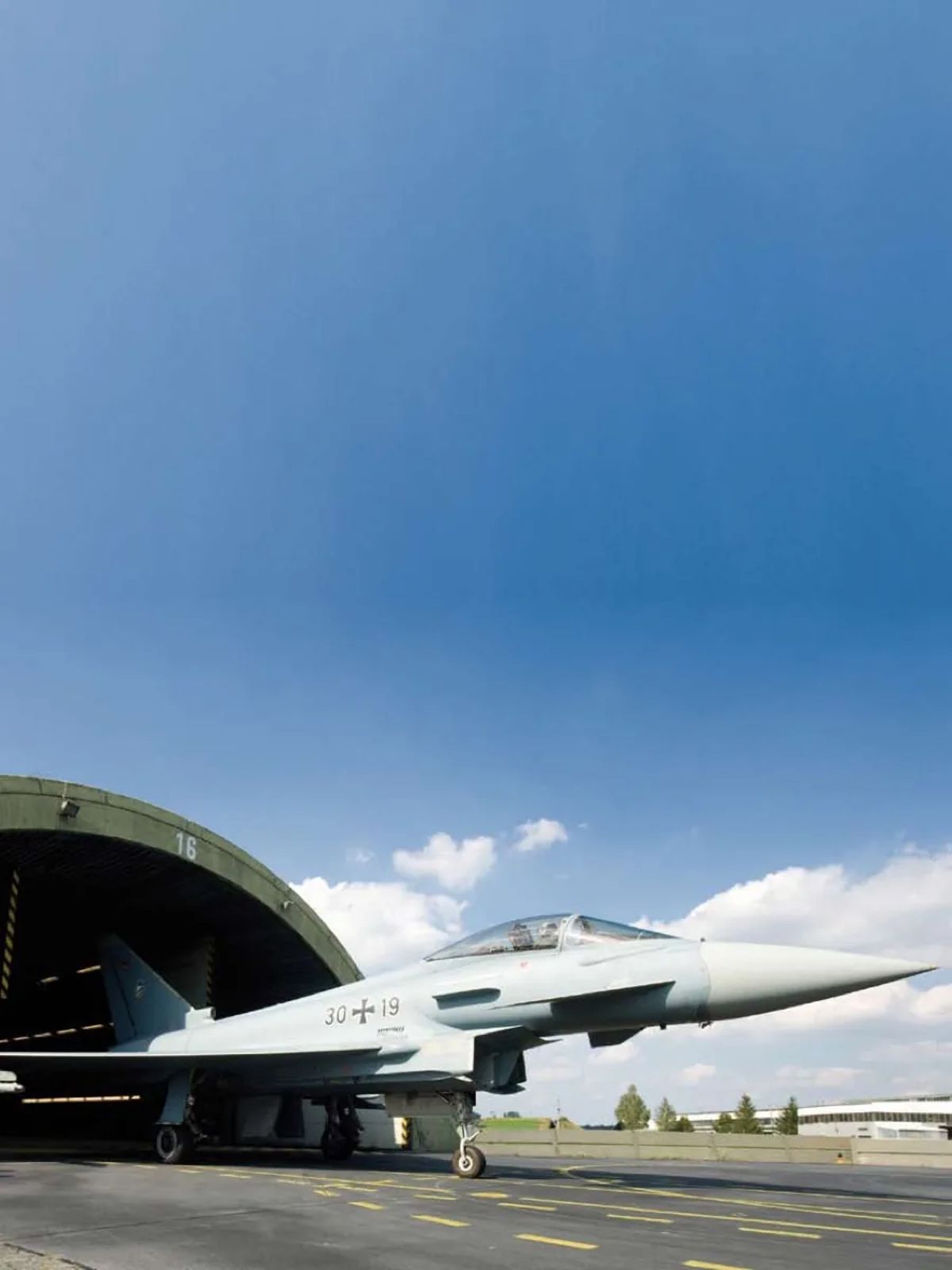
The Eurofighter Typhoon took twenty years to develop. When it finally entered service, it was one of the most advanced multi-role combat aircraft in the world — a collaboration between Germany, the United Kingdom, Italy, and Spain.
On that occasion, Tutima was granted the rights to produce the official Eurofighter watch. The result was the F2 UTC Eurofighter Typhoon Limited Edition, Ref. 780-59.
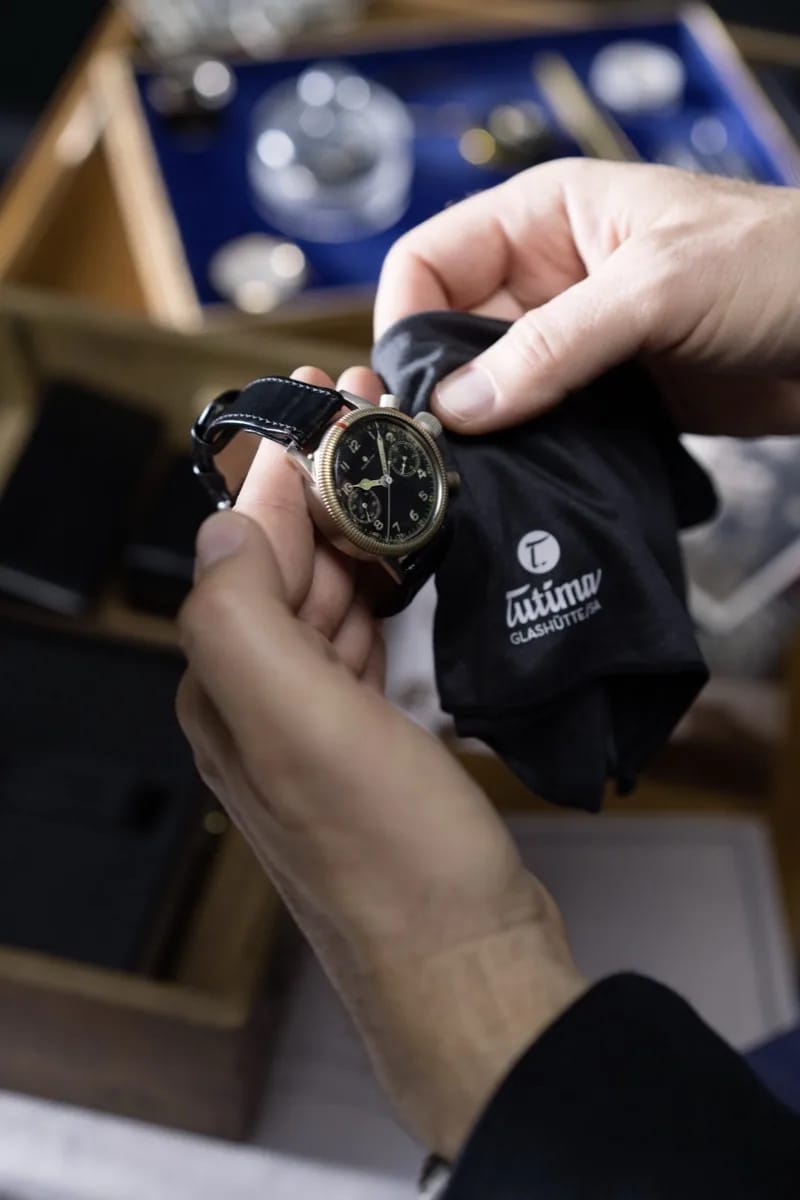
The design started from suggestions by Eurofighter pilots themselves. They wanted something that echoed the 1940s Fliegerchronograph — the original UROFA-UFAG instrument that pilots had wo since 1941. Tutima obliged. The case shape, the dial layout, the legibility at a glance: all drawn from the same lineage.
Inside sat a special version of the Valjoux Caliber 7750. The chronograph had hour and minute counters. A second time zone was indicated by a central sweep hour hand — useful when flying between nations. On the dial, the Eurofighter emblem. On the sapphire crystal caseback, the Typhoon's silhouette, etched into the glass.
The connection between Tutima and military aviation did not start with the Eurofighter. It started with Ernst Kurtz's brother Walter, a test pilot, in the 1930s. It continued through the Fliegerchronograph of 1941, the NATO Chronograph of 1984, and the Flieger revivals of the 1990s. The Eurofighter edition was the latest chapter in a relationship that was older than the jet engine.
Twenty years of development. Four nations. One official watch — built with the same method Tutima has applied since Glashütte: movement first, then case, then specifications.