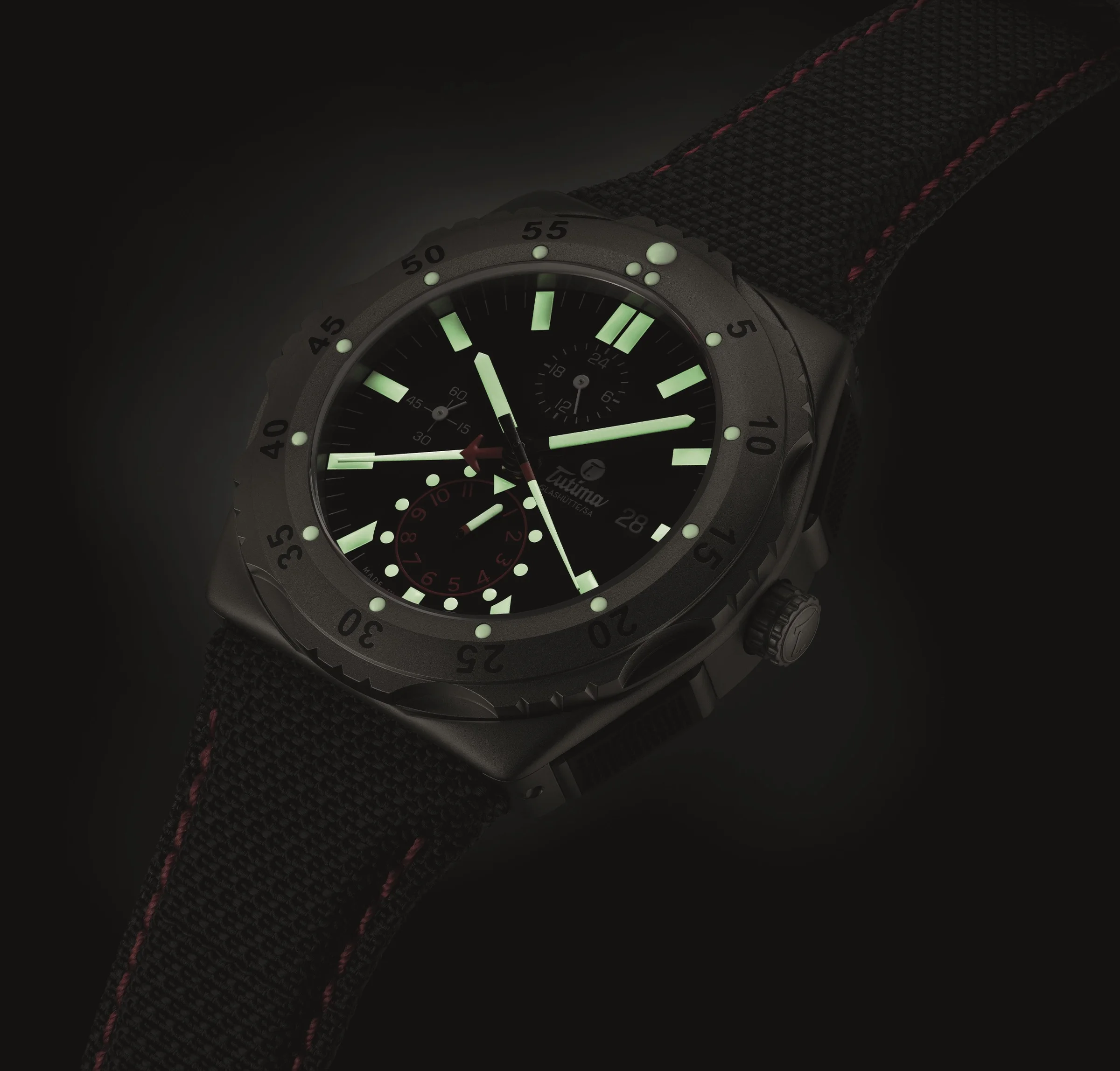
M2
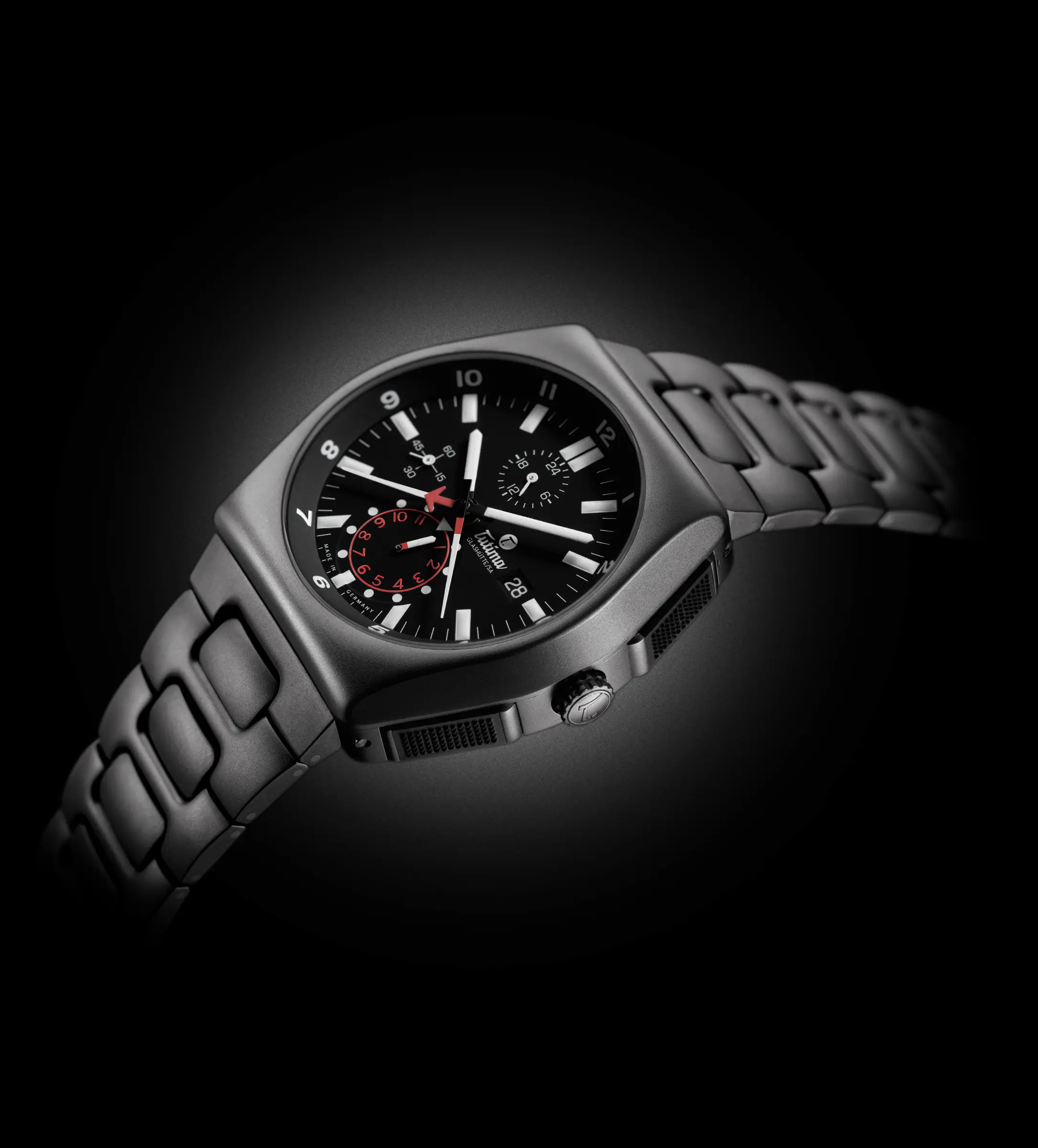
Titanium. Mu-metal magnetic shielding. The NATO chronograph entered Bundeswehr service in 1984 — this is its successor.
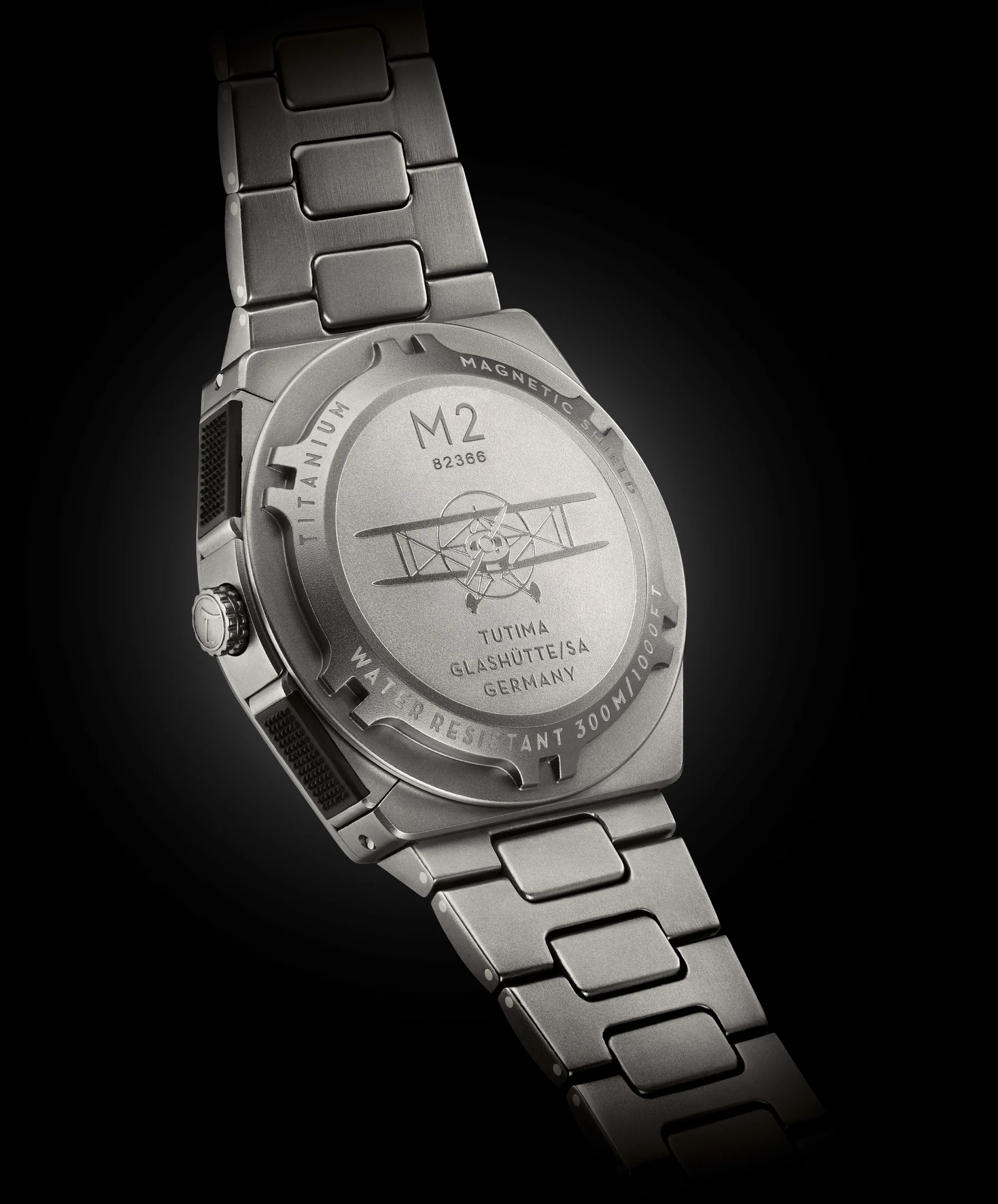
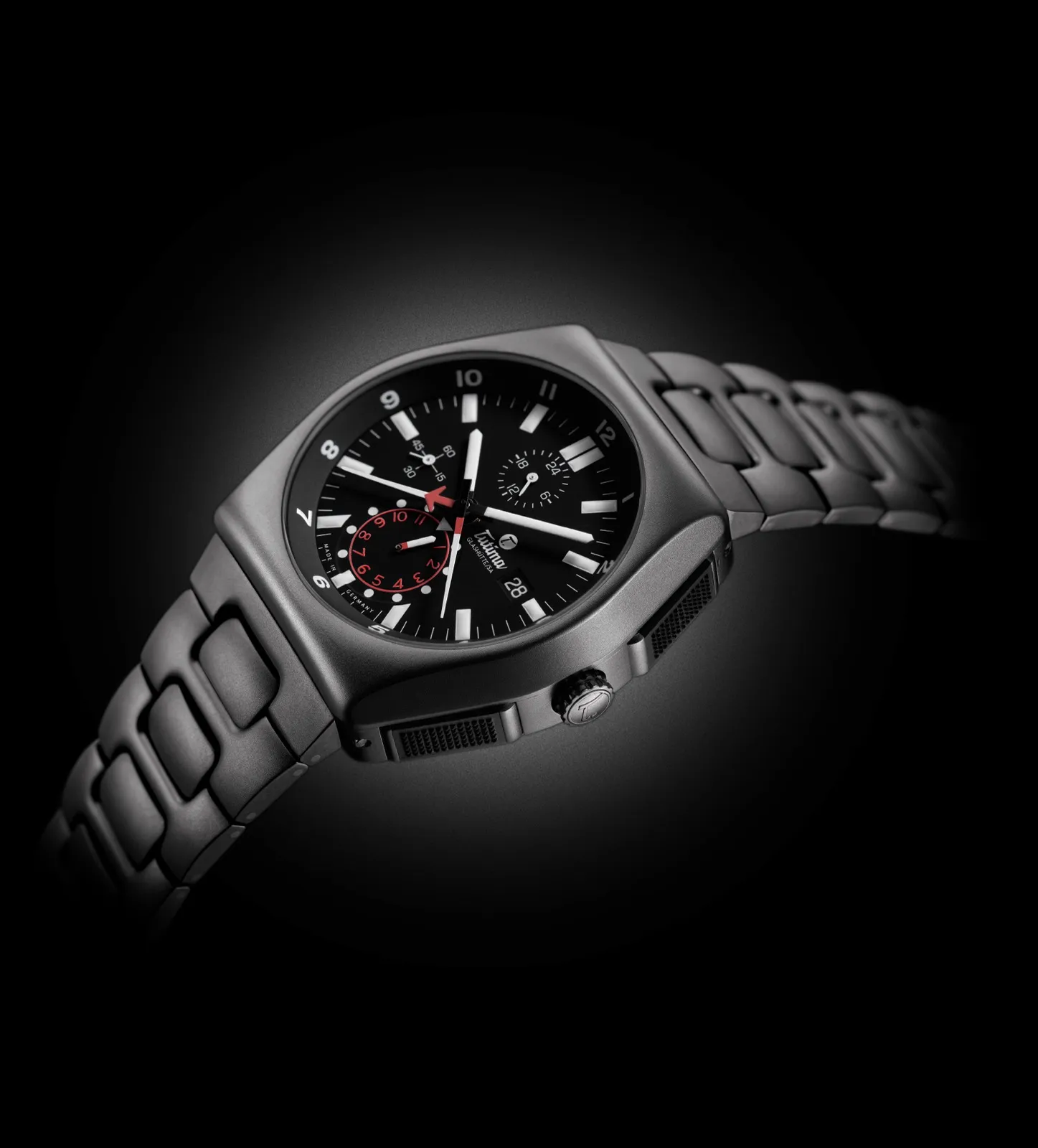
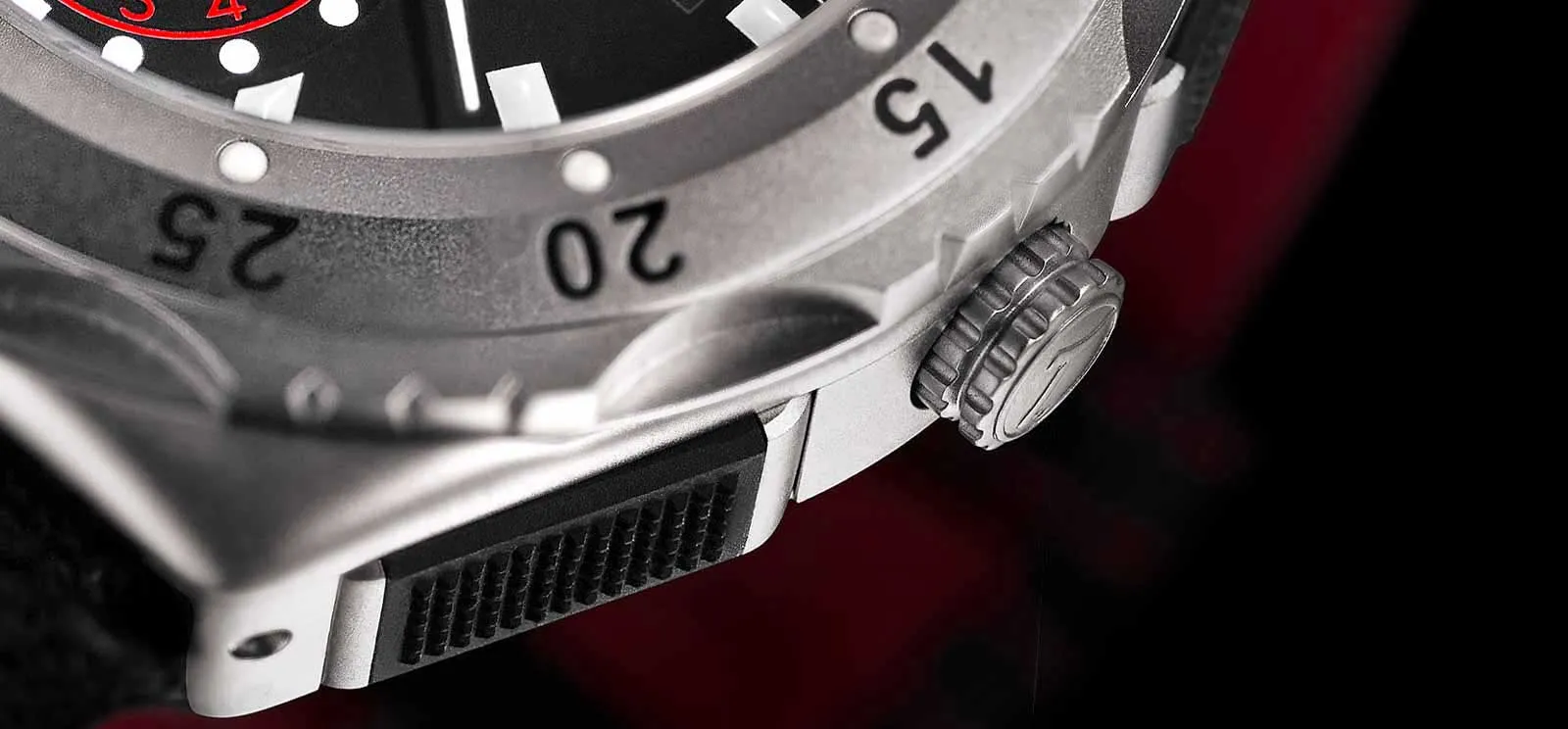
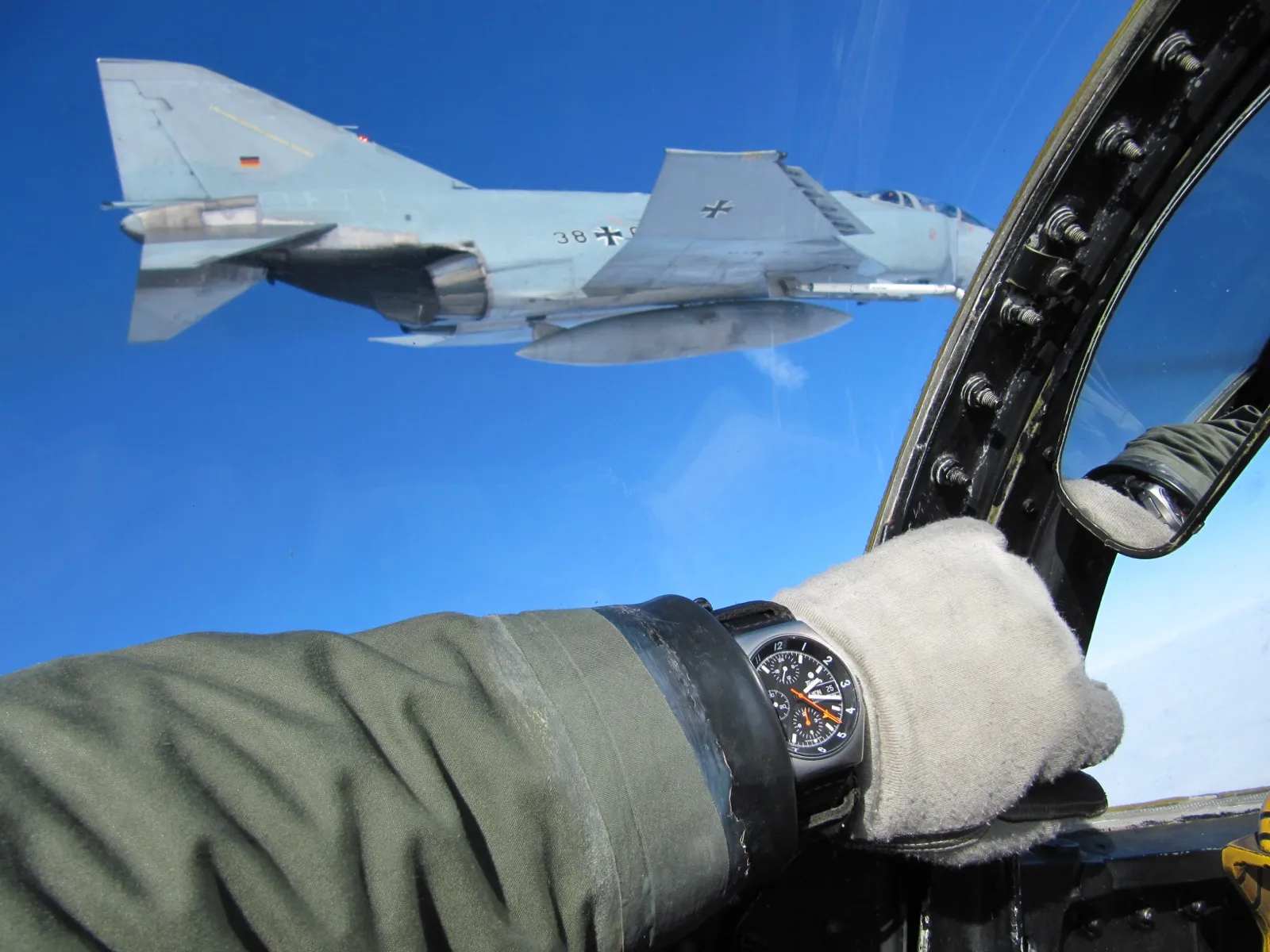
In 1984, Tutima was asked to build a chronograph for the German Air Force. The rest of the industry had moved to quartz — mechanical movements were considered obsolete. Tutima built one anyway. Pearl-blasted titanium case. Mu-metal inner case — a magnetically soft nickel-iron alloy that blocks external magnetic fields before they reach the movement, the same shielding used in MRI machines. Pushers and crown sit flush with the case — a military requirement to prevent snagging under flight gear. Sapphire crystal 2.5mm thick — roughly double a standard watch crystal — anti-reflective on both sides. Flight tested at 1,500 meters and 15 kilometers altitude. NATO acceptance certificate. It spent a week aboard the MIR space station. The German military still maintains two workshops in northern Germany devoted strictly to repairing these chronographs. The M2 is where the conviction started.
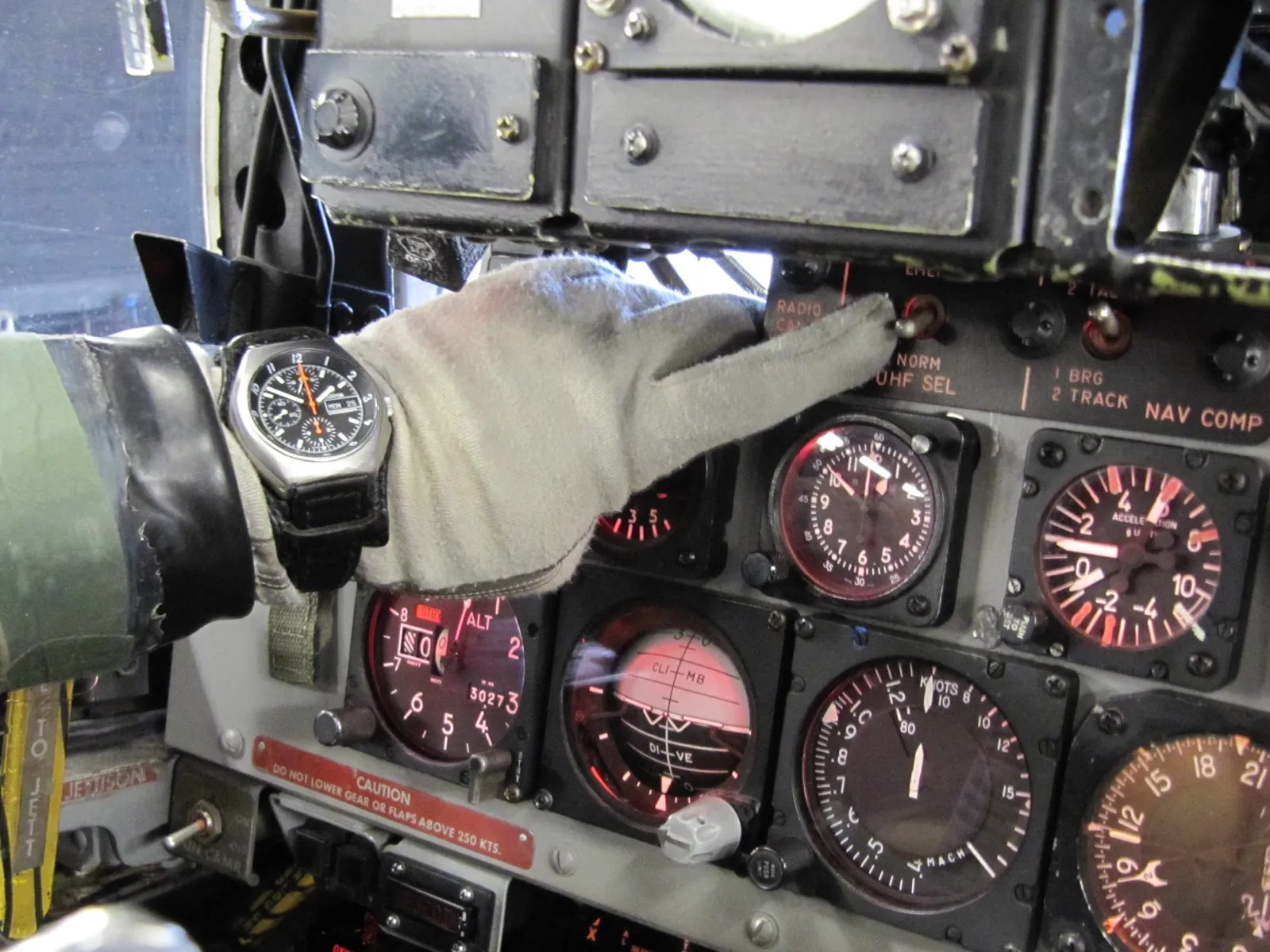
Selected by the Bundeswehr in 1984 — when the rest of the industry had moved to quartz.
In Context
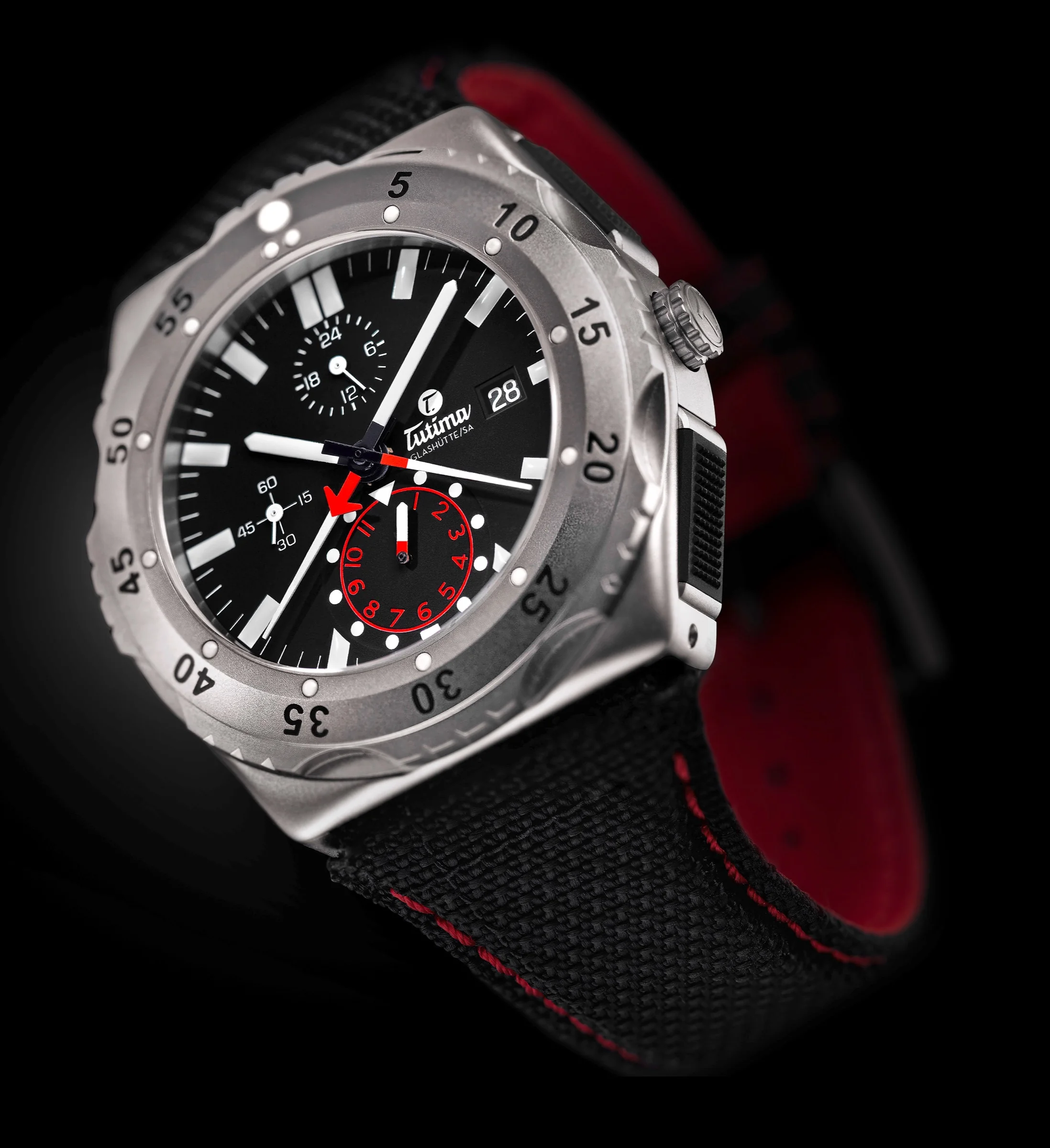
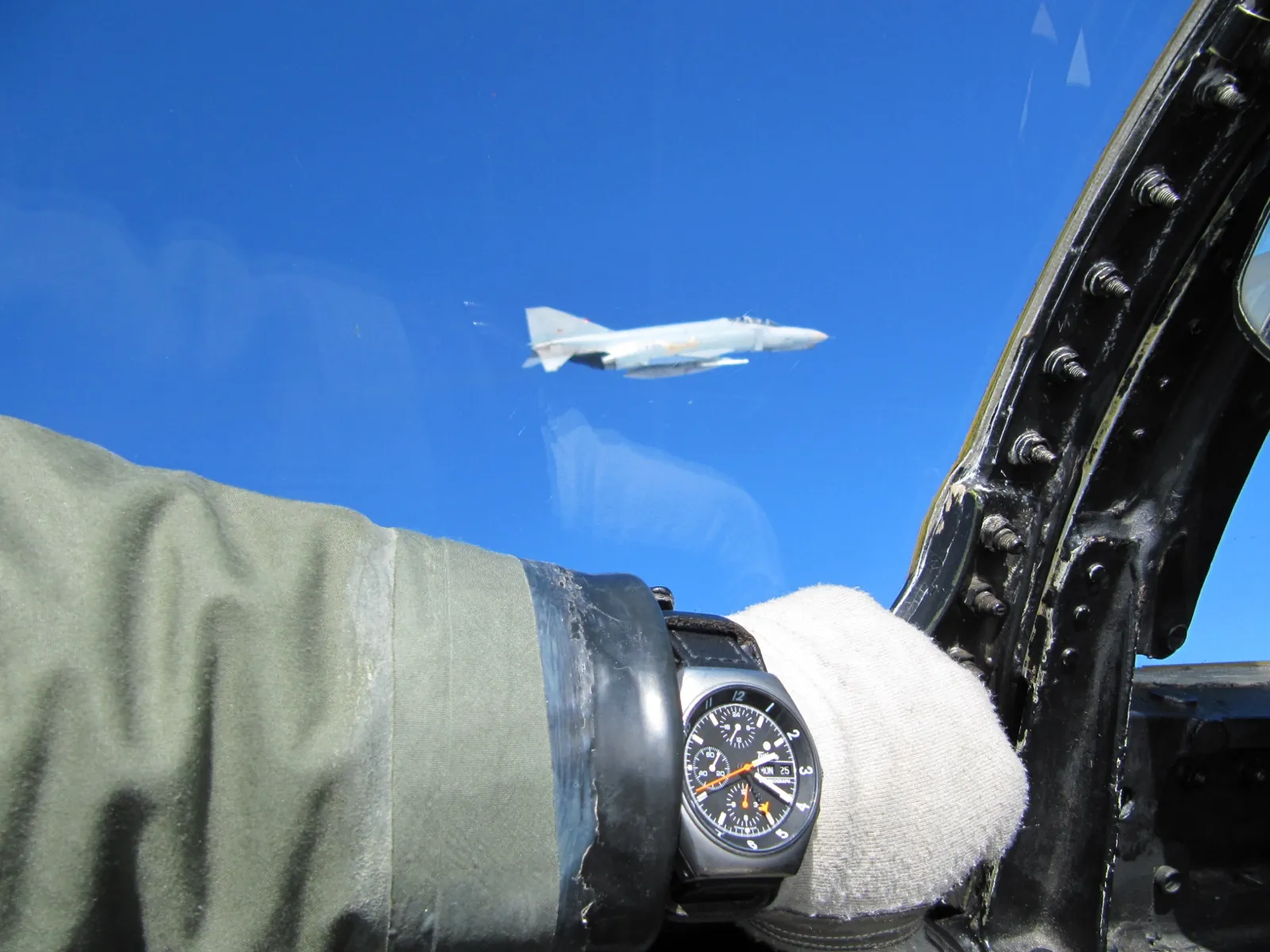
Heritage
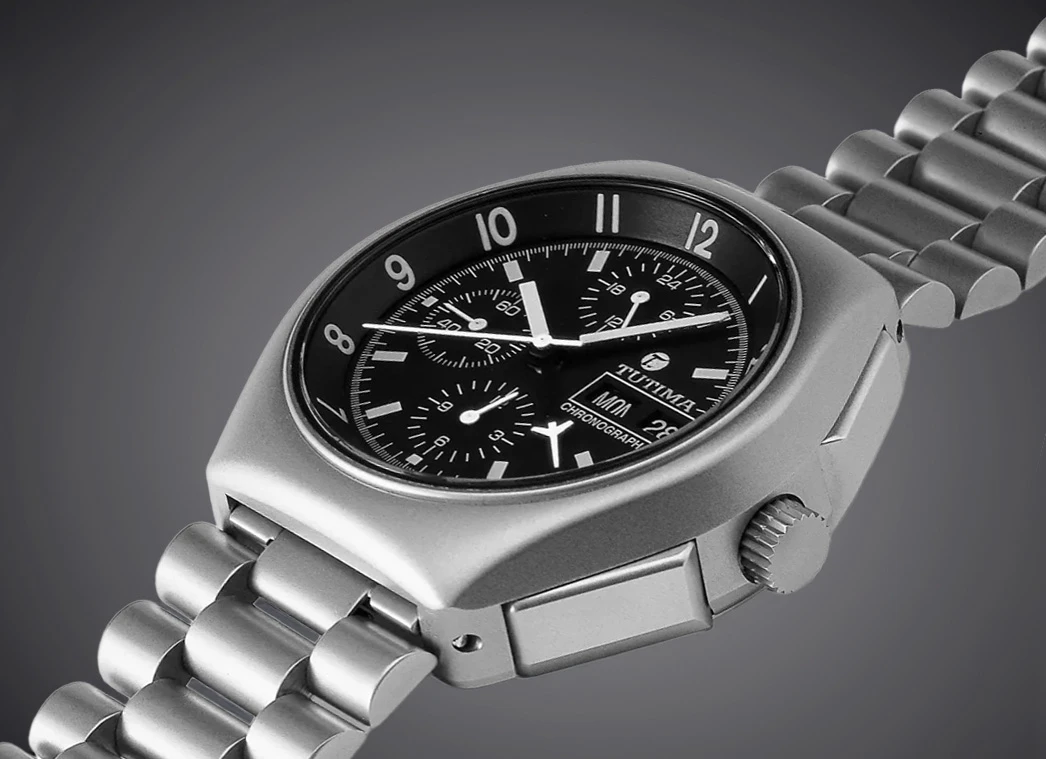
NATO Ref. 798 (1984)
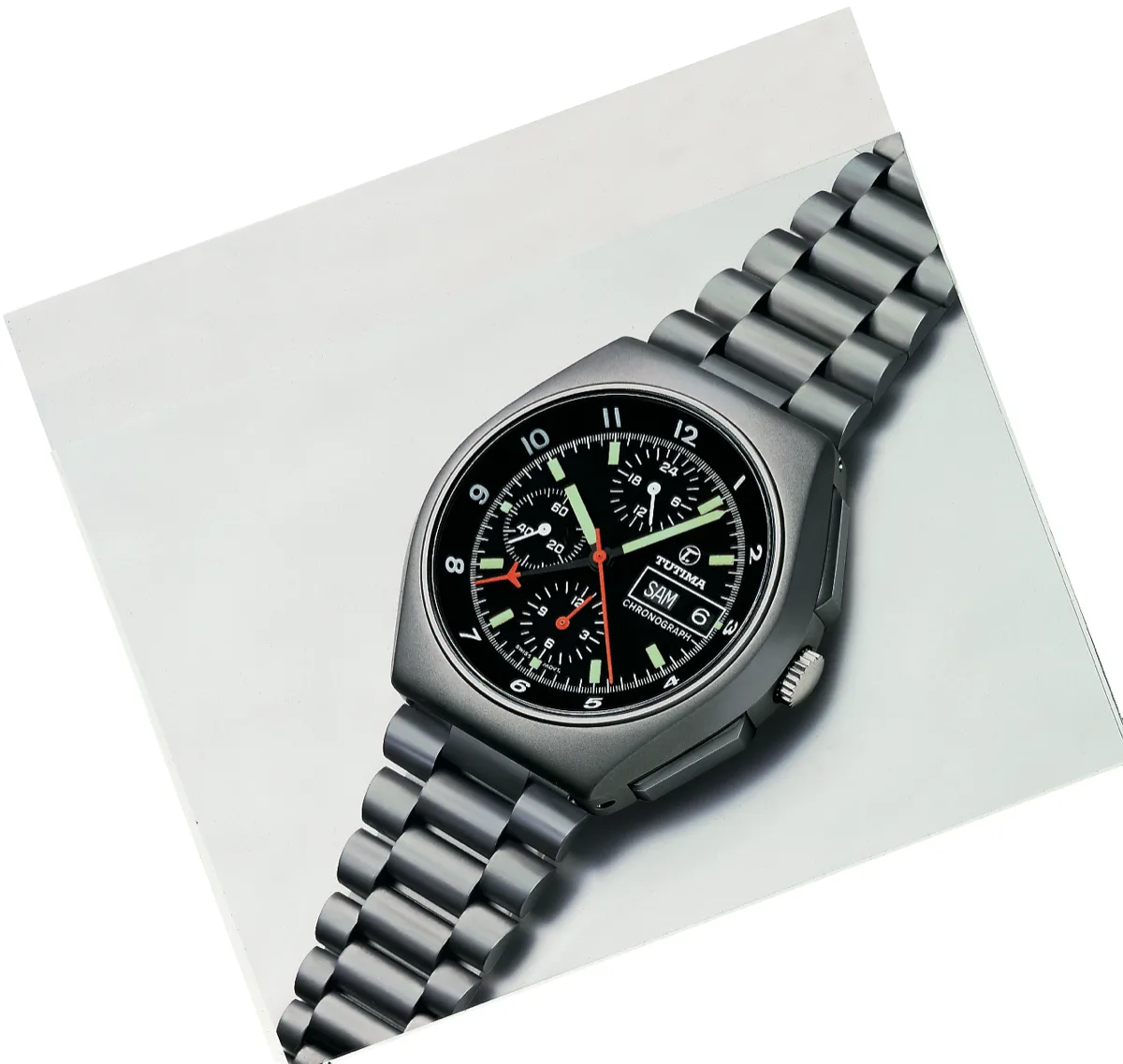
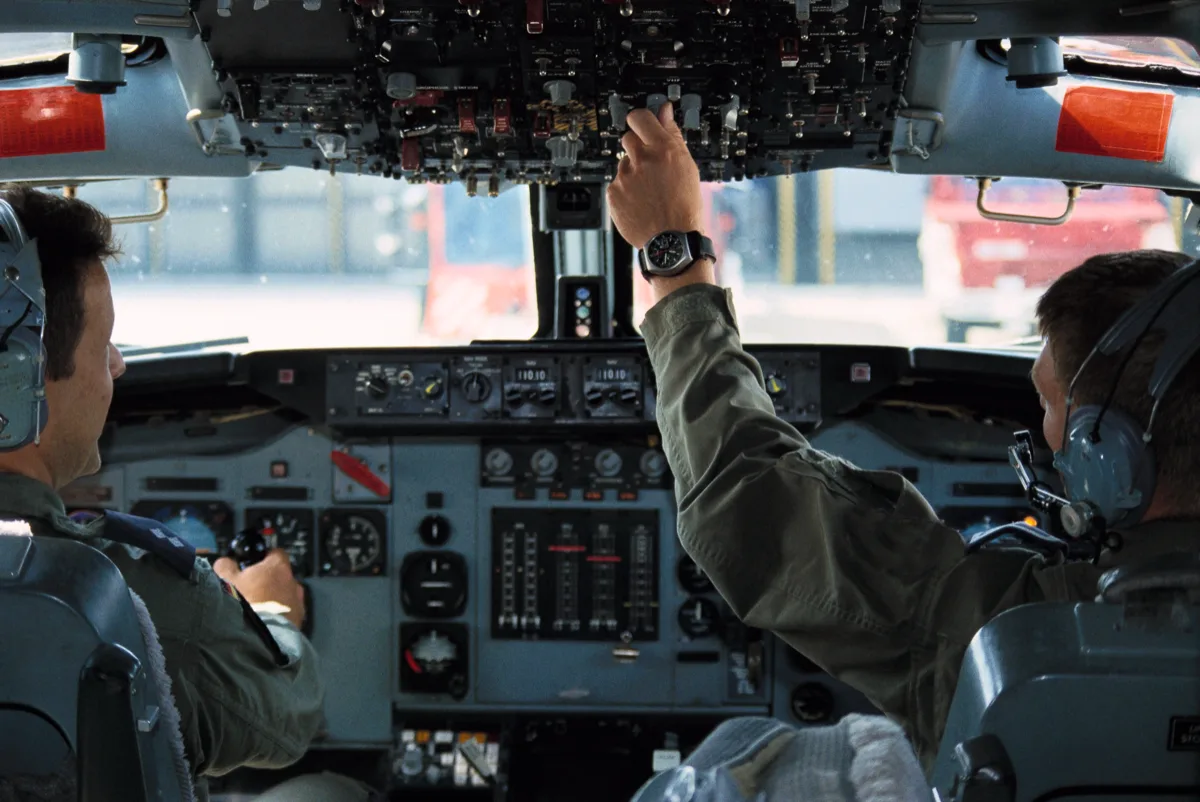
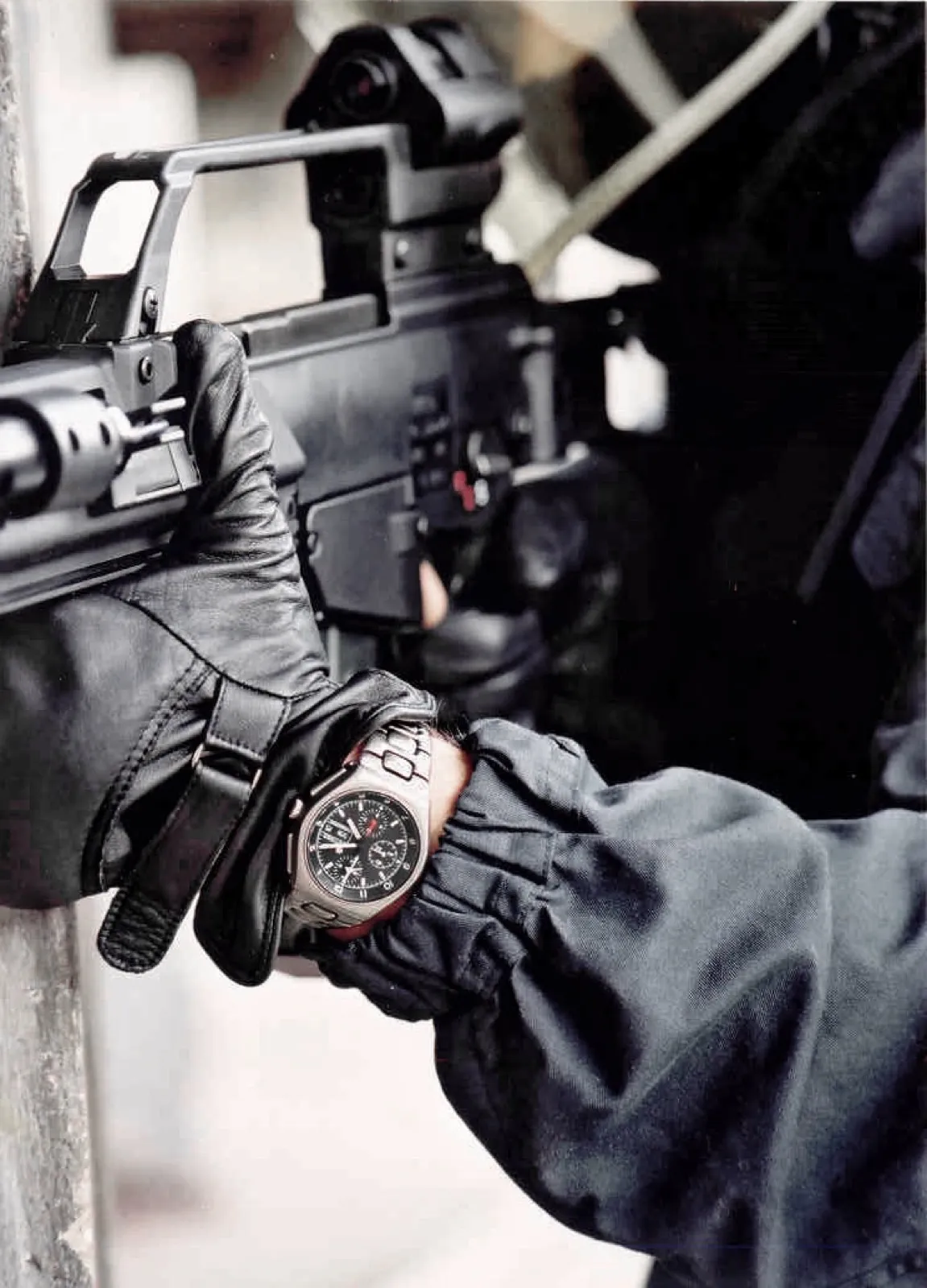
In 1984, the Bundeswehr selected Tutima's Ref. 798 as its official chronograph — NATO Stock Number 6645-12-194-8642. It flew aboard MIR, was flight-tested to 15 km altitude and 1,500 m. From German special forces to fighter cockpits, the 798 proved itself in the harshest conditions. The M2 Chronograph inherits this uncompromising instrument philosophy.
Caliber
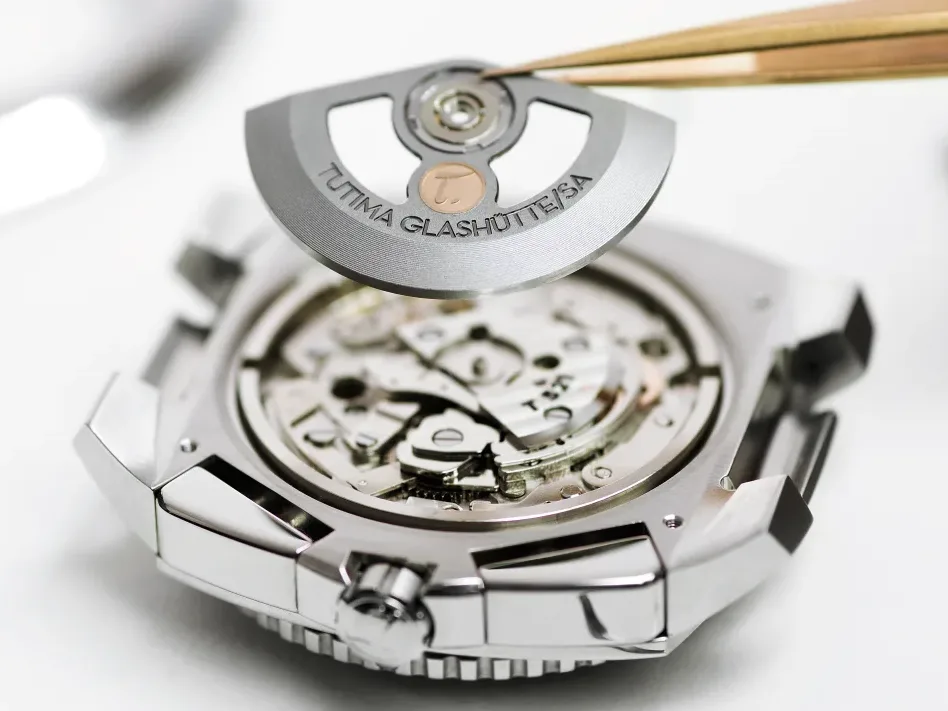
Caliber 521
The Chronograph Module
Caliber 521
The Chronograph Module
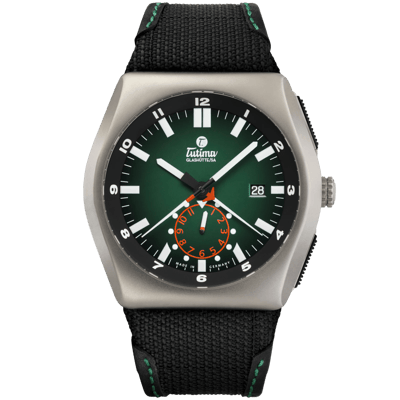
Central minute hand — driven from the dial centre, not a subdial. Harder to engineer, rarely found in production chronographs. Patented in-house module. Elapsed minutes readable at a glance.
Chronograph
Ref. 6450-04
€4,700 (DE RRP) €€
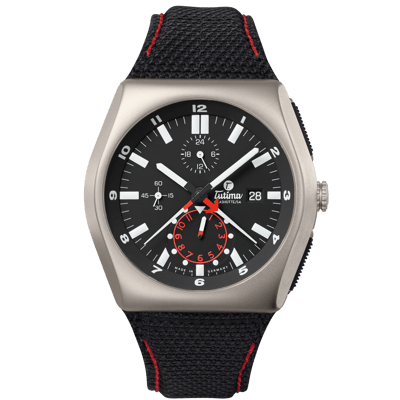
Chronograph
Ref. 6450-02
€4,950 (DE RRP) €€
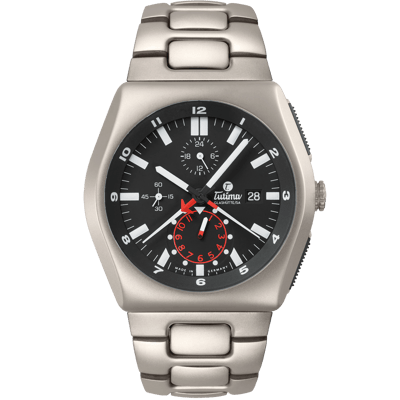
Chronograph
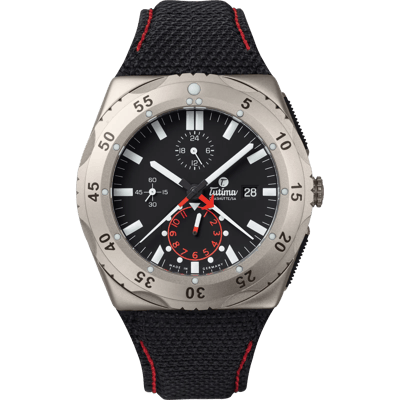
Ref. 6450-03
€5,300 (DE RRP) €€
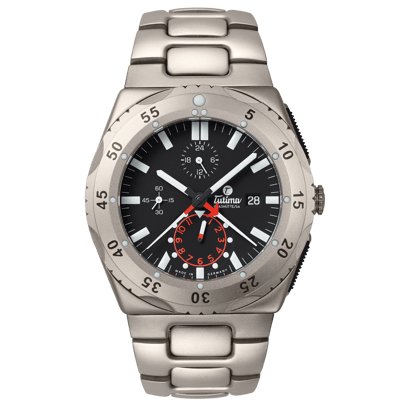
Pioneer
Ref. 6451-02
€5,250 (DE RRP) €€
Pioneer
Ref. 6451-03
€5,600 (DE RRP) €€
Stories
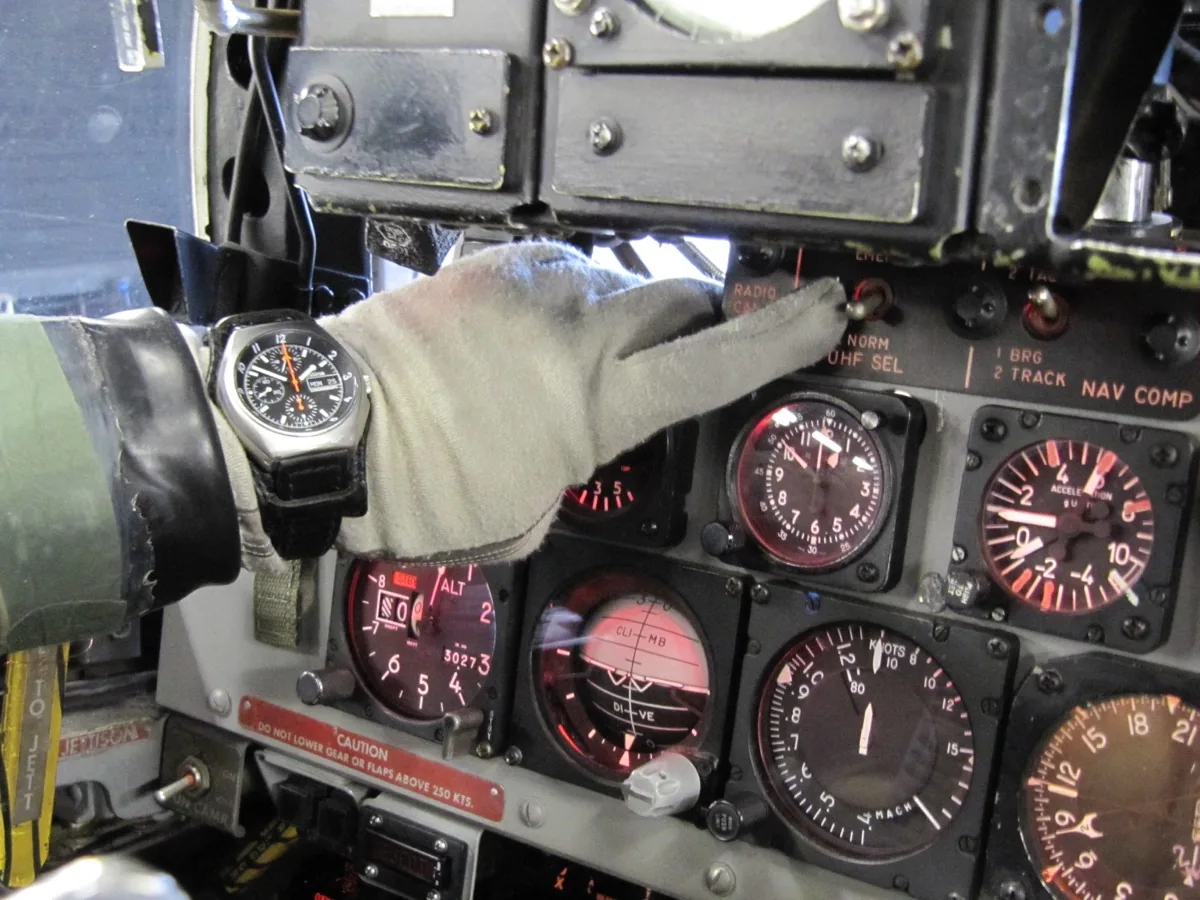
The NATO Chronograph Story
· 1984The German Air Force needed a standard-issue pilot's chronograph. Tutima's answer: integrated pushers, anti-magnetic Lemania 5100, mu-metal shielding. NATO Stock Number 6645-12-194-8642. One went to the MIR space station.
Read the full story →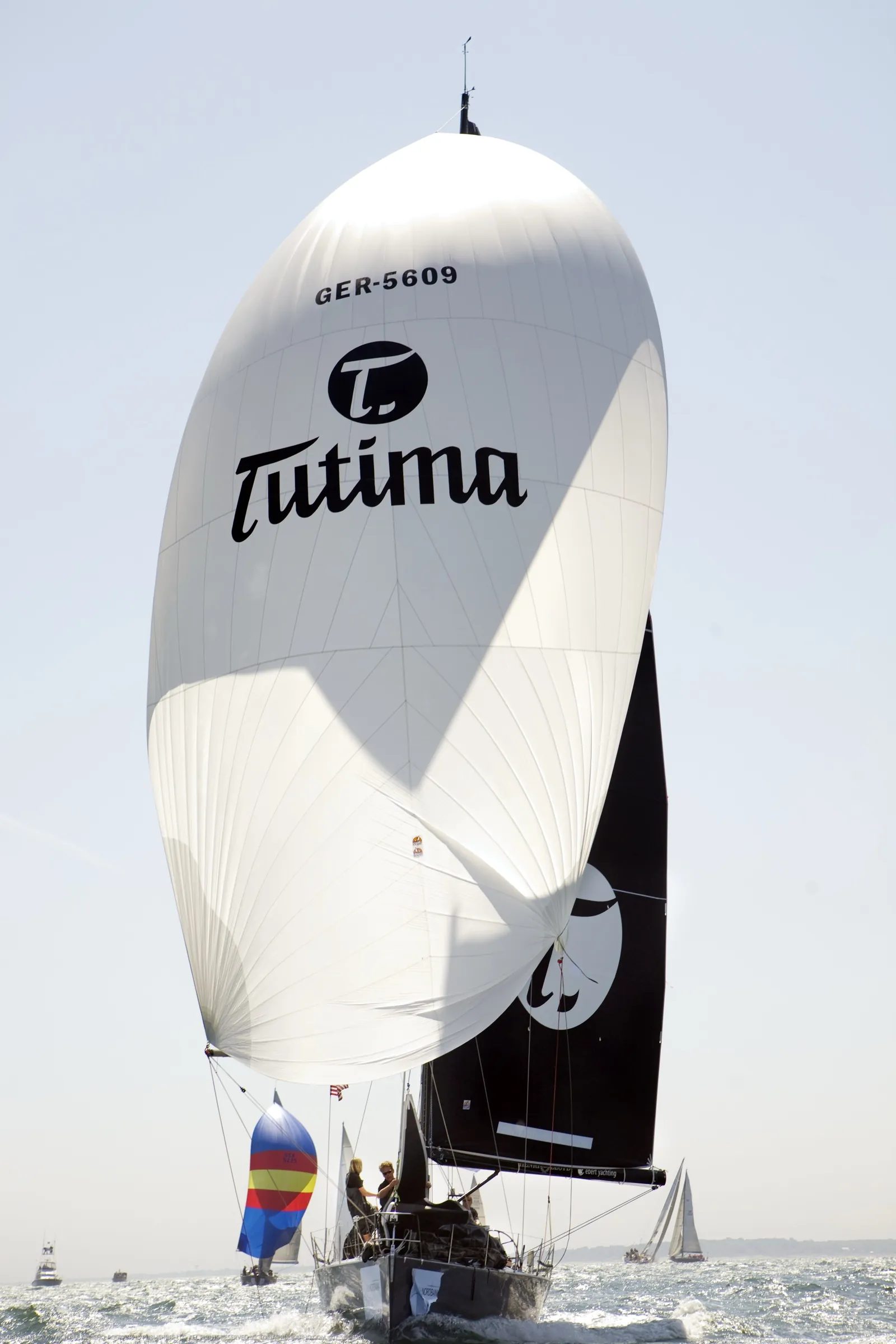
Kieler Woche: Racing, Time, and 100 Nautical Miles
· 2005–presentOfficial Timekeeper of the Kieler Woche since 2005. Tutima's own racing yacht — a titanium-grey DK46, crewed entirely by women under skipper Kirsten Harmstorf. The crew has sailed together for fifteen years, from J24s to World Championships.
Read the full story →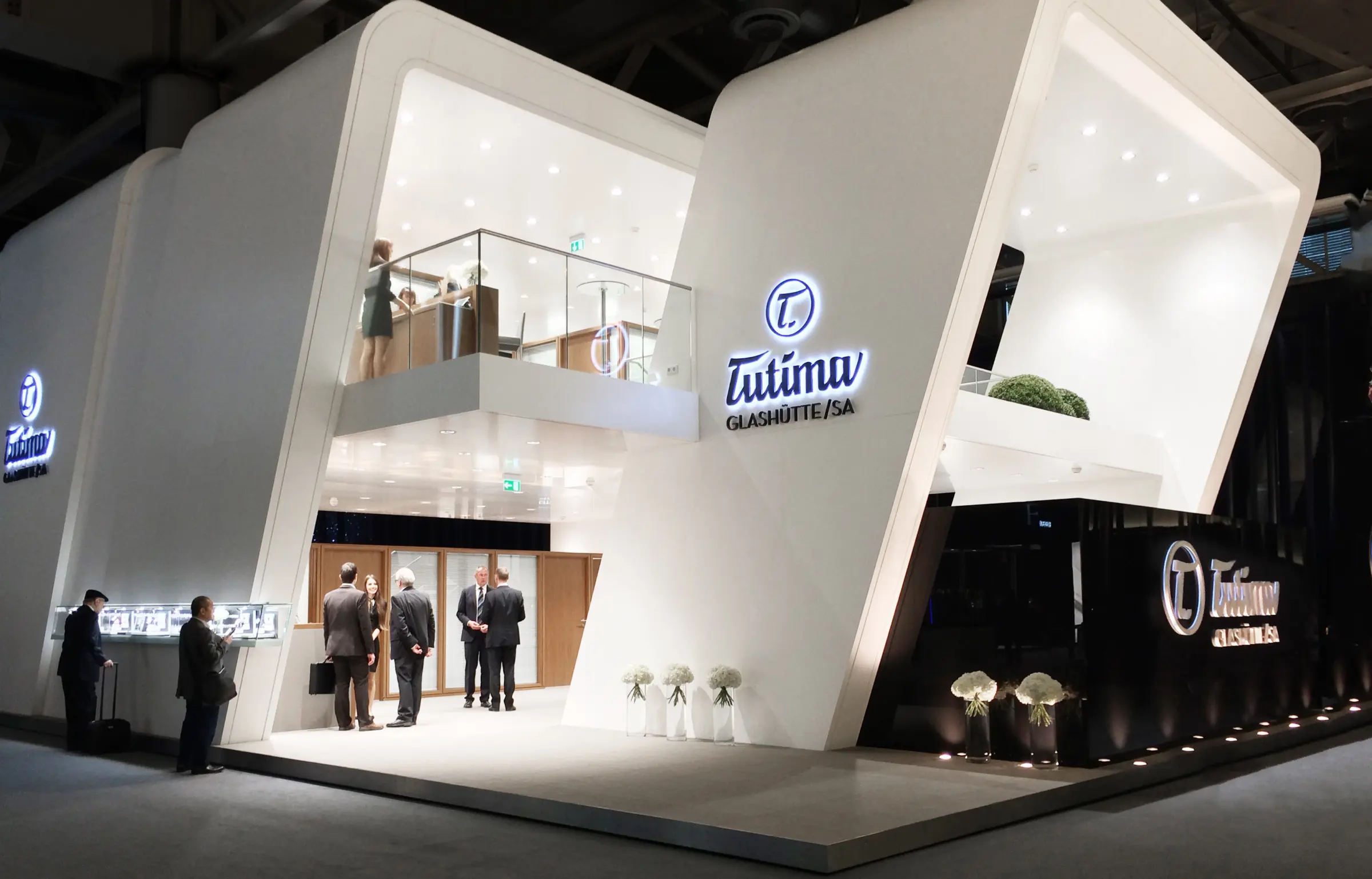
Performance Professional
Performance Professional BASELWORLD 2015 The robust M2 “Made in Glashütte” continues the tradition of the Tutima Military Chronograph—engineered for the toughest o…
Read the full story →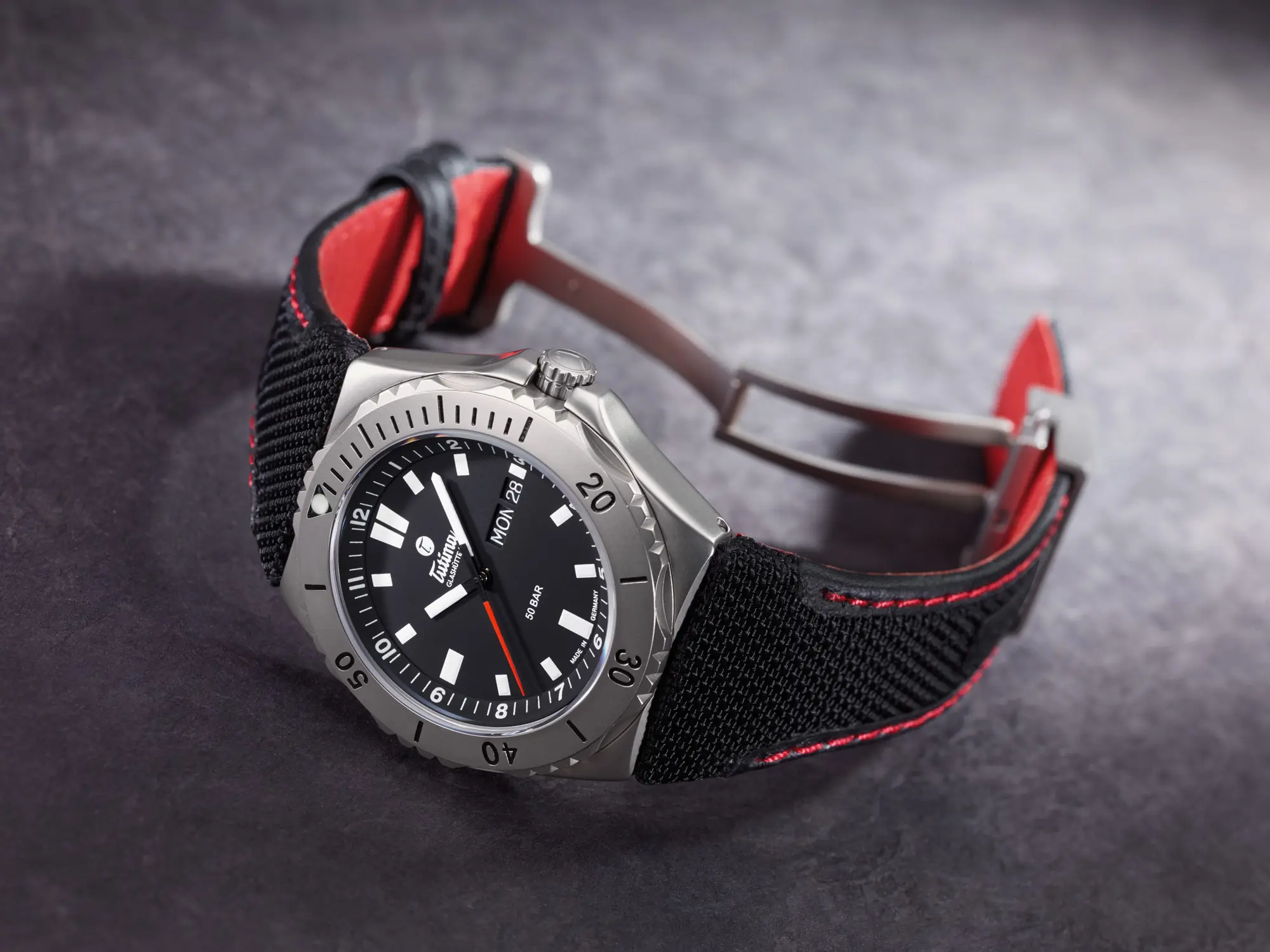
M2 Seven Seas
M2 Seven Seas Built to withstand pressure Sometimes you simply have to endure pressure.
Read the full story →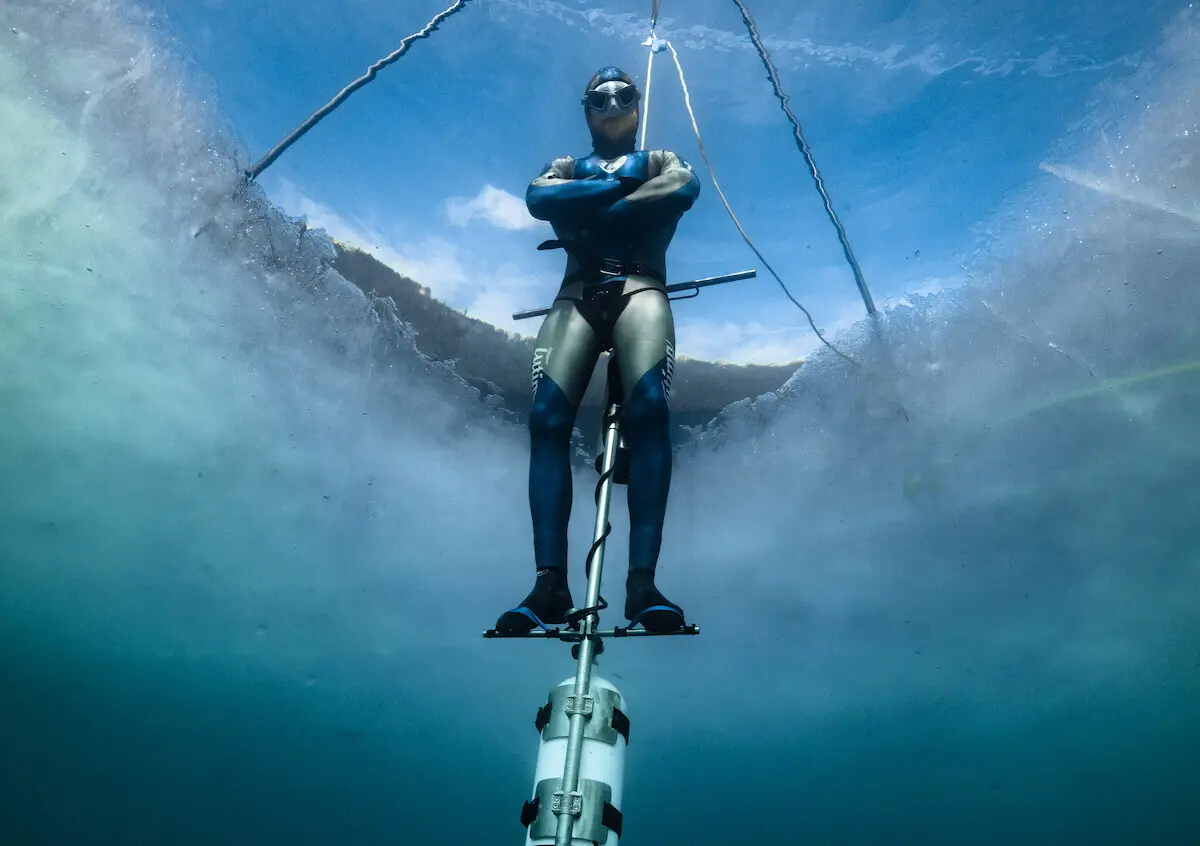
Into Icy Depths for a New World Record
Independent voice
“If you ever see a Grand Seiko with a highly polished titanium case and bracelet: Tutima is in no way inferior. Maybe it's even better.”
More from this family
Both chronographs from Glashütte. The M2 behind mu-metal in titanium; the Tempostopp with a hand-wound column-wheel flyback.
Tempostopp →Both from military service. The M2 Chronograph aboard MIR; the Flieger Legacy from the NATO instrument specification.
Flieger Legacy →Same M2 platform. The Chronograph measures elapsed time with Cal. 521; the Seven Seas S measures depth to 500 metres with Cal. 330.
M2 Seven Seas S →